
Male vs Female Rhinoplasty in Dubai | Differences Explained by Dr. Hatem Dalati
Rhinoplasty is not simply about reshaping the nose —it is about creating harmony, balance, and natural results that match each patient’s facial identity. One of the most important factors in achieving this is understanding the clear anatomical and aesthetic differences between male and female rhinoplasty.
At the ENT Clinic of Excellence in Dubai Healthcare City, Dr. Hatem Dalati, an experienced ENT and rhinoplasty surgeon, performs highly customized procedures tailored to each individual. His goal is to preserve feminine softness in women and masculine strength in men, while also addressing functional concerns such as breathing difficulties.
Why Male and Female Rhinoplasty Are Not the Same
1. Aesthetic Goals Differ Between Men and Women
Aesthetic expectations vary significantly between genders, and this directly influences the surgical approach.
Male Rhinoplasty Goals
- Strong, straight nasal bridge
- Minimal curvature
- Defined but not overly refined nasal tip
- A masculine, structured profile
- Preservation of facial strength and character
Female Rhinoplasty Goals
- Softer, more delicate nasal contour
- Slight concave bridge (in selected cases)
- Gently lifted nasal tip
- Smooth, refined appearance
- Balanced feminine proportions
👉 Want to understand which approach suits your face? Read:
Which Nose Shape Suits my Face Best?
Male vs Female Rhinoplasty Consultation Process in Dubai
At the ENT Clinic of Excellence, every rhinoplasty begins with a detailed consultation with Dr. Hatem Dalati.
During consultation:
- Facial analysis is performed
- Nose shape is evaluated from all angles
- Breathing function is assessed
- Gender-specific goals are discussed
- Digital planning may be used in selected cases
This ensures that both aesthetic and functional goals are clearly defined before surgery.
2. Anatomical Differences That Influence the Technique
Beyond aesthetics, the underlying nasal anatomy differs between men and women, requiring different surgical strategies.
Men Typically Have:
- Thicker skin that may require stronger structural support
- Larger nasal bones
- Firmer cartilage
- A broader nasal base
Women Typically Have:
- Thinner skin
- Smaller nasal framework
- More flexible cartilage
- A narrower nasal base
These differences mean that male rhinoplasty often requires stronger structural support, while female rhinoplasty focuses more on refinement and contouring.
3. Nasal Bridge Shape & Tip Rotation
One of the most noticeable differences between male and female rhinoplasty is the profile of the nasal bridge and the degree of tip rotation.
Male Nose Features
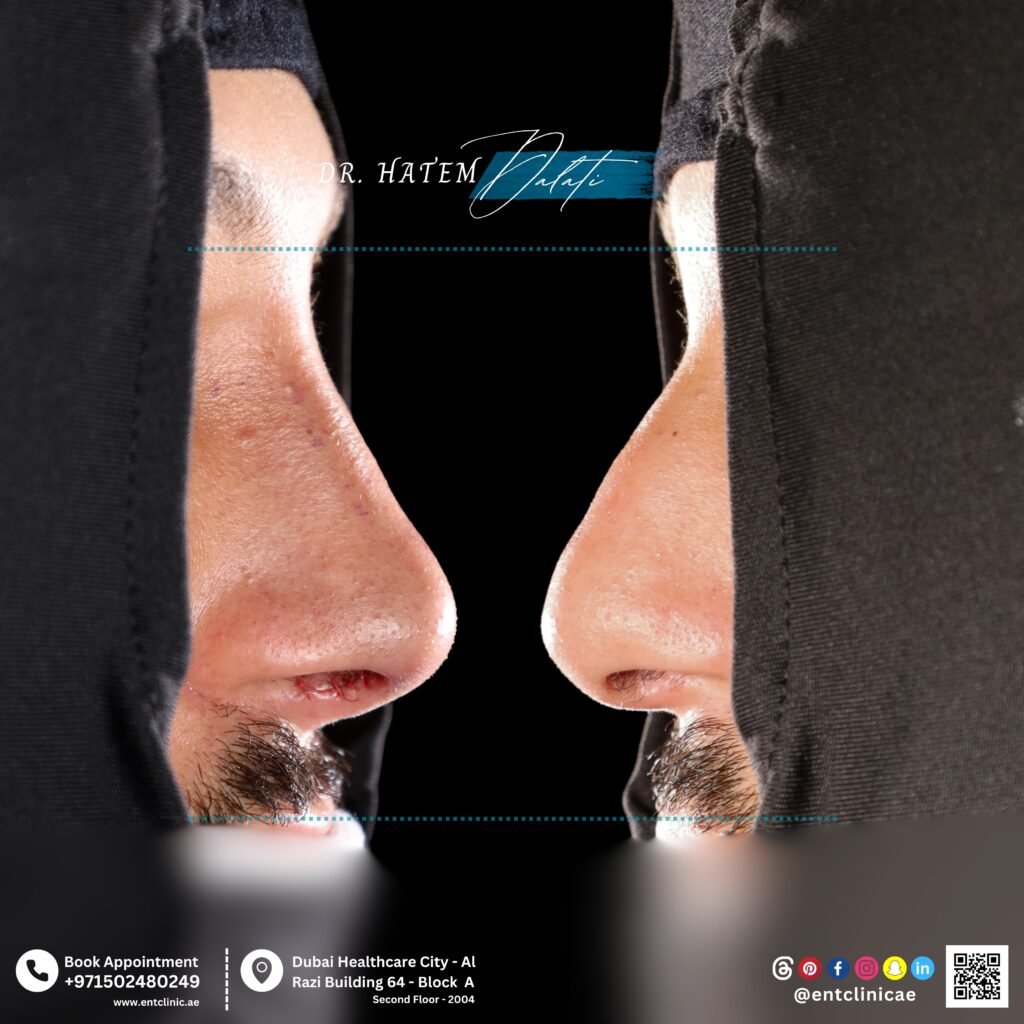
- Straighter or stronger bridge
- Little to no swoop or curve
- Less tip rotation
- More angular appearance
Female Nose Features
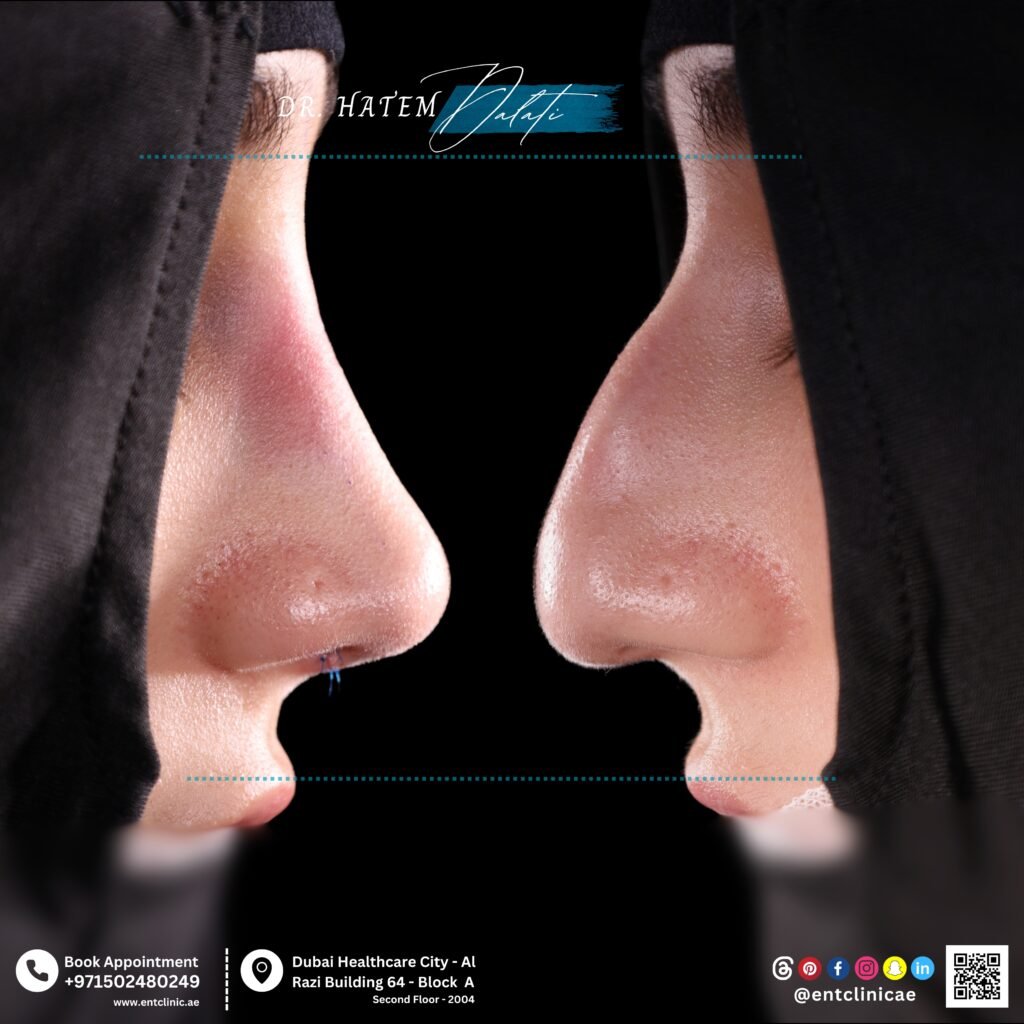
- Slightly concave or softly curved bridge
- More refined nasal tip
- Increased tip rotation
- Elegant, softer profile
To understand how these features are shaped during surgery, read:
How Is Rhinoplasty Performed? Step-by-Step Guide
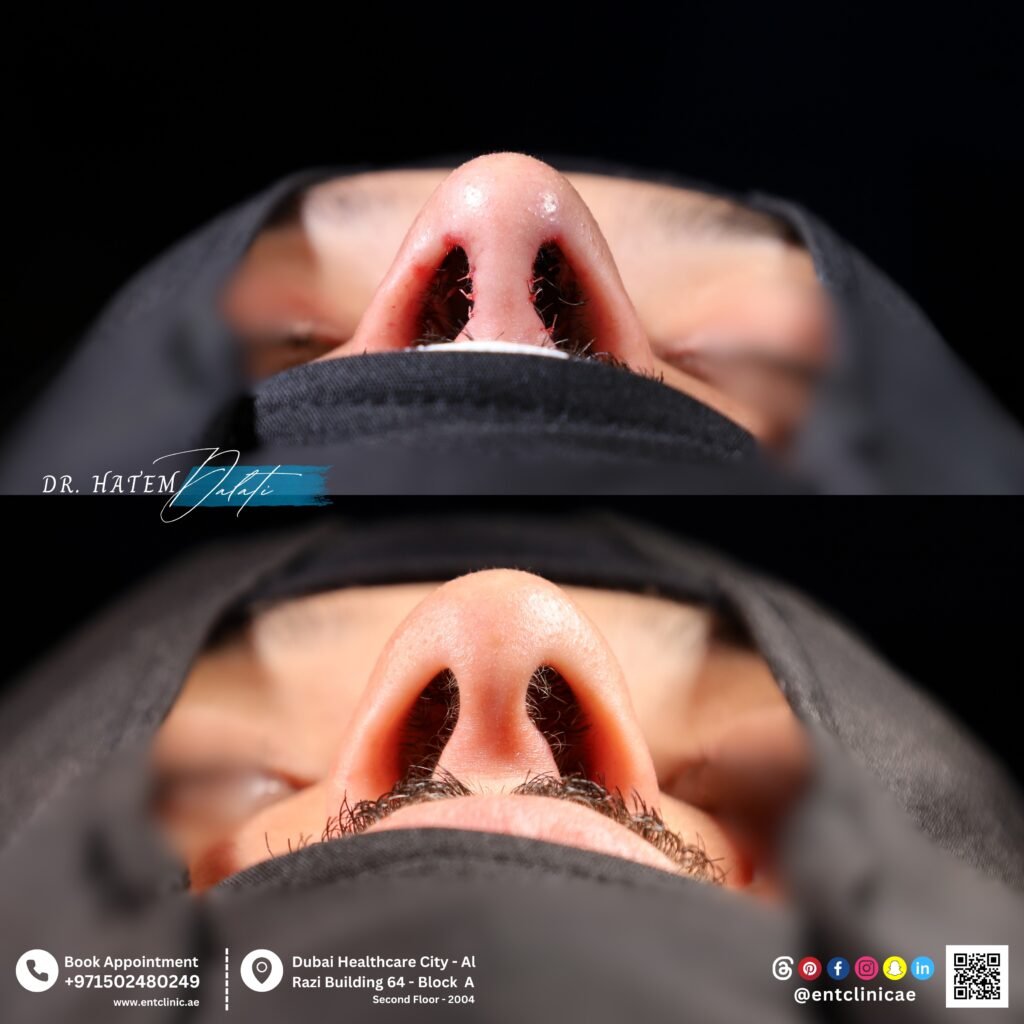
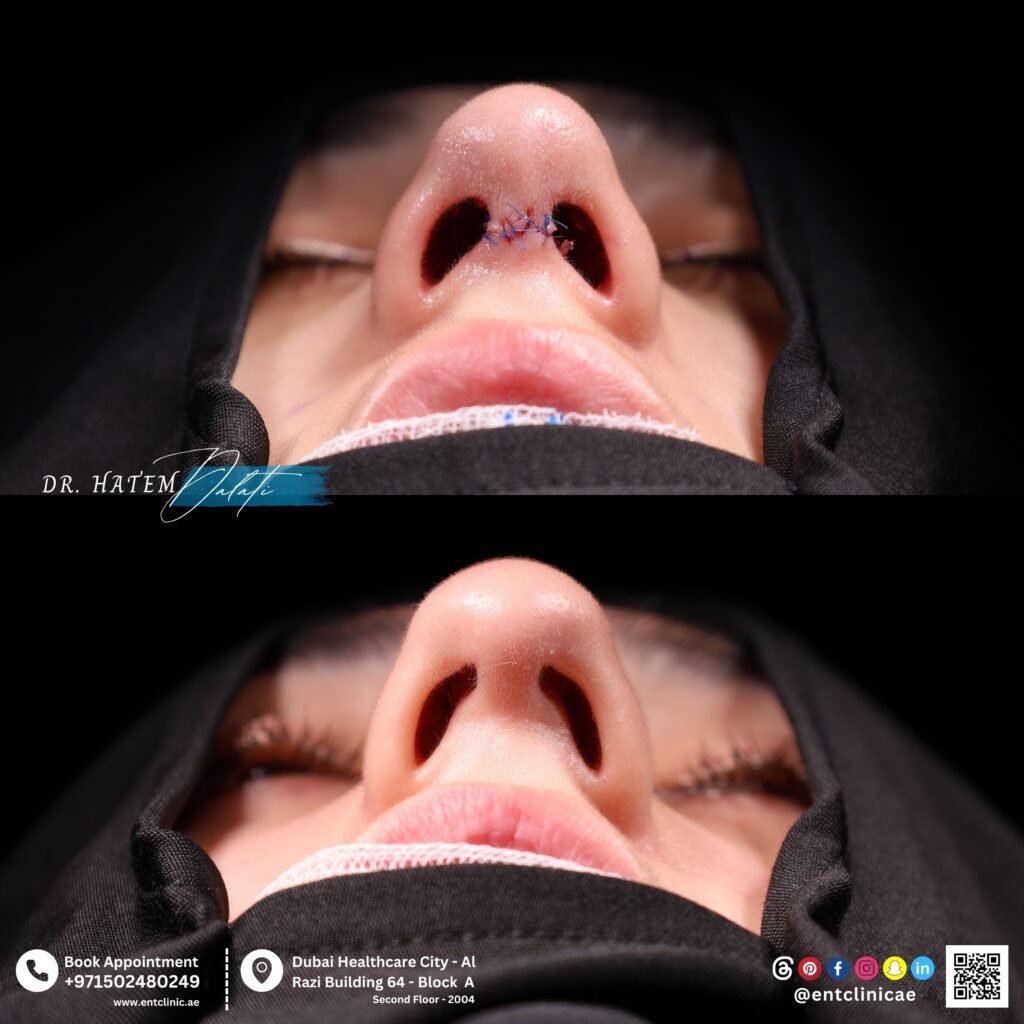
When viewed from below (base view), the differences in nostril shape, nasal width, and tip support between male and female rhinoplasty become even more apparent:
4. The Role of Skin Thickness in Final Results
Skin thickness is one of the most critical—and often overlooked—factors in rhinoplasty outcomes.
- Thick skin (more common in men):
Can limit visible definition, especially in the nasal tip, requiring stronger structural support and refined techniques. - Thin skin (more common in women):
Reveals even minor imperfections, requiring precise sculpting and smooth contouring.
Dr. Dalati adapts his surgical approach based on skin type to ensure the final result looks smooth, natural, and balanced.
👉 To know more about thick skin Rhinoplasty read: Can Rhinoplasty Work for Thick Skin?
5. Nasolabial Angle & Facial Proportions
The nasolabial angle (the angle between the nose and upper lip) is a key factor in achieving gender-appropriate results:
- Men: 90–95° (less rotation, more structure)
- Women: 95–105° (slightly more rotation for femininity)
Choosing the correct angle ensures the nose blends naturally with the rest of the face without appearing overdone.
6. Ethnic Considerations in Rhinoplasty
In a diverse city like Dubai, patients come from various ethnic backgrounds, each with unique nasal characteristics. These must be respected alongside gender differences.
Dr. Dalati carefully considers:
- Skin thickness variations
- Nasal bridge height
- Tip definition preferences
- Cultural aesthetic goals
The aim is always to enhance—not erase—ethnic identity.
7. Functional Concerns in Both Genders
Rhinoplasty is not always purely cosmetic. Many patients experience breathing issues due to structural abnormalities.
Common conditions include:
- Deviated septum
- Turbinate hypertrophy
- Previous injuries
- Congenital structural concerns
In such cases, septorhinoplasty may be recommended to improve both function and appearance simultaneously.
8. Male vs Female Rhinoplasty Healing & Recovery
Healing may differ depending on skin thickness and structural changes:
- Men may take slightly longer to see definition because of thicker skin.
- Women often see refined results sooner due to thinner skin.
However, general recovery is similar:
- Back to work: 7–10 days
- Swelling improves: over weeks to months
- Final results: up to 12 months
9. Psychological & Social Considerations
Interestingly, male and female patients often approach rhinoplasty differently:
- Men typically request subtle changes that maintain a “natural” and strong look
- Women may be more open to refinement and contouring
Dr. Dalati prioritizes clear communication and realistic expectations to ensure patient satisfaction.
10. Importance of Natural Results in Modern Rhinoplasty
Today’s trend is moving away from overdone or “operated” noses. Patients increasingly want:
- Natural-looking results
- Harmony with facial features
- Preservation of identity
Dr. Dalati’s philosophy focuses on “undetectable rhinoplasty”—where the nose looks better but not obviously operated on.
Why Choose Dr. Hatem Dalati for Gender-Specific Rhinoplasty in Dubai?
At the ENT Clinic of Excellence, each rhinoplasty procedure is tailored based on:
- Gender-specific anatomy
- Individual facial proportions
- Patient goals
- Skin type
- Functional needs (breathing improvement)
Dr. Dalati ensures that both male and female patients get natural, personalized, and long-lasting results.
Conclusion: The Importance of Gender-Focused Rhinoplasty
Male and female rhinoplasty require different planning, techniques, and aesthetic judgment. Ignoring these differences can lead to unnatural results.
By respecting both anatomical and aesthetic distinctions, Dr. Hatem Dalati creates outcomes that enhance facial harmony while preserving individuality.
Whether you want a strong masculine profile, a soft feminine nose, or a combination of functional and cosmetic correction, choosing a surgeon with expertise in gender-specific rhinoplasty in Dubai is essential for achieving the best outcome.
Frequently Asked Questions About Male vs Female Rhinoplasty
Is male rhinoplasty more difficult than female rhinoplasty?
Not necessarily, but it requires a different approach. Male rhinoplasty focuses on maintaining strong, defined features, which can be technically demanding.
Can a man get a feminine-looking nose by mistake?
Yes, if gender-specific principles are not followed. This is why choosing an experienced surgeon is crucial.
Does rhinoplasty look more natural in women?
Not necessarily—natural results depend on technique, not gender. Both men and women can achieve very natural outcomes.
How long does swelling last in men vs women?
Men may experience longer-lasting swelling due to thicker skin, while women often see definition sooner.
Is rhinoplasty painful?
Most patients report mild discomfort rather than pain, which is well-controlled with medication.
Your Ideal Nose Starts with the Right Expert
Whether you want a strong masculine profile or a soft, refined feminine look, Dr. Hatem Dalati will design a rhinoplasty plan tailored specifically to your face and goals.
📍 Location: ENT Clinic of Excellence, Dubai Healthcare City
📞 +971 50 248 0249 (WhatsApp)
🌐 Website: entclinic.ae
📱 Follow for Rhinoplasty Insights: Instagram Tiktok