Is “Barbie Nose” Rhinoplasty Right For You? Why Rhinoplasty Should Be Tailored To Your Face?
The Barbie nose rhinoplasty may not be right for everyone—and that’s why rhinoplasty or nose reshaping should be tailored to your face, not copied from a trend. A smaller, refined, slightly upturned nose may suit some patients, but the right result depends on your facial proportions, nasal anatomy, breathing, and personal goals.
The “Barbie nose” rhinoplasty has become a popular nose job aesthetic on social media, with patients often bringing photos of this refined, delicate look to their consultations. There is nothing wrong with being inspired by a trend. However, the same nose shape will not necessarily create the same balanced appearance on every face.
In this guide, we’ll explore what the “Barbie nose” rhinoplasty actually means, why a trending nose shape may not suit everyone, how facial proportions and nasal anatomy influence nose surgery planning, and why a personalized approach can help create natural-looking results that complement your face. We’ll also look at how Dr. Hatem Dalati approaches individualized rhinoplasty and what to consider when viewing before-and-after results.
What Is a “Barbie Nose”?

“Barbie nose” is not a formal medical diagnosis or a specific nose job technique. It is primarily a popular aesthetic term used to describe a particular style of nose that has become common on social media.
The exact appearance varies, but the trend is often associated with:
- A smaller-looking nose
- A smooth or refined nasal bridge
- A more delicate nasal tip
- A slightly rotated tip
- A shorter or more petite-looking nasal appearance
- Narrower nasal contours
- A soft, feminine aesthetic
- There is no single surgical technique that creates a “Barbie nose” rhinoplasty. Different patients may require completely different techniques to achieve a similar aesthetic goal—and some patients may not be anatomically suited to that appearance at all.
This is why rhinoplasty should be customized rather than copied.
Why Is a Trending Nose Shape Not Suitable for Everyone?
One of the biggest misconceptions about social-media nose job trends is that a particular nose shape can simply be copied. Your nose does not exist independently from the rest of your face. A nose that looks beautifully balanced on one person may look too small, too short, too rotated, or disproportionate on another.
For example, significantly reducing the size of the nose may not create the desired result if your facial proportions require more nasal structure. Similarly, excessive tip rotation or narrowing may not be appropriate for every nasal anatomy.
During rhinoplasty planning, Dr. Hatem Dalati considers factors such as:
- Facial proportions and width
- Nasal length and projection
- Tip projection and rotation
- Bridge height and nasal base width
- Chin and profile relationships
- Skin thickness and cartilage strength
- Septal structure and nasal airway
- Facial asymmetry
- Previous trauma or nasal surgery
- These factors help determine what changes can be made while maintaining facial harmony, structural support, and nasal function.
This is why personalized rhinoplasty is fundamentally different from asking for a specific nose from a photograph. A reference photo can show what you like, but the final result should be adapted to your face and anatomy.
Why Do Facial Proportions Matter More Than a Trend?
A beautiful nose is not defined by a trend. In nose reshaping, the goal is to create a nose that complements your individual facial features and maintains overall harmony.
The American Society of Plastic Surgeons notes that rhinoplasty can improve nasal proportions and facial harmony while also addressing structural concerns that may affect breathing. Your nose should therefore be assessed in relation to your forehead, cheeks, lips, chin, profile, and overall facial proportions. A nose that looks delicate and balanced on one patient may appear too small or overly short on another. This is why two patients who both want a smaller or more refined nose may require completely different approaches.
There is no single nose shape that is ideal for every face.
For Dr. Hatem Dalati, the objective is not to create a “perfect” or trending nose, but to achieve a natural, balanced result that suits the individual patient.
For more information on finding a nose shape that complements your features, read our guide on Which Nose Shape Suits my Face Best?
How Is Rhinoplasty Customized to Your Anatomy?
There is no single nose job technique that is appropriate for every patient. Your nasal anatomy determines what can be safely changed and how the nose needs to be reshaped and supported.
Dr. Hatem Dalati assesses the skin thickness, cartilage strength, septum, nasal bones, nasal tip, nasal airway, and overall structural support before developing a surgical plan.
The approach may involve refining, reshaping, repositioning, or supporting specific structures rather than simply making the nose smaller. In some patients, cartilage grafts may also be needed to maintain or improve structural support. The objective is to achieve the desired improvement while preserving the strength, function, and natural proportions of the nose.
This is what makes nose reshaping truly personalized: the surgical plan is designed around your anatomy and goals—not around a standard nose shape or social-media trend.
Learn more about how rhinoplasty is performed and the role of cartilage grafts in rhinoplasty.
Natural Rhinoplasty Does Not Mean “No Change”
Some patients hear the term natural rhinoplasty and assume it means making almost no change to the nose. Natural rhinoplasty does not mean that the nose should remain almost unchanged. It means that the changes should look appropriate for the patient’s face and should not make the nose appear obviously operated on.
Depending on the patient’s anatomy and goals, rhinoplasty may:
- Reduce a dorsal hump
- Refine a broad or bulbous tip
- Improve nasal width
- Straighten a deviated nose
- Adjust nasal projection
- Modify tip rotation
- Improve nasal symmetry
- Refine the nasal bridge
- Improve facial proportions
- Address functional breathing problems
- Strengthen or preserve nasal support
The difference is that the result is planned around the individual, rather than forcing the nose into a predetermined template.
At ENT Clinic of Excellence, Dr. Hatem Dalati’s approach to natural rhinoplasty emphasizes individualized planning based on anatomy, facial balance and nasal function. The goal is not to make everyone look the same. The goal is to make the nose look like it belongs to the face.
Our detailed guide to natural rhinoplasty in Dubai explains how a natural result focuses on facial harmony rather than creating one standardized nose shape.
Can You Have a Barbie-Nose-Inspired Result Without Looking Overdone?
In some patients, yes. A patient may like certain characteristics associated with the Barbie nose rhinoplasty —for example, a refined bridge or a more defined tip—but that does not mean every feature needs to be reproduced exactly.
Dr. Hatem Dalati will discuss which aspects may be appropriate for the patient’s anatomy and which may not be advisable. For example, the patient may want:
A refined tip → possible with appropriate structural planning.
A smoother bridge → potentially achievable depending on the nasal anatomy.
A slightly elevated tip → may be appropriate for some patients.
An extremely small or excessively rotated nose → may not be appropriate or desirable for that individual’s facial proportions or nasal function.
The important distinction is between using a trend as inspiration and using a trend as a surgical blueprint. Your inspiration photo can communicate what you like. It should not replace an individualized medical assessment.
What About Breathing?
This is particularly important when considering nose operation with an ENT specialist. The nose is not simply an aesthetic feature. It is an airway. A patient may want a smaller, narrower, or more refined nose, but excessive alteration of important nasal structures can potentially compromise support or airflow.
Rhinoplasty may also be combined with functional procedures when appropriate, such as:
- Septoplasty (Septorhinoplasty)
- Turbinate surgery
- Nasal valve repair
- Structural cartilage grafting
- The American Society of Plastic Surgeons notes that rhinoplasty can address both appearance and impaired breathing related to structural problems, including a deviated septum. This is why an aesthetic goal should never be considered separately from nasal function.
Does Ethnicity Matter When Choosing Your Rhinoplasty Result?
Absolutely. Dubai is home to people from many ethnic and cultural backgrounds, and rhinoplasty should not produce the same-looking nose for every patient. Ethnic and individual differences in skin thickness, cartilage strength, nasal structure, facial proportions, and aesthetic preferences can all influence the surgical plan.
For example, a patient with thicker skin and weaker cartilage may require a different structural approach from someone with thinner skin and stronger cartilage. Neither anatomy is better—the technique simply needs to respect the anatomy that is actually present.
Ethnic rhinoplasty is not about placing patients into predefined categories or following a Westernized template. It is about balancing refinement, facial harmony, individual goals, identity, and nasal function. This is especially important when considering a trend such as the “Barbie nose” rhinoplasty. You do not have to choose between having a refined nose and preserving your ethnic identity. A personalized rhinoplasty can aim for refinement while maintaining the characteristics that make your face uniquely yours.
Learn more in our guide to Dubai’s Expert Guide to Ethnic Rhinoplasty: Beauty in Cultural Balance.
How Dr. Hatem Dalati Approaches Individualized Rhinoplasty
At ENT Clinic of Excellence in Dubai, Dr. Hatem Dalati, ENT Consultant & Rhinoplasty Surgeon, approaches rhinoplasty with attention to both appearance and nasal function. Rather than treating a particular social-media nose as a universal template, the surgical plan should be based on the patient’s:
- Facial proportions
- Nasal anatomy
- Skin characteristics
- Nasal airway
- Structural support
- Existing asymmetries
- Ethnic characteristics
- Previous surgery or trauma
- Personal aesthetic goals
- Dr. Hatem Dalati’s background in ENT and advanced rhinoplasty allows the consultation to consider both the external appearance of the nose and the internal structures that influence breathing and support. For patients considering a more complex procedure, including revision nose jobs, structural correction, or cartilage grafting, individualized assessment becomes even more important.
You can learn more about Dr. Hatem Dalati and his rhinoplasty approach.
What Can Before-and-After Nose Job Photos Really Tell You?
Before-and-after photographs can be helpful when researching nose reshaping, but they should be viewed as examples of individual results, not templates for your own nose.
Instead of looking only at whether the nose appears “smaller” or “more refined,” consider:
- Does the nose complement the patient’s face?
- Does the result look natural and balanced?
- Is the profile harmonious?
- Does the front view remain proportional?
- Is the nasal tip appropriately refined?
- Does the nose maintain good structural support?
- Does the result reflect the patient’s individual anatomy and goals?
- It is also important to remember that nose job results evolve during healing. Swelling gradually decreases, and the nasal contour can continue to refine for many months. The timing of the postoperative photograph therefore matters when evaluating a result.
The most meaningful before-and-after photos are not necessarily those showing the most dramatic change. They can demonstrate how rhinoplasty is tailored to different faces, anatomies, and aesthetic goals.
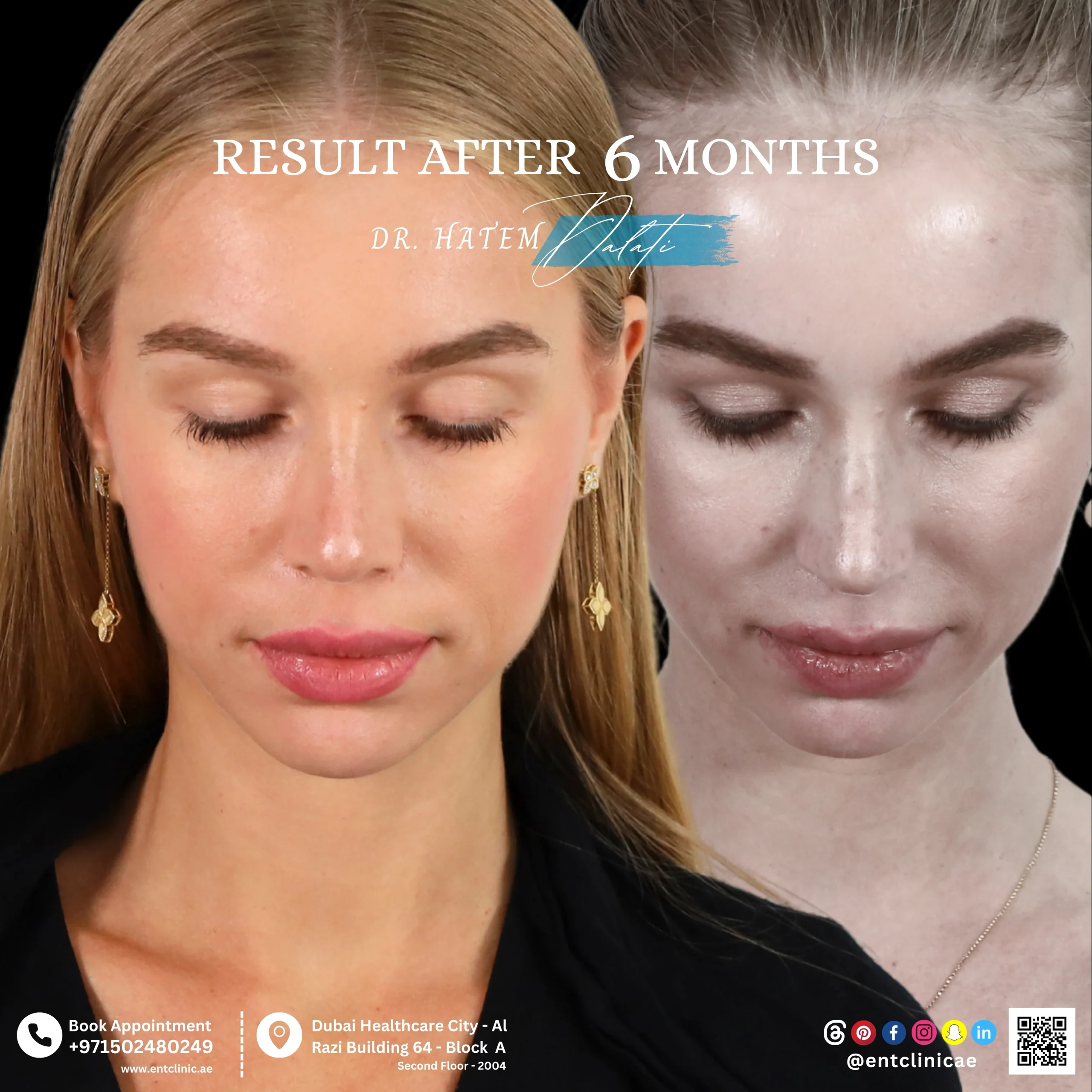
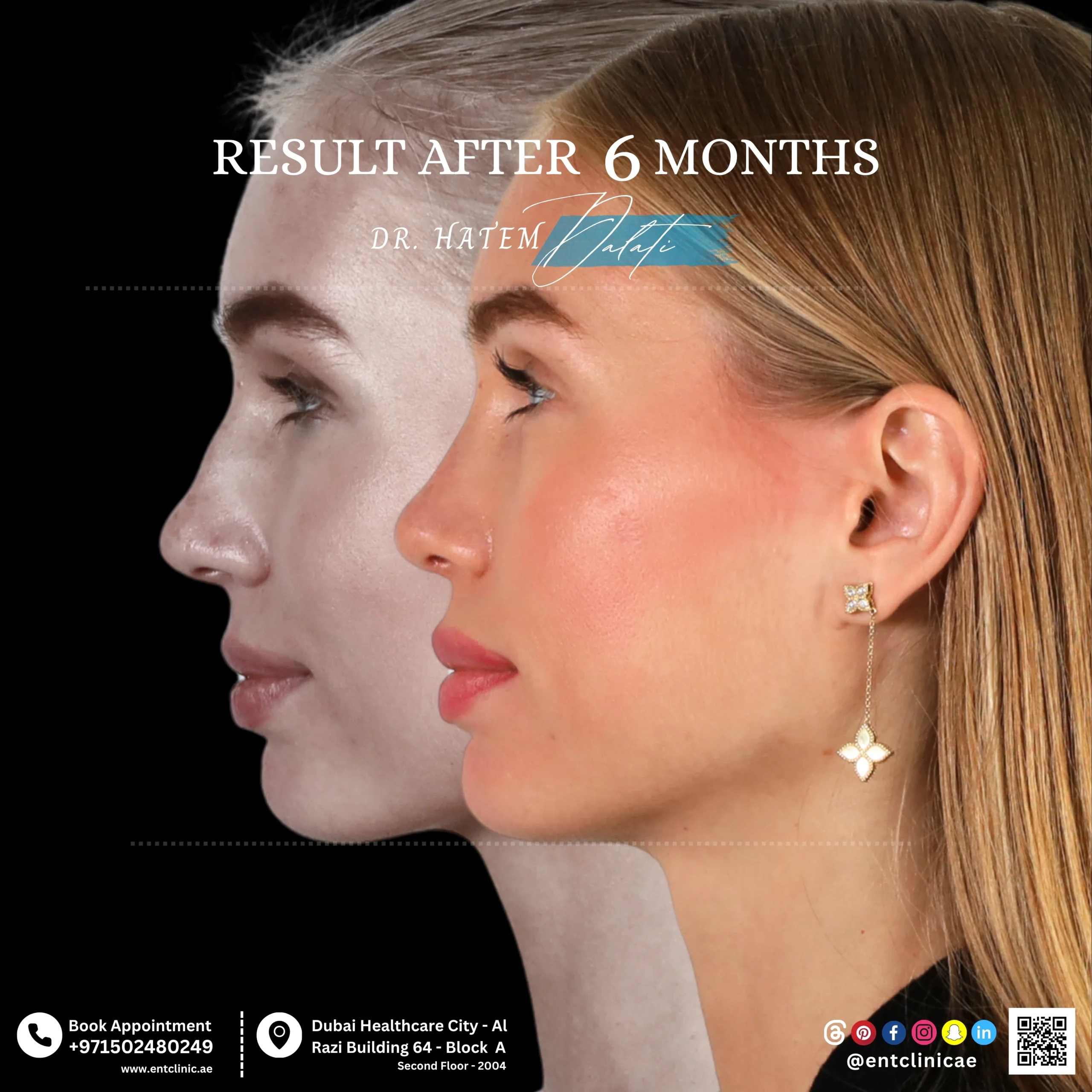
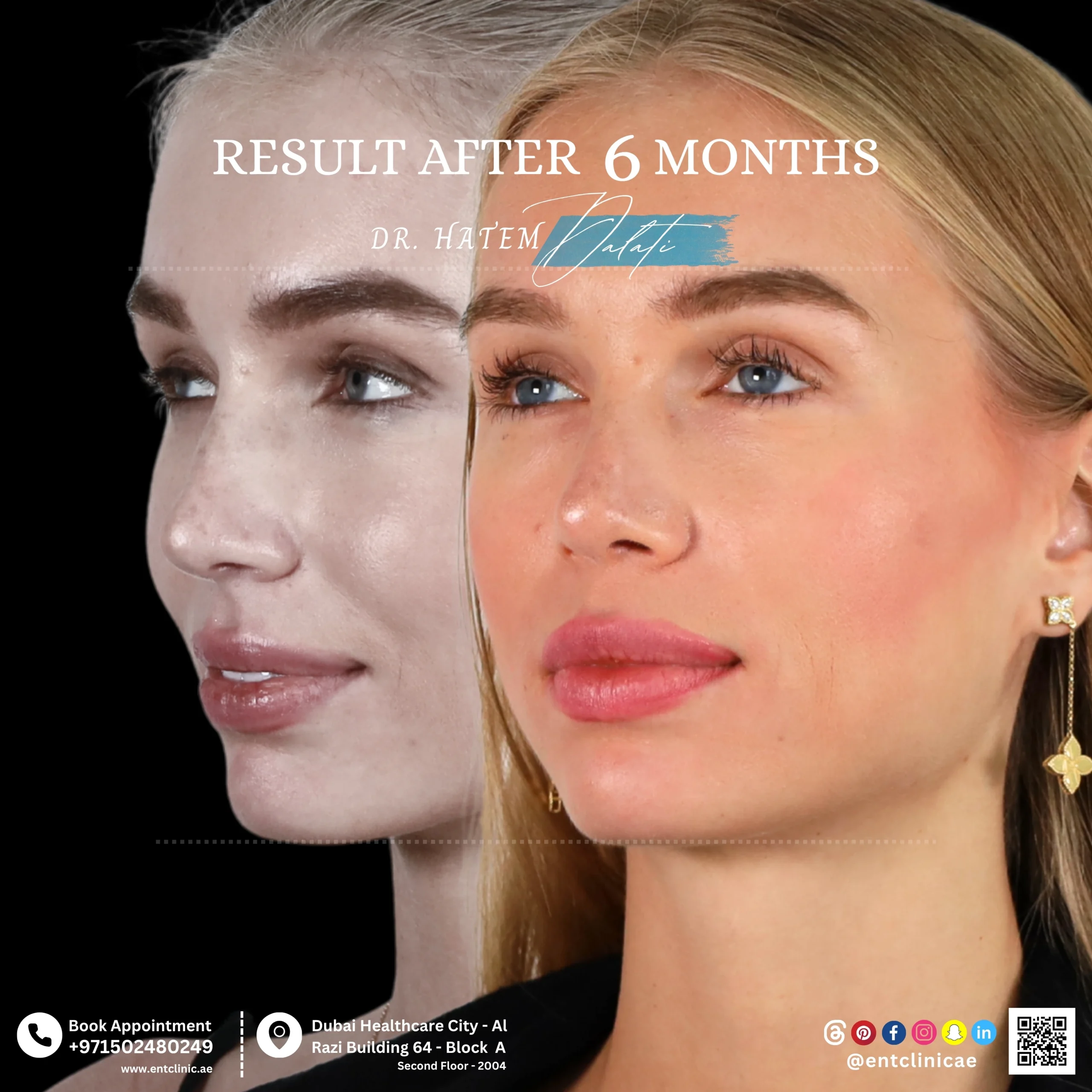
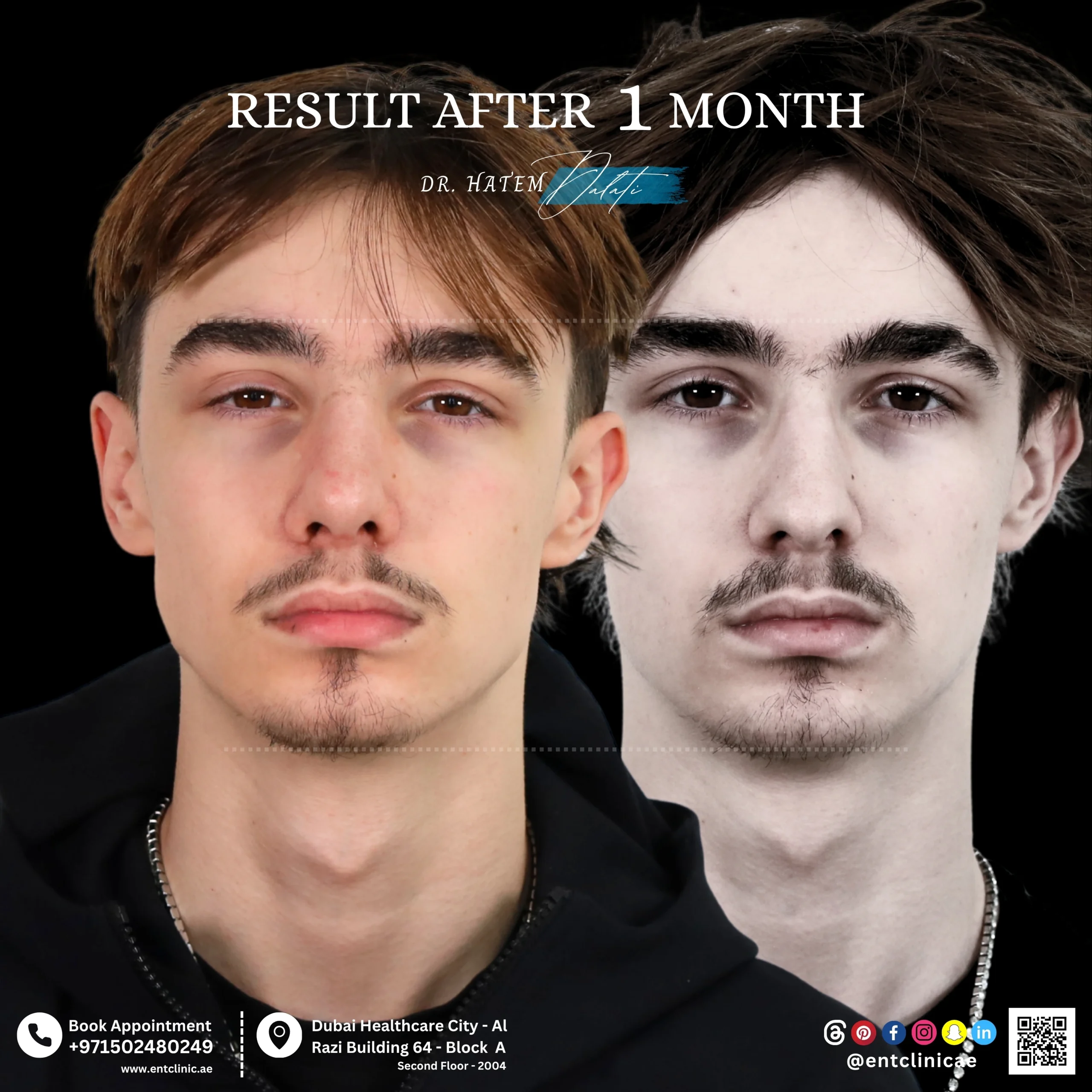
Every patient has a different starting point, anatomy, and aesthetic goal. These before-and-after examples demonstrate how rhinoplasty can be tailored to create natural-looking results that complement each individual face.
Patient 1 — Subtle Natural Refinement
Patient 2 — Rhinoplasty for Facial Harmony
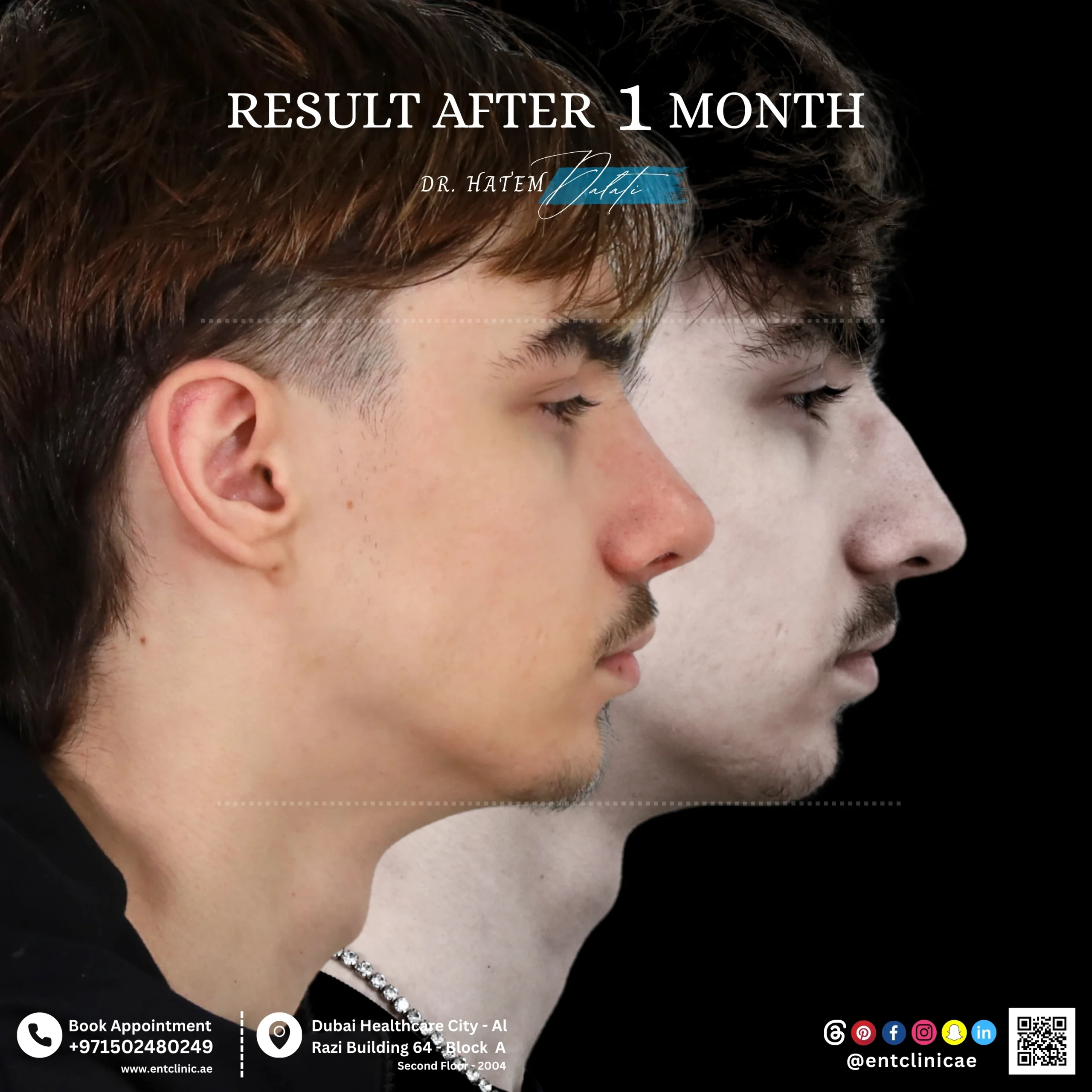
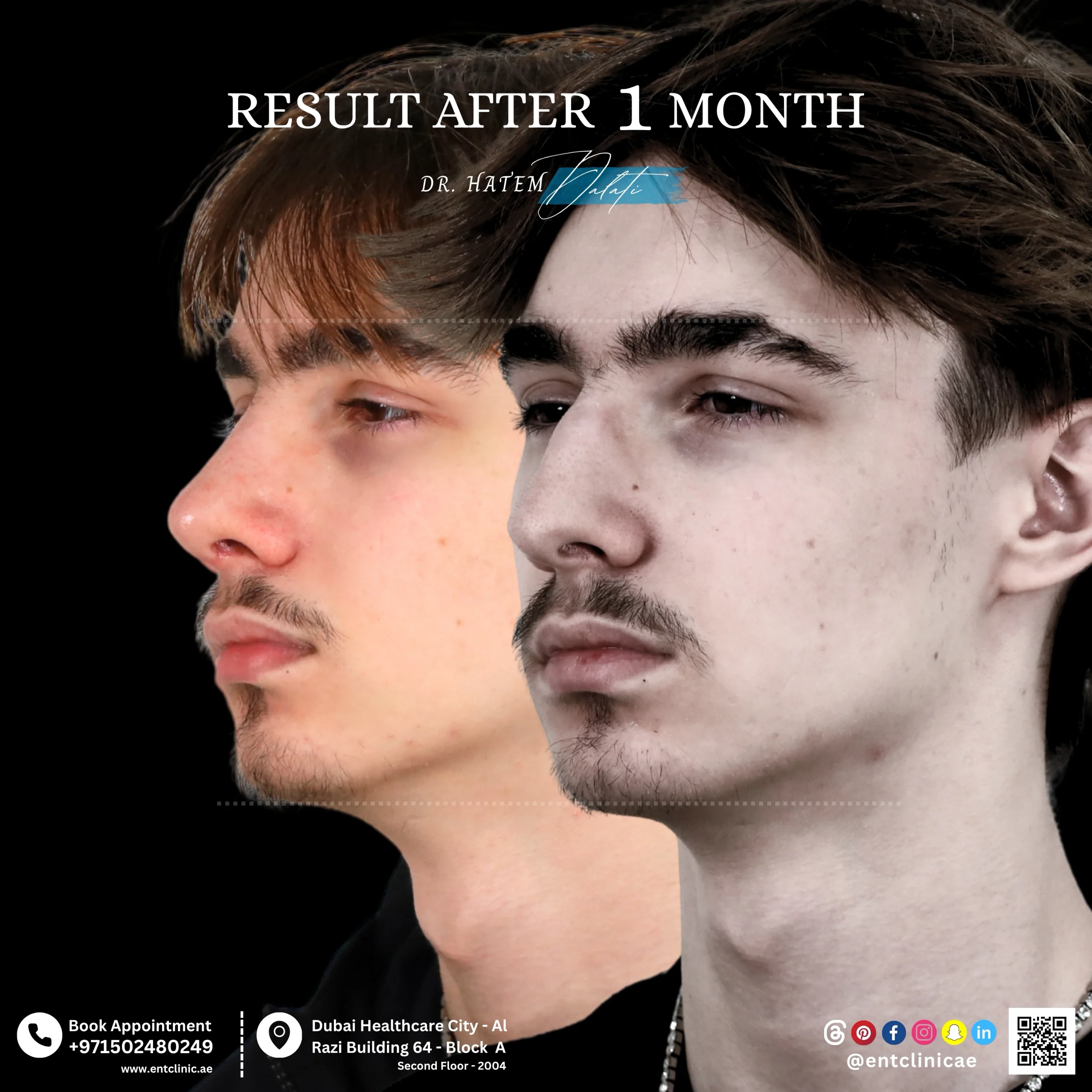
Patient 3 — Profile Refinement
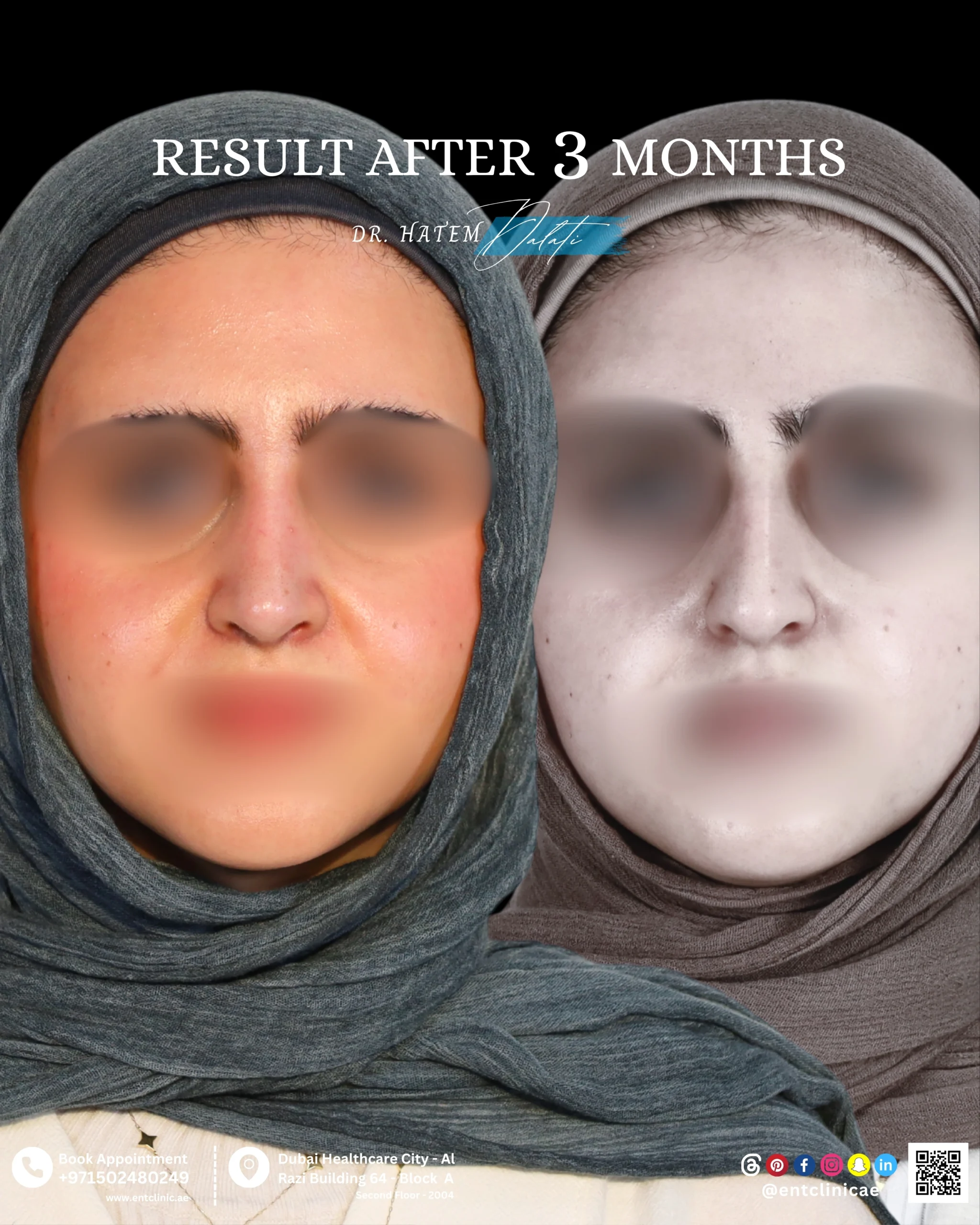
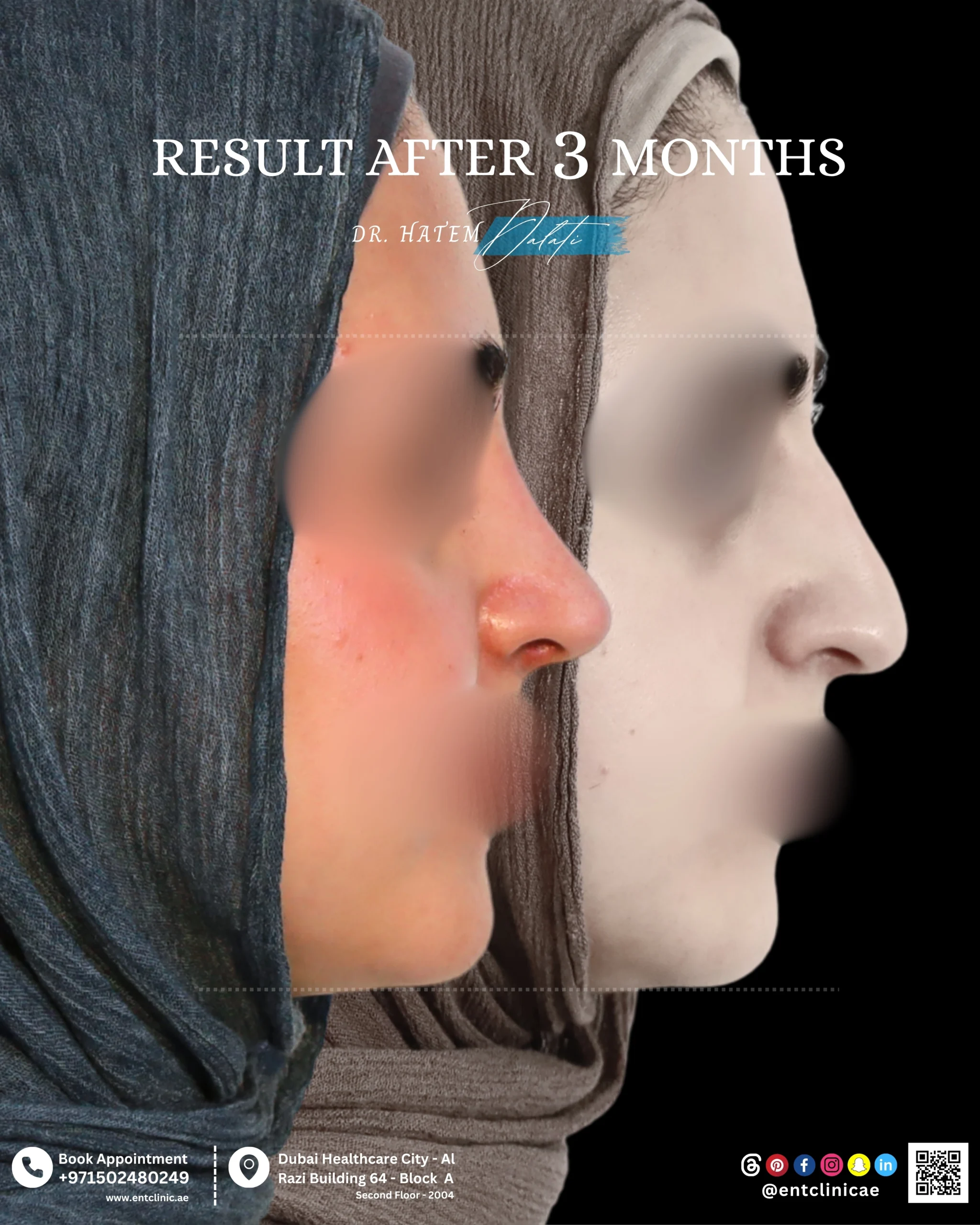
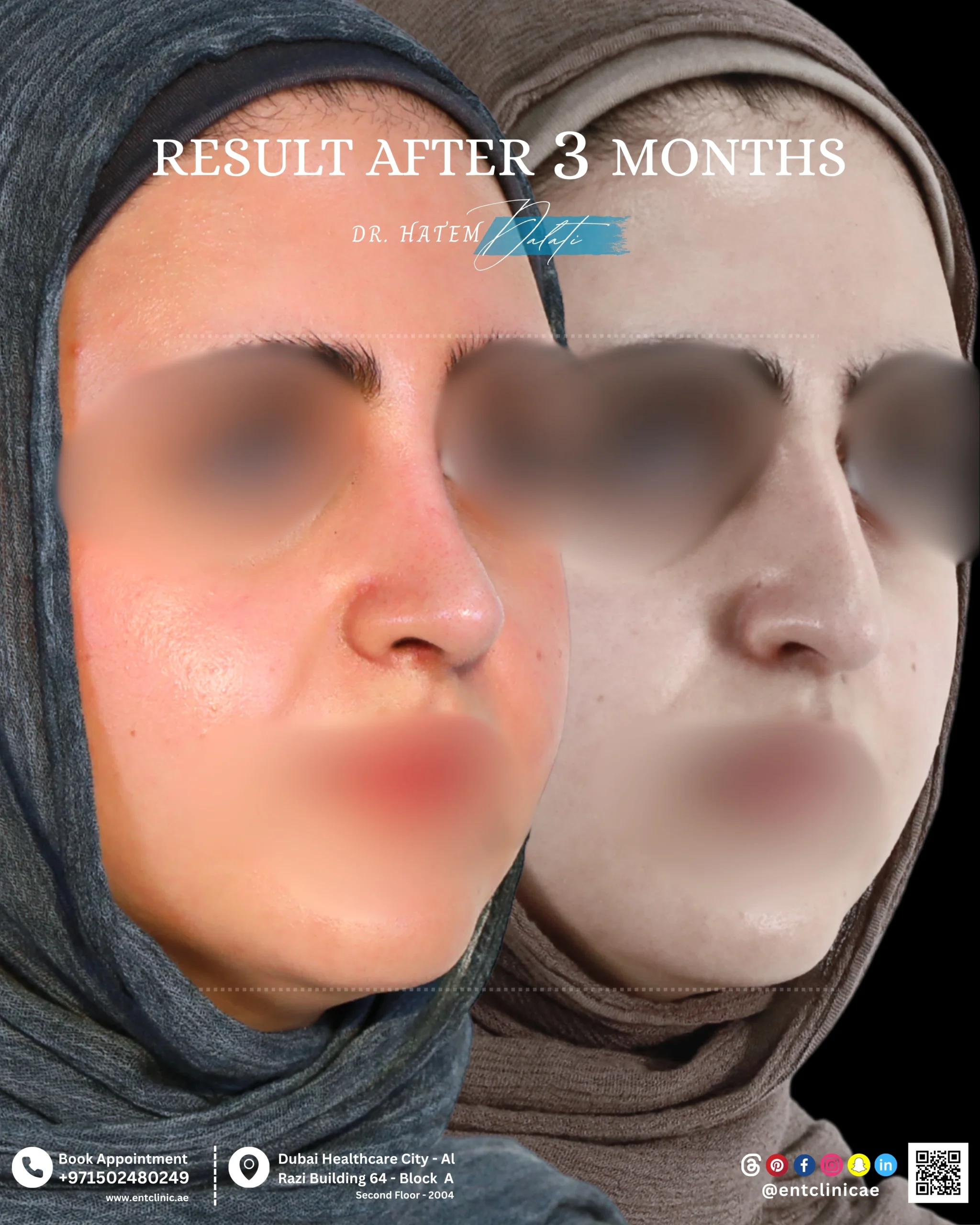
Patient 4 — Ethnic Rhinoplasty

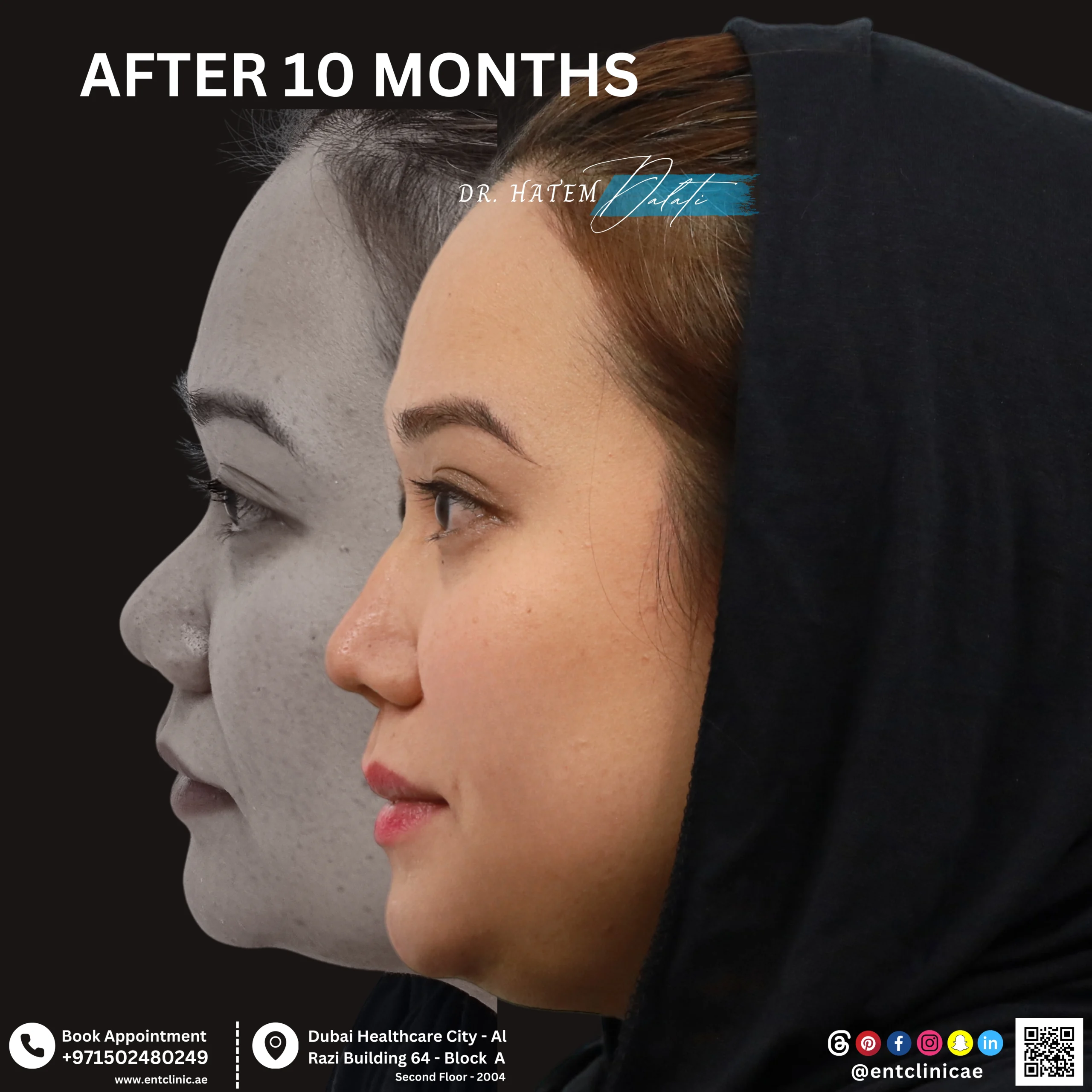
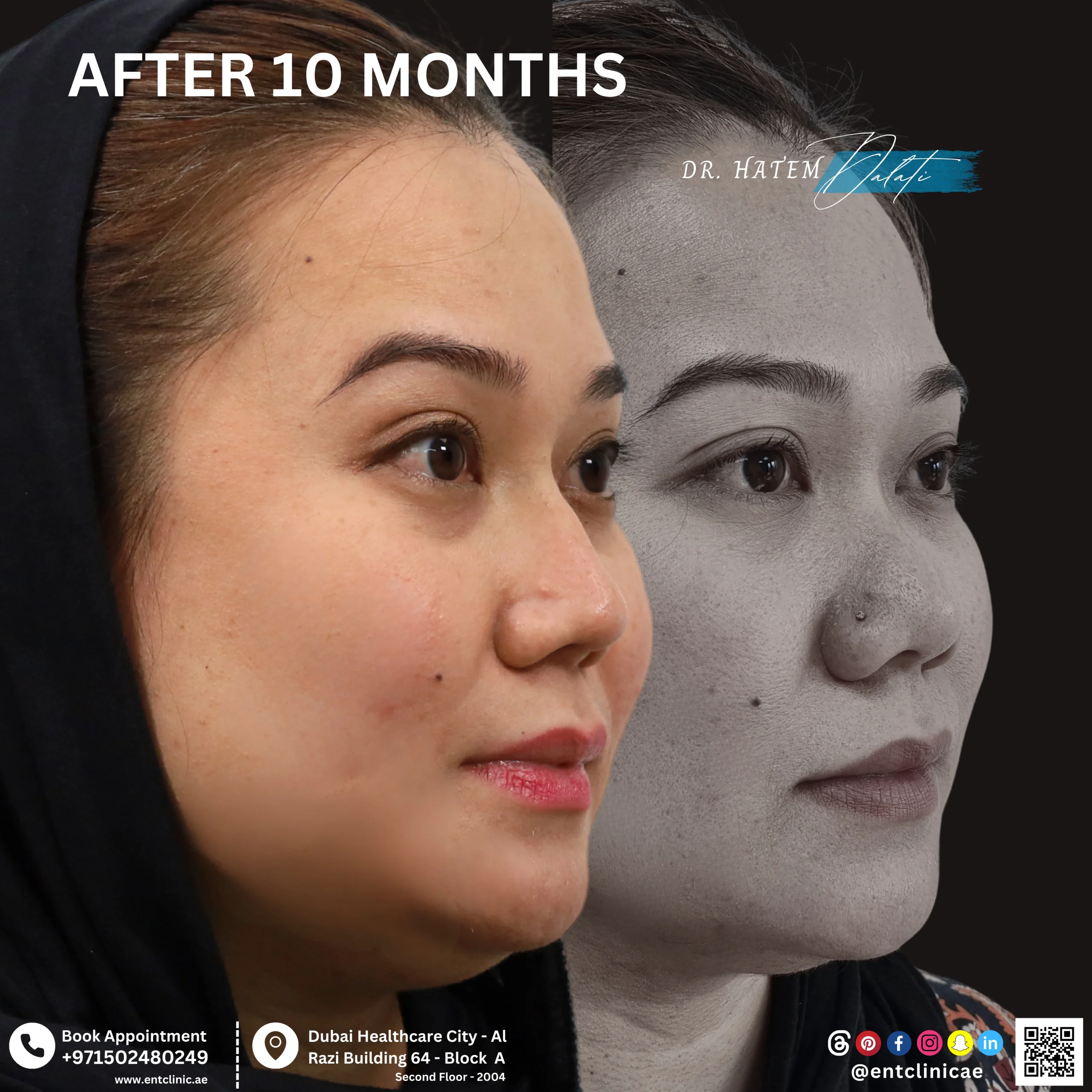
Patient 5 — Functional and Cosmetic Rhinoplasty
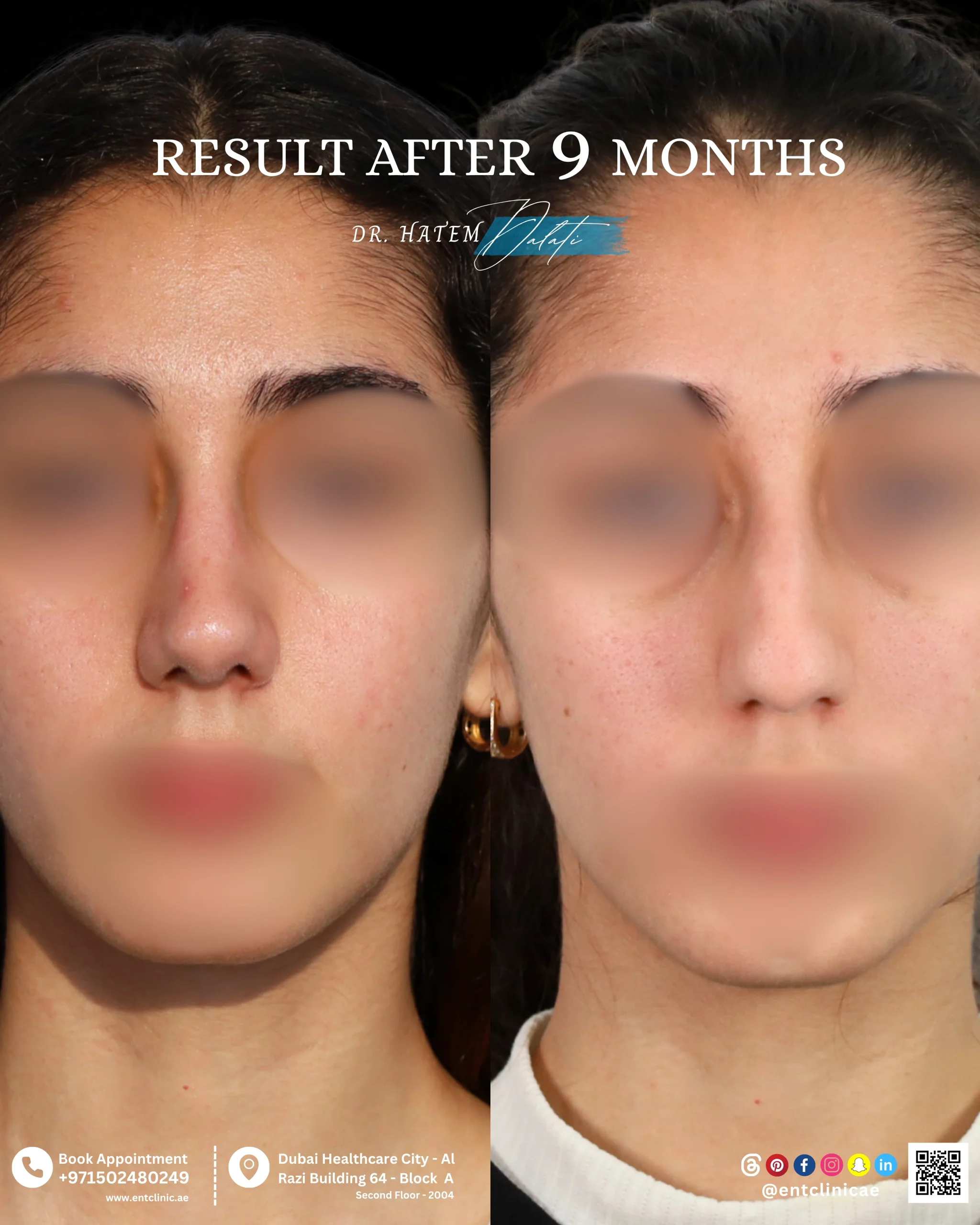
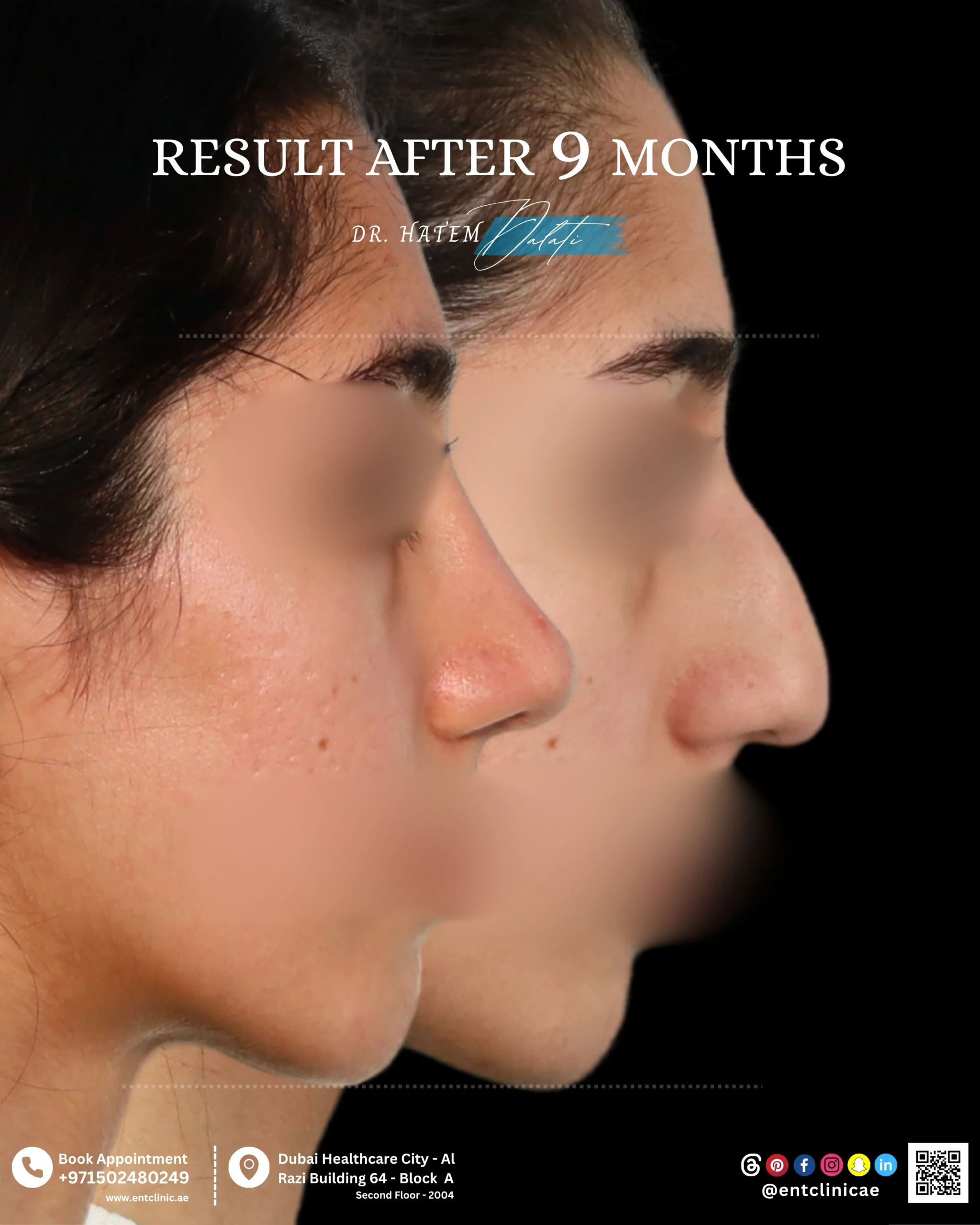
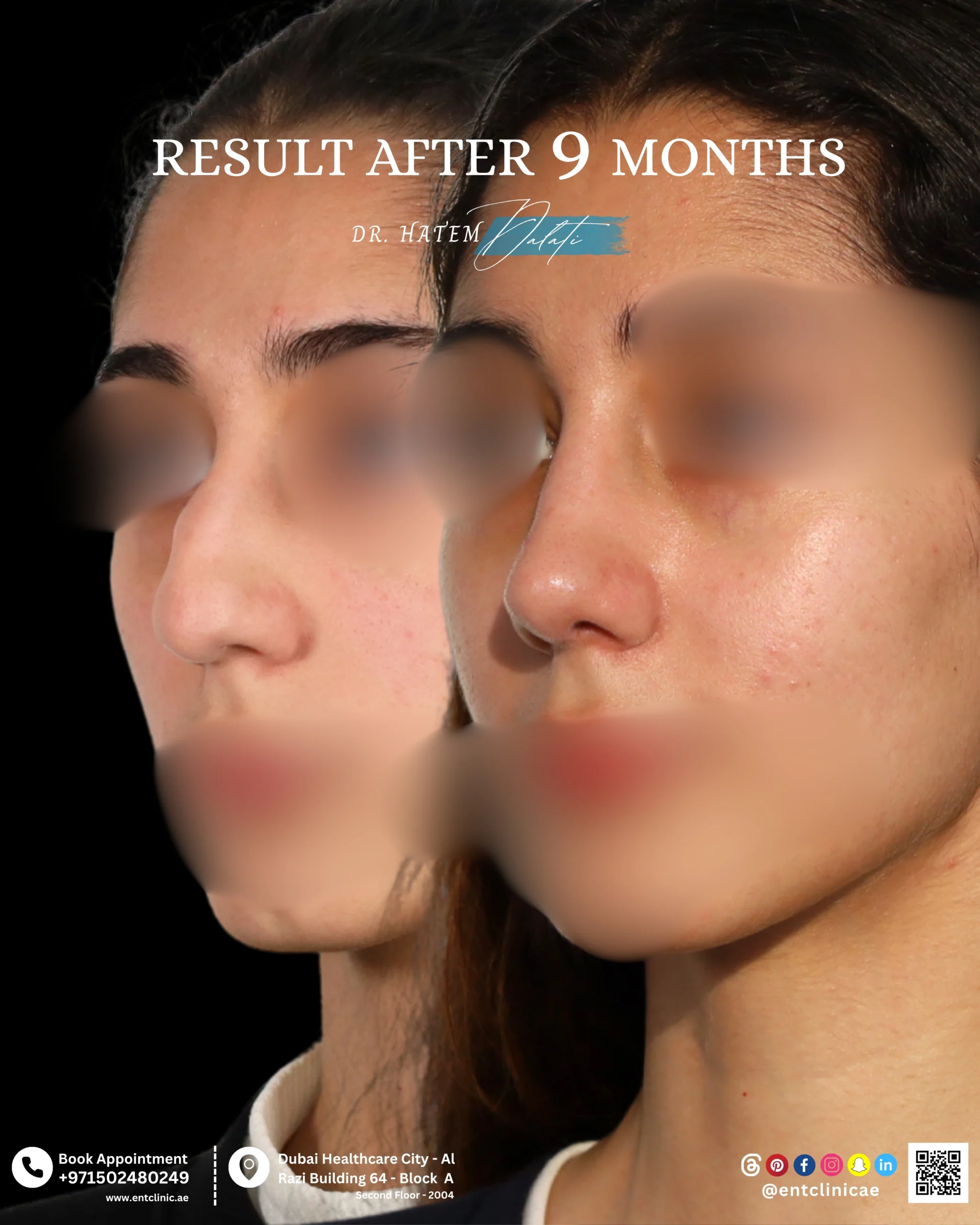
Patient 6 — Functional Rhinoplasty with Cosmetic Refinement
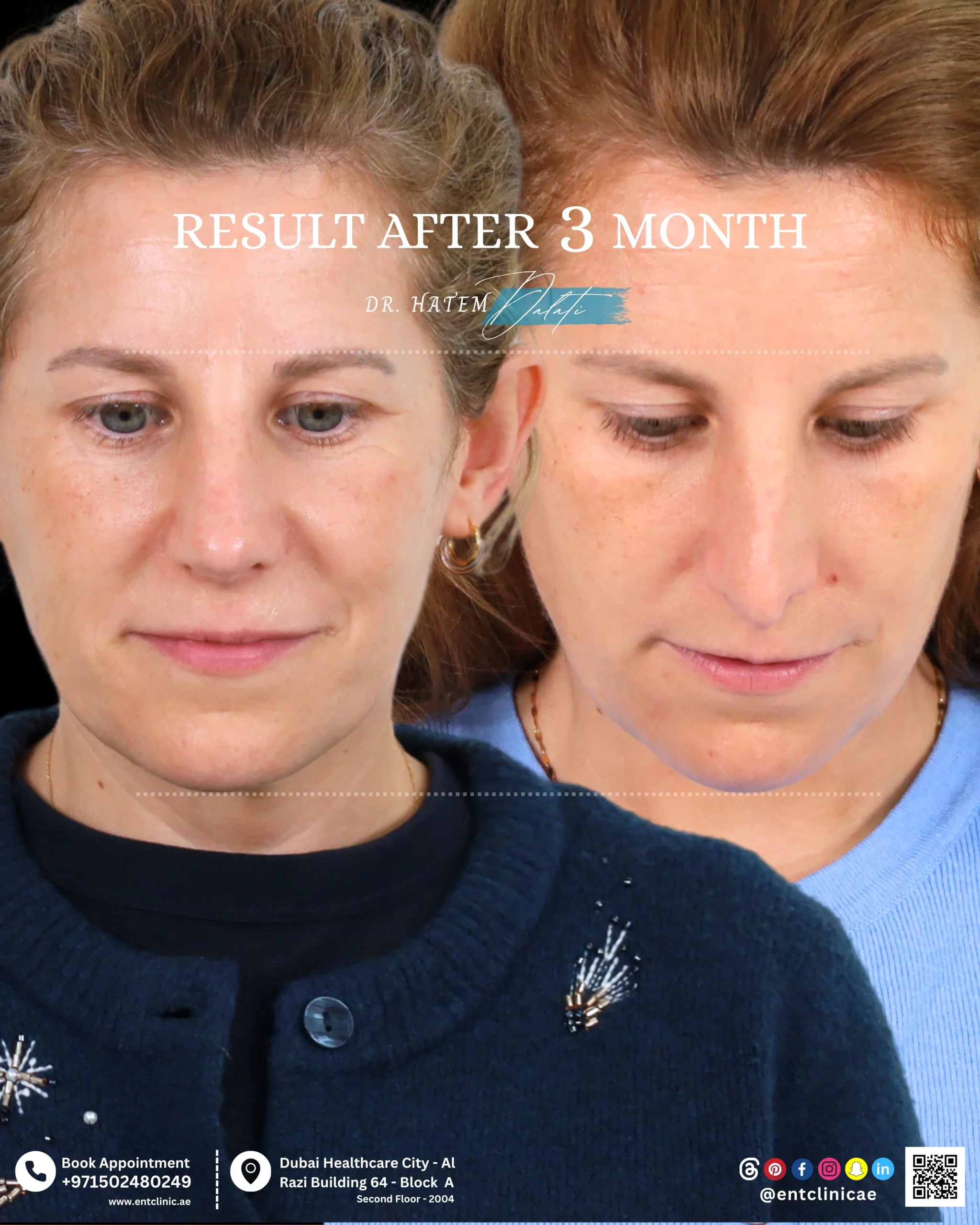
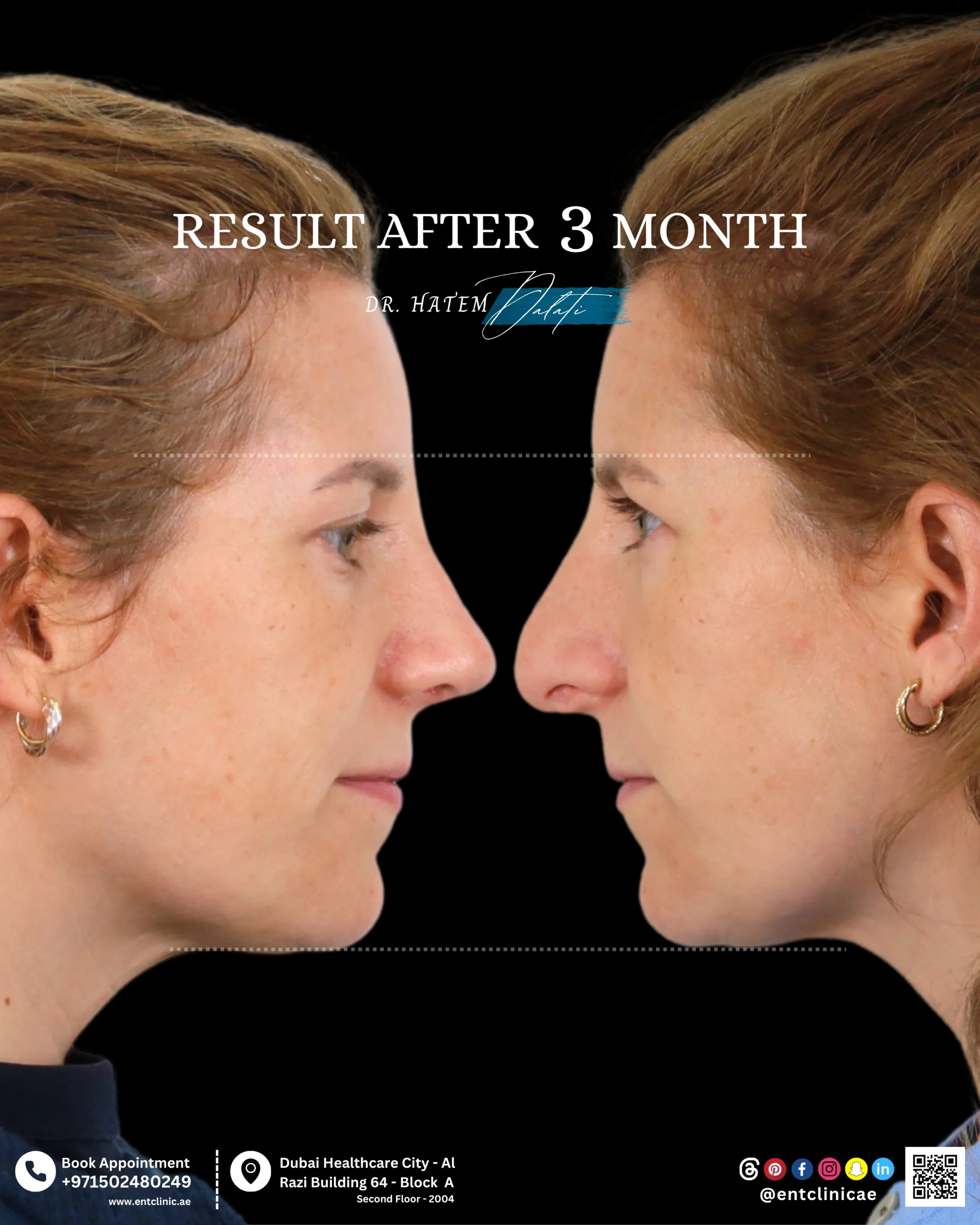
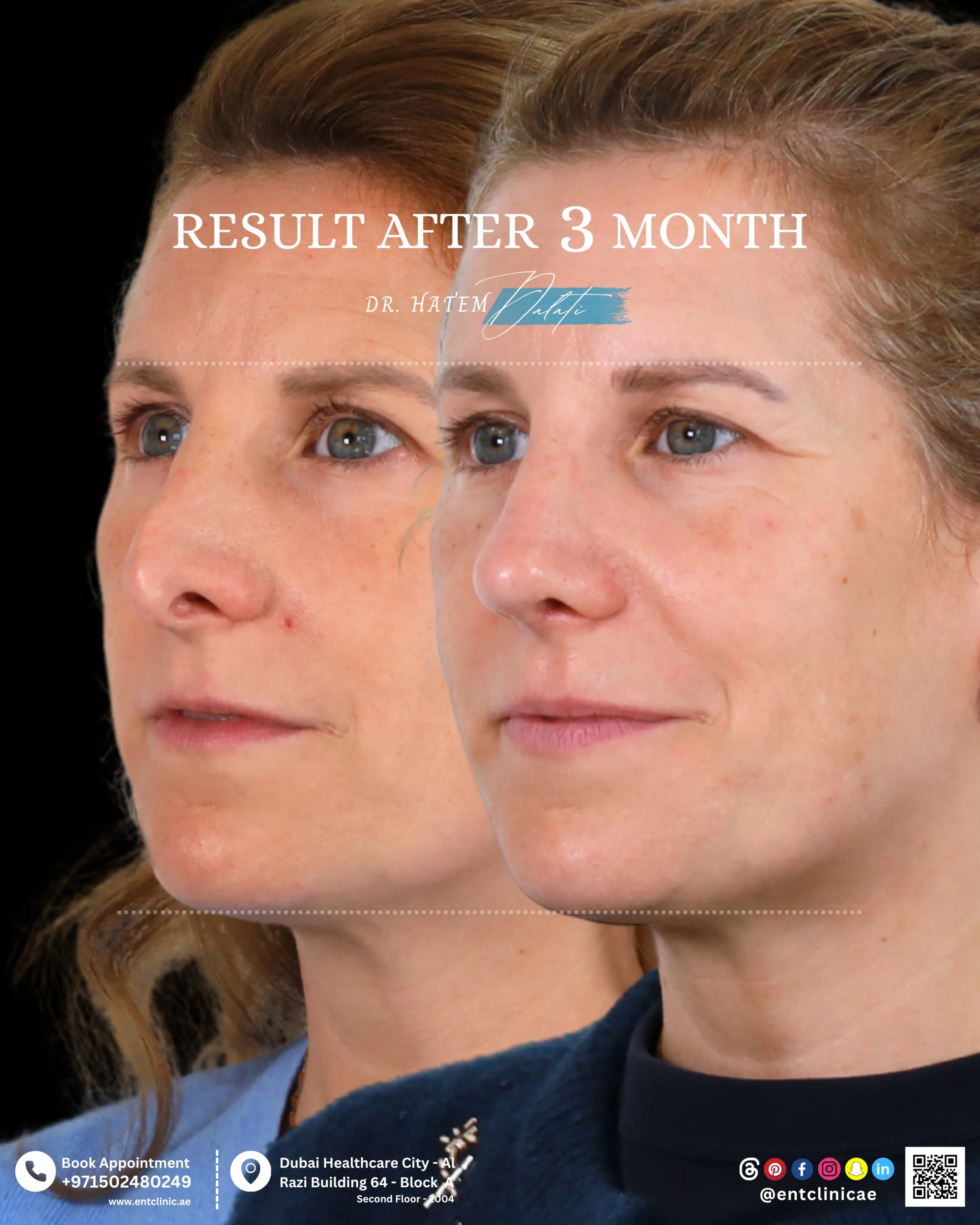
Before and 3 months after revision rhinoplasty, showing individualized nasal reshaping while addressing functional concerns.
Patient results are individual and may vary depending on anatomy, healing, previous surgery, and the surgical approach. Photographs are shared with patient consent for educational purposes and do not guarantee a specific result.
Why a Natural Result Can Be More Timeless Than a Trend
Beauty trends change. The preferred nose shape on social media today may not be the preferred aesthetic several years from now.
A personalized rhinoplasty is not about predicting the next trend. It is about creating a result that fits the patient’s face. The goal is a nose that does not dominate the face. Instead, it should integrate with the surrounding features. That is one reason facial harmony is more meaningful than following a specific trend. Nose job results can be long-lasting, although the nose naturally continues to change with aging.
A timeless approach therefore focuses on:
Proportion.
Structure.
Function.
Balance.
Individuality.
What Should You Ask During Your Rhinoplasty Consultation?
If you are considering a Barbie nose rhinoplasty or another trend-inspired shape, consider asking:
- Would this nose shape suit my facial proportions?
- How much can my nose realistically be reduced?
- Would changing the tip affect my nasal support?
- Do I have a deviated septum or breathing problem?
- Is my nasal valve contributing to obstruction?
- How does my skin thickness affect the expected result?
- Would I need cartilage grafts?
- What should be preserved rather than removed?
- What changes would look natural on my face?
- Can I see before-and-after examples of patients with similar anatomy?
These questions can help move the consultation away from simply copying a trend and toward understanding what is realistically achievable for you.
Frequently Asked Questions About Barbie Nose Rhinoplasty
Is the Barbie nose rhinoplasty suitable for everyone?
No. The characteristics associated with the Barbie nose may not be appropriate for every patient’s facial proportions, nasal anatomy, skin thickness, structural support, or breathing needs.
Is Barbie nose rhinoplasty the same as natural rhinoplasty?
Not necessarily. Barbie nose rhinoplasty describes a popular aesthetic style, while natural rhinoplasty focuses on creating a result that is harmonious with the individual patient’s face and anatomy. Some Barbie-inspired features may be incorporated into a natural result when appropriate.
Can I ask my surgeon for a Barbie nose?
Yes. You can bring photographs or explain the features you like. However, Dr. Hatem Dalati believes in natural, individualized rhinoplasty. He will assess whether the requested characteristics are suitable for your anatomy and facial proportions, rather than simply copying a reference nose. The goal is to create a balanced, natural-looking result that complements your face.
Can rhinoplasty make my nose smaller?
Rhinoplasty can change the size, width, projection, tip, bridge, and other features of the nose. However, the appropriate amount of reduction depends on your anatomy and facial balance. Making a nose as small as possible is not necessarily the goal.
Can Barbie nose rhinoplasty improve breathing?
Rhinoplasty may address certain structural problems that affect breathing, but a cosmetic trend should never be the reason to compromise the airway. Patients with nasal obstruction may require assessment of the septum, nasal valves, turbinates, and other structures.
Can I still have a natural-looking result if I want a refined nose?
Yes. A refined nose and a natural result are not opposites. The important question is whether the degree of refinement is appropriate for your facial proportions, anatomy, and goals.
The Bottom Line: Your Nose Should Suit Your Face—Not the Trend
The Barbie nose rhinoplasty may be an attractive aesthetic to some patients, and there is nothing wrong with being inspired by a particular style. But rhinoplasty should never be reduced to choosing a trending nose from social media.
Your ideal nose is not necessarily someone else’s nose. The best surgical plan considers your facial proportions, nasal anatomy, skin thickness, structural support, breathing, ethnicity, and personal goals.
The question should not simply be:
“Can I have a Barbie nose?”
A better question is:
“Which features of the nose I like can be adapted to create a natural, balanced result for my face?”
That is the difference between copying a trend and creating an individualized rhinoplasty result.
Ready to Explore the Right Rhinoplasty for You?
If you are considering a Barbie-inspired nose, natural rhinoplasty, functional rhinoplasty, or another type of nose reshaping, the first step is a personalized consultation.
At ENT Clinic of Excellence, Dr. Hatem Dalati evaluates your facial proportions, nasal anatomy, breathing, structural support, and aesthetic goals to develop a treatment plan tailored to you.
 Visit Us:
ENT Clinic of Excellence
Building 64 – Block A, 2nd Floor – 2004
Umm Hurair 2, Dubai Healthcare City, Dubai
 WhatsApp: +971 50 248 0249
 Website: entclinic.ae
 Instagram: @entclinicae
 TikTok: @entclinic.ae
Your nose does not need to follow a trend. It should complement your face, your identity, and your goals.
Book your consultation with Dr. Hatem Dalati and discover what rhinoplasty approach may be right for you