What Are Tonsil Stones and How to Safely Get Rid of Them?
Tonsil stones are small, hardened deposits that form inside the natural pockets and folds of the tonsils. They can cause symptoms such as bad breath, a bad taste, throat irritation, or the feeling that something is stuck in the throat. Some tonsil stones are occasional and may come out on their own. However, if you keep getting tonsil stones, they may be related to the structure of the tonsils, particularly deeper tonsillar crypts.
At ENT Clinic of Excellence in Dubai Healthcare City, Dr. Hatem Dalati, ENT Consultant & Rhinoplasty Surgeon, evaluates patients with recurrent or troublesome tonsil stones and discusses treatment options based on their symptoms and examination.
This guide explains what tonsil stones are, how they form, their symptoms, treatment options, prevention, and when an ENT assessment may be appropriate.
What Are Tonsil Stones?
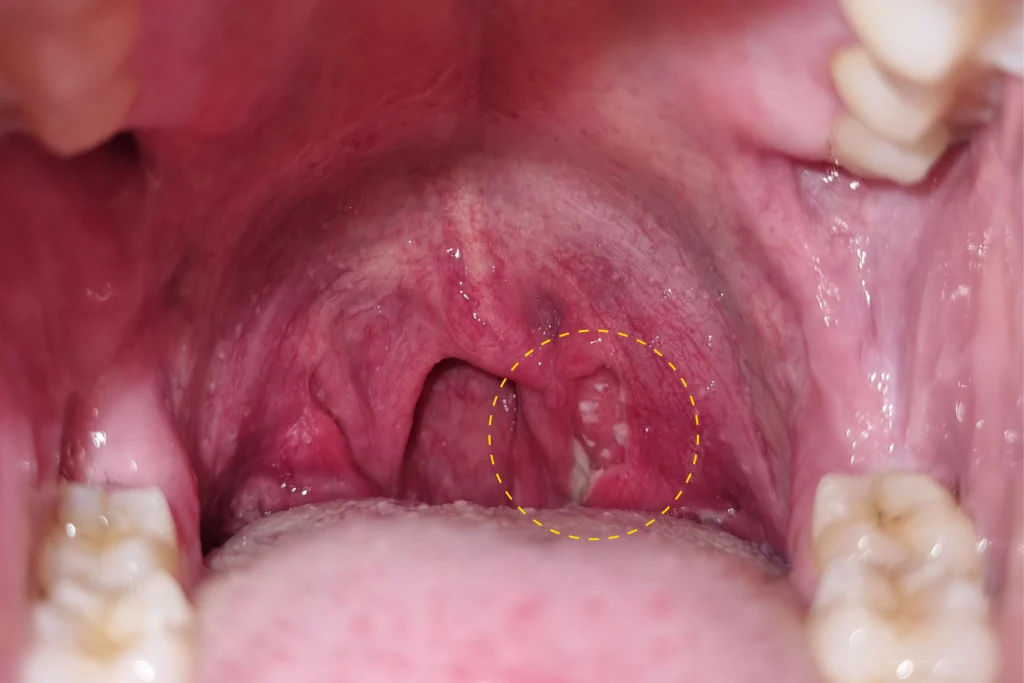
Tonsil stones, medically known as tonsilloliths, are small white or yellowish deposits that develop within the tonsils. The tonsils are pads of lymphoid tissue located at the back of the throat. Their surface naturally contains small folds, pits and pockets called tonsillar crypts.
These crypts can trap:
- Food particles
- Dead cells
- Mucus
- Bacteria
- Other debris
Over time, the trapped material can harden and form a tonsil stone. Some stones are very small and may not cause any symptoms. Others may become more noticeable or occur repeatedly, particularly when the tonsils have deeper or enlarged crypts.
According to Mayo Clinic, tonsil stones develop when material becomes trapped in the tonsillar crevices and hardens over time.
How Do Tonsil Stones Form?
Tonsil stones form when material becomes trapped in the tonsillar crypts and gradually hardens. The structure of the tonsils is one reason some people are more prone to them. Deep or enlarged tonsillar crypts provide spaces where debris can collect.
Factors associated with tonsil stones may include:
- Deep or enlarged tonsillar crypts
- Recurrent tonsillitis or tonsil inflammation
- Accumulation of bacteria and debris
- Dry mouth or dehydration
- Previous inflammation of the tonsils
This means that a person can develop tonsil stones even with good oral hygiene. Good oral hygiene can help reduce bacteria and debris in the mouth, but it cannot change the underlying structure of the tonsillar crypts.
Why Do I Keep Getting Tonsil Stones?
If tonsil stones keep returning, the reason may be that the tonsillar crypts where the stones form are still present.
For example:
Tonsillar crypt → debris becomes trapped → material hardens → tonsil stone forms → stone is removed → crypt remains
Removing an individual stone therefore does not necessarily prevent another stone from developing.
Occasional tonsil stones may not require medical treatment. However, recurrent stones that cause persistent bad breath, throat discomfort or repeated attempts at removal may warrant an ENT assessment.
What Are the Symptoms of Tonsil Stones?
Some people have tonsil stones without experiencing any symptoms. The stones may only be noticed when looking at the tonsils or during a throat examination.
When symptoms occur, they may include:
- Bad breath (halitosis)
- A feeling that something is stuck in the throat
- Bad taste in the mouth
- Throat irritation or discomfort
- Discomfort when swallowing
- Irritating cough
- Earache or referred ear pain
- Visible white or yellow spots on the tonsils
The symptoms can vary depending on the size and location of the stone.
Tonsil Stones and Bad Breath
One of the most common concerns associated with tonsil stones is persistent bad breath. Tonsil stones can contain bacteria and trapped organic material. Bacterial activity can contribute to unpleasant-smelling compounds, which may cause or worsen bad breath.
If bad breath continues despite good oral hygiene, an ENT assessment can help determine whether tonsil stones or another condition may be contributing.
Are Tonsil Stones Dangerous?
Most tonsil stones are harmless. They are generally considered more of a nuisance than a serious health problem. Small tonsil stones may cause no symptoms and can sometimes fall out naturally.
However, larger or recurrent stones may cause:
- Persistent bad breath
- Throat irritation
- A foreign-body sensation
- Swallowing discomfort
- Recurrent throat symptoms
- Ongoing concern about removing the stones
Very large tonsil stones are rare. In unusual cases, a large tonsillolith can appear as a mass or swelling in the tonsil area and may resemble another condition. A 2026 case report described a large tonsillolith that initially mimicked a peritonsillar abscess before CT imaging identified the calcified mass. Read the 2026 case report on PubMed
If the tonsils are very red, bleed easily, become significantly swollen, or are associated with persistent pain or recurrent sore throats, an ENT evaluation is appropriate.
How Do You Get Rid of Tonsil Stones?
The appropriate approach depends on the size of the stones, how often they occur and whether they are causing symptoms.
1. Gargling With Salt Water
Gargling with warm salt water may help loosen small tonsil stones and clear some debris from the mouth and throat.
It may also provide temporary relief from throat irritation.
2. Gentle Removal
Some small, visible tonsil stones may come out naturally or can sometimes be gently dislodged.
However, forceful pressure should be avoided. Aggressive manipulation can injure the tonsils and cause bleeding.
Avoid using sharp objects or instruments to dig into the tonsils.
3. Gentle Irrigation
Some people use a low-pressure water irrigator to help dislodge tonsil stones.
If an irrigator is used, it should be operated gently and according to the manufacturer’s instructions. Excessive pressure may cause pain, irritation or bleeding.
If a stone is difficult to remove, repeatedly trying to force it out may cause more irritation.
4. Professional Removal
An ENT specialist can examine the tonsils and determine whether a troublesome stone can be removed safely.
Professional assessment is particularly useful when tonsil stones are:
- Recurrent
- Large
- Difficult to remove
- Associated with persistent bad breath
- Associated with throat discomfort
- Affecting quality of life
Mayo Clinic also notes that gentle self-care measures may help with tonsil stones, while persistent problems may require medical evaluation.
Can Tonsil Stones Go Away on Their Own?
Yes. Some tonsil stones can fall out on their own. Small stones may loosen naturally when a person swallows, coughs or gargles.
If a tonsil stone is not causing symptoms, treatment may not be necessary.
However, when a person has deeper tonsillar crypts, the tendency to form stones may continue even after an individual stone disappears.
Can You Prevent Tonsil Stones?
It may not be possible to completely prevent tonsil stones, particularly when a person has deep tonsillar crypts.
However, good oral hygiene can help reduce the amount of bacteria and debris that may contribute to stone formation.
Helpful habits include:
- Brush your teeth twice a day.
- Clean between your teeth regularly.
- Gently clean your tongue.
- Stay adequately hydrated.
- Gargle with salt water when appropriate.
- Avoid smoking.
- Maintain regular dental check-ups.
These measures may help reduce the factors that contribute to tonsil stones, but they cannot guarantee that stones will not return.
Does Cleaning Tonsil Stones Stop Them From Coming Back?
Not necessarily. Removing a visible tonsil stone addresses the individual stone, but it does not necessarily eliminate the tonsillar crypt where the material collected. This is why some people find themselves repeatedly cleaning or removing tonsil stones.
If the stones continue to return and cause significant symptoms, it may be more useful to have the tonsils assessed rather than repeatedly attempting to remove individual stones.
Dr. Hatem Dalati’s Approach to Recurrent Tonsil Stones
At ENT Clinic of Excellence in Dubai Healthcare City, Dr. Hatem Dalati, ENT Consultant & Rhinoplasty Surgeon, evaluates patients with recurrent tonsil stones based on their symptoms, medical history and tonsil examination.
For selected patients with recurrent and troublesome tonsil stones, he may recommend discussing a more definitive surgical option, such as intracapsular Coblation tonsillectomy, when clinically appropriate.
The aim is not simply to keep removing individual stones but to address the tonsillar tissue involved in the recurrent problem. The decision for surgery is individualized. Not every patient with tonsil stones needs a tonsillectomy.
Learn more: Coblation Surgery in Dubai: Tonsillectomy, Adenoidectomy & More
What Is Intracapsular Coblation Tonsillectomy?
Intracapsular Coblation tonsillectomy is a surgical technique that removes most of the tonsillar tissue while preserving the tonsil capsule. Coblation uses controlled radiofrequency energy and saline to remove tissue.
For appropriately selected patients with recurrent, troublesome tonsil problems, intracapsular Coblation may be discussed as a surgical treatment option. The suitability of this procedure depends on the patient’s symptoms, tonsil anatomy, medical history and the surgeon’s clinical assessment.
Do Tonsil Stones Require Tonsillectomy?
Not always. Occasional tonsil stones may not require surgery and can often be managed with good oral hygiene, gargling and other conservative measures. However, recurrent and troublesome tonsil stones are different from occasional stones.
If stones continue to develop despite conservative measures or significantly affect a person’s quality of life, Dr. Hatem Dalati can assess the tonsils and discuss whether a more definitive treatment, such as intracapsular Coblation tonsillectomy, may be appropriate.
The decision depends on factors such as:
- Frequency of the tonsil stones
- Severity of symptoms
- Persistent bad breath
- Tonsil anatomy
- Recurrent throat symptoms
- Response to conservative measures
- Overall impact on quality of life
When Should You See an ENT for Tonsil Stones?
Consider seeing an ENT specialist if you keep getting tonsil stones, especially when they cause persistent or troublesome symptoms.
An ENT assessment may be appropriate if:
- You frequently develop tonsil stones.
- The stones cause persistent bad breath (halitosis).
- You repeatedly need to remove or clean the stones.
- The stones are large or difficult to remove.
- You have persistent throat discomfort or irritation.
- You experience difficulty or discomfort when swallowing.
- You have recurrent tonsillitis or sore throats.
- Tonsil stones are affecting your quality of life.
- You want to discuss longer-term treatment options.
An ENT examination can assess the tonsils and determine whether their structure, including deep tonsillar crypts, may be contributing to recurrent stones.
At ENT Clinic of Excellence, Dubai Healthcare City, Dr. Hatem Dalati can assess patients with recurrent or symptomatic tonsil stones and discuss appropriate treatment options.
Frequently Asked Questions About Tonsil Stones
Are tonsil stones contagious?
No. Tonsil stones themselves are not contagious and cannot be passed from one person to another.
Can you swallow a tonsil stone?
Yes. Accidentally swallowing a tonsil stone is generally not harmful. Some stones can naturally loosen and be swallowed without a person noticing.
Can tonsil stones come back after removal?
Yes. Removing an individual stone does not necessarily prevent another from forming, particularly when deeper tonsillar crypts remain.
Can tonsil stones cause ear pain?
They can sometimes cause referred ear pain because structures in the throat and ear share nerve pathways. Persistent or significant ear pain should be evaluated to rule out other causes.
Do tonsil stones require any tests?
Usually, no special tests are needed to diagnose straightforward tonsil stones. An ENT specialist can often identify them by examining the tonsils and the back of the throat. Occasionally, tonsil stones may be noticed on imaging performed for another reason. Additional imaging is generally not necessary when the diagnosis is clear from examination.
Can antibiotics get rid of tonsil stones?
Antibiotics do not remove tonsil stones or eliminate the tonsillar crypts where they form. They may be prescribed when a bacterial infection is present, but they are not a long-term treatment for recurrent tonsil stones themselves.
Can tonsil stones be permanently prevented?
There is no guarantee that oral hygiene alone can prevent tonsil stones. People with deeper tonsillar crypts may continue to develop stones despite good oral hygiene. For recurrent and troublesome cases, an ENT specialist can discuss appropriate treatment options.
What happens if I keep removing my tonsil stones?
Repeated removal may provide temporary relief, but another stone can form if the underlying tonsillar crypt remains. If you frequently need to remove tonsil stones, an ENT assessment can help determine whether a longer-term treatment approach should be considered.
Conclusion: What Is the Best Way to Get Rid of Recurrent Tonsil Stones?
Occasional tonsil stones may come out on their own or improve with good oral hygiene and simple measures.
However, if you keep getting tonsil stones, repeatedly removing them may only provide temporary relief because the tonsillar crypts where they form remain.
For patients with recurrent and troublesome tonsil stones, Dr. Hatem Dalati may discuss intracapsular Coblation tonsillectomy as a more definitive treatment option when appropriate.
If tonsil stones are causing persistent bad breath, throat discomfort or repeated problems with removal, an ENT consultation can help determine the cause and identify the most appropriate treatment for your individual case.
Looking for Treatment for Recurrent Tonsil Stones in Dubai?
If you frequently develop tonsil stones, experience persistent bad breath, or find yourself repeatedly cleaning or removing stones, an ENT assessment can help identify the underlying cause and discuss appropriate treatment options.
At ENT Clinic of Excellence in Dubai Healthcare City, Dr. Hatem Dalati, ENT Consultant & Rhinoplasty Surgeon, evaluates patients with recurrent tonsil stones and can discuss whether intracapsular Coblation tonsillectomy may be suitable based on the individual case.
📍 ENT Clinic of Excellence
Second Building 64 – Block A, 2nd Floor – Unit 2004
Umm Hurair 2 – Dubai Healthcare City, Dubai
📱 Book a consultation via WhatsApp: +971 50 248 0249
🌐 Website: entclinic.ae
Stay connected for more ENT & Rhinoplasty Tips:
Instagram | TikTok