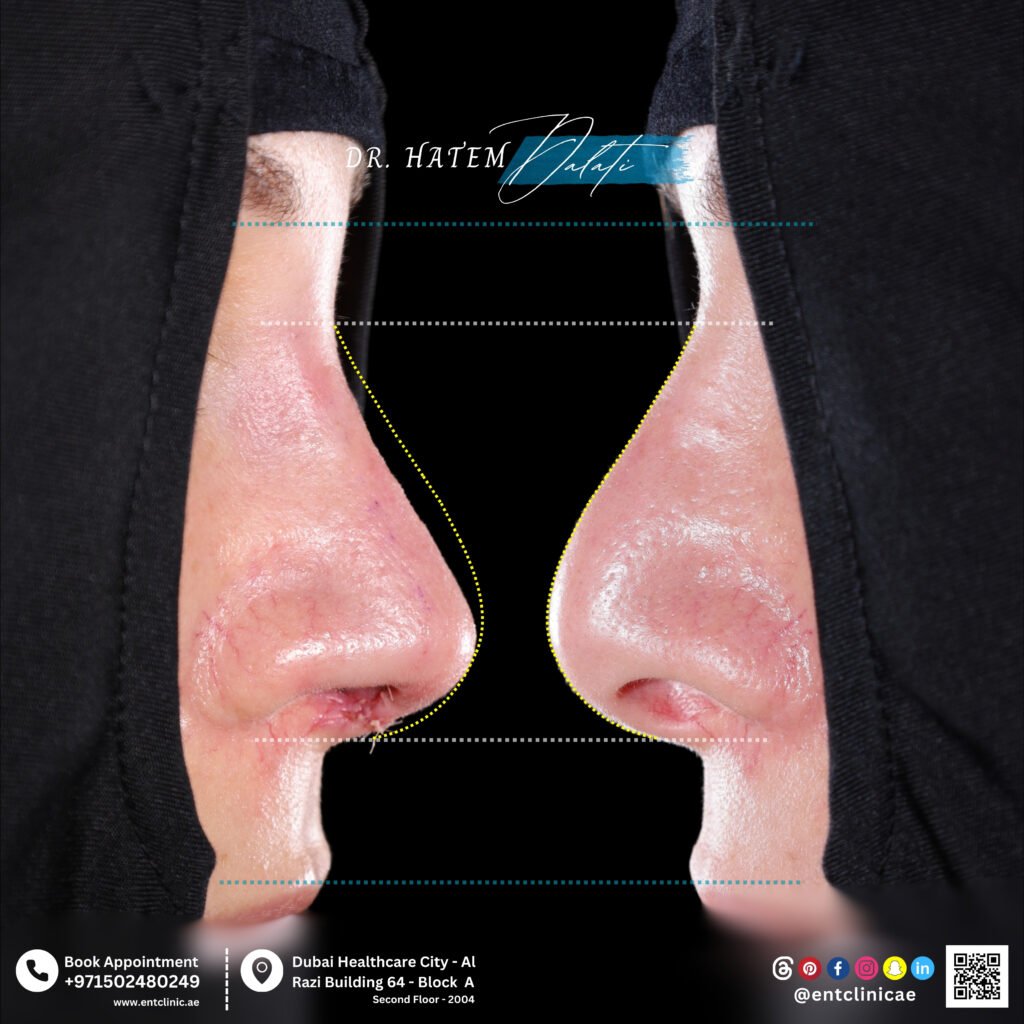
Polybeak Deformity After Rhinoplasty in Dubai: Causes & Correction
Polybeak deformity after rhinoplasty is a postoperative nasal contour abnormality in which excessive fullness in the supratip area creates a convex, “beak-like” appearance. This often becomes noticeable months after surgery and is commonly associated with excessive columella show and lower lateral cartilage collapse, affecting both nasal aesthetics and tip support. According to a peer-reviewed review published in the European Review for Medical and Pharmacological Sciences, pollybeak deformity may result from factors such as inadequate recognition of the tip‑supratip relationship during surgery, residual supratip tissue, or postoperative scar formation (PubMed). In Dubai, patients seeking revision rhinoplasty for this condition require expert evaluation to restore nasal balance, correct tip support, and achieve harmonious facial proportions.
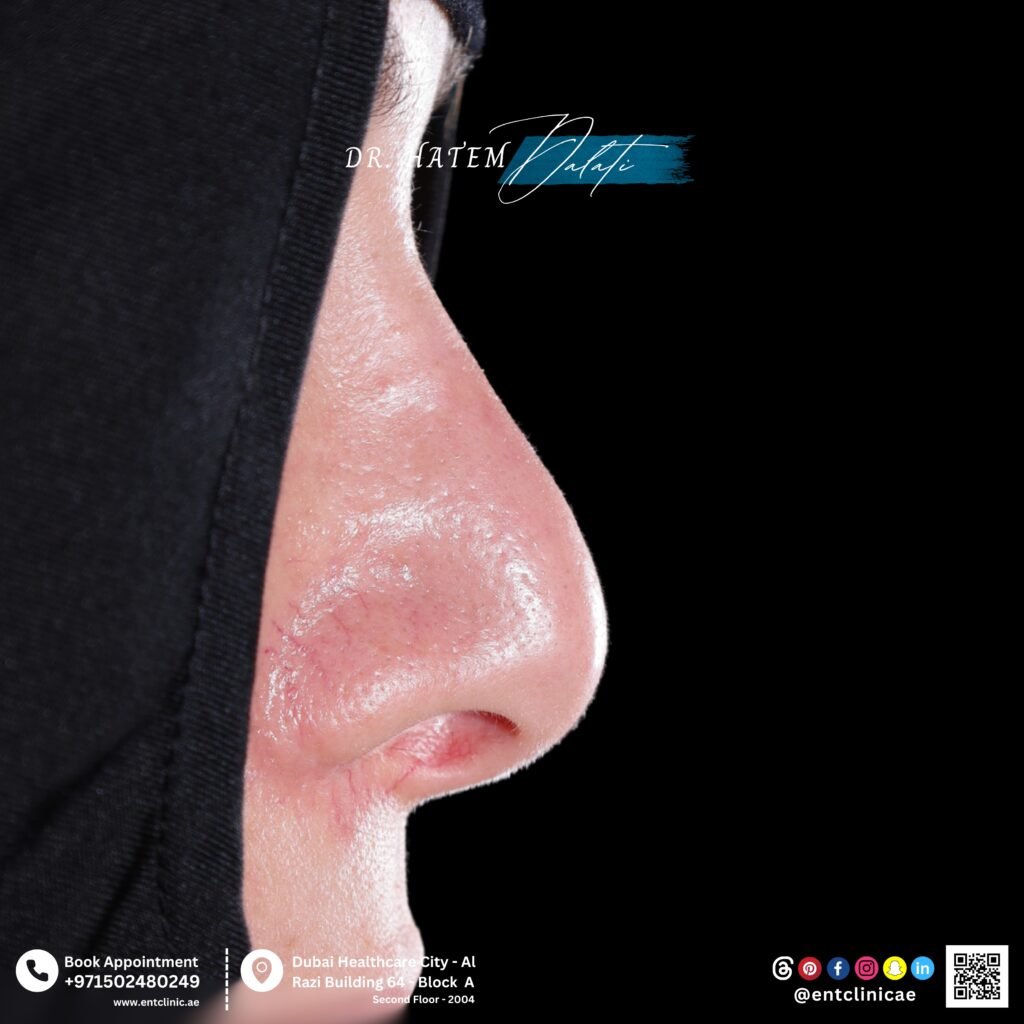
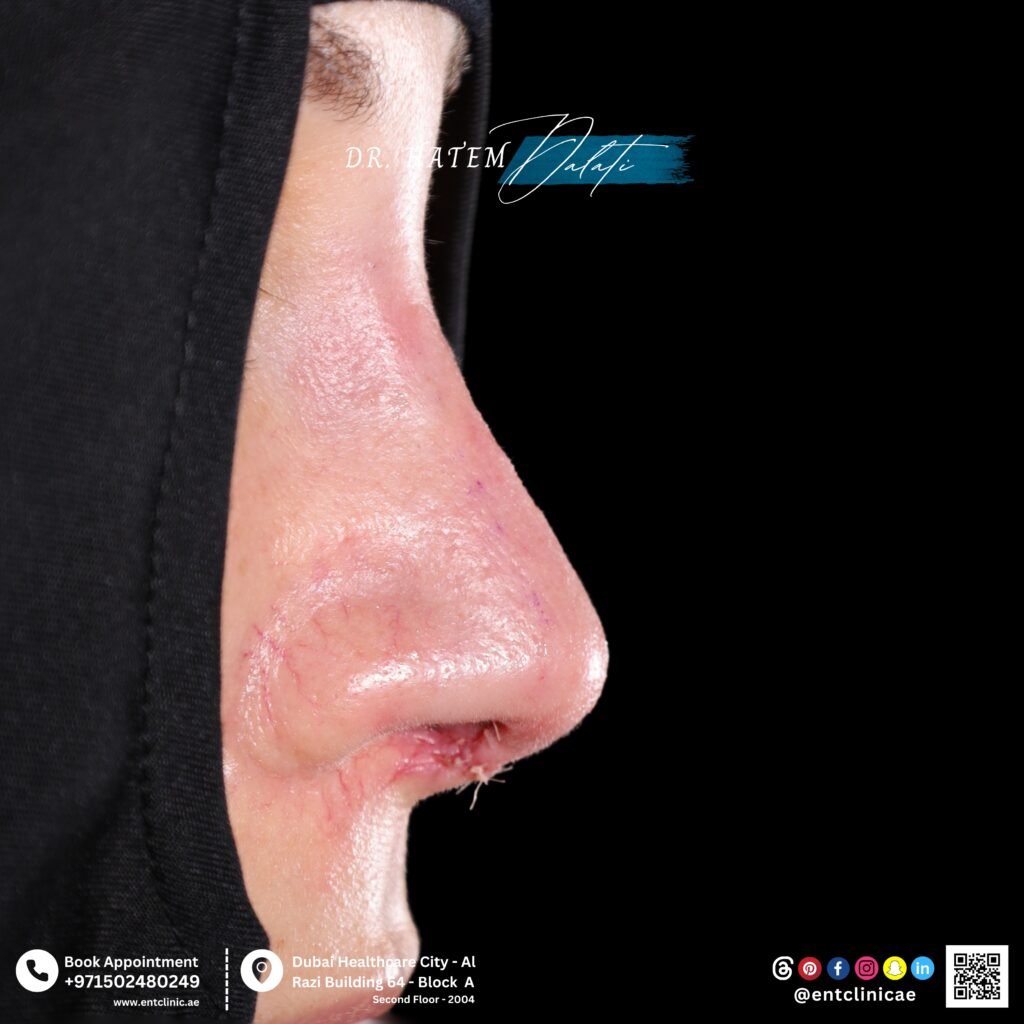
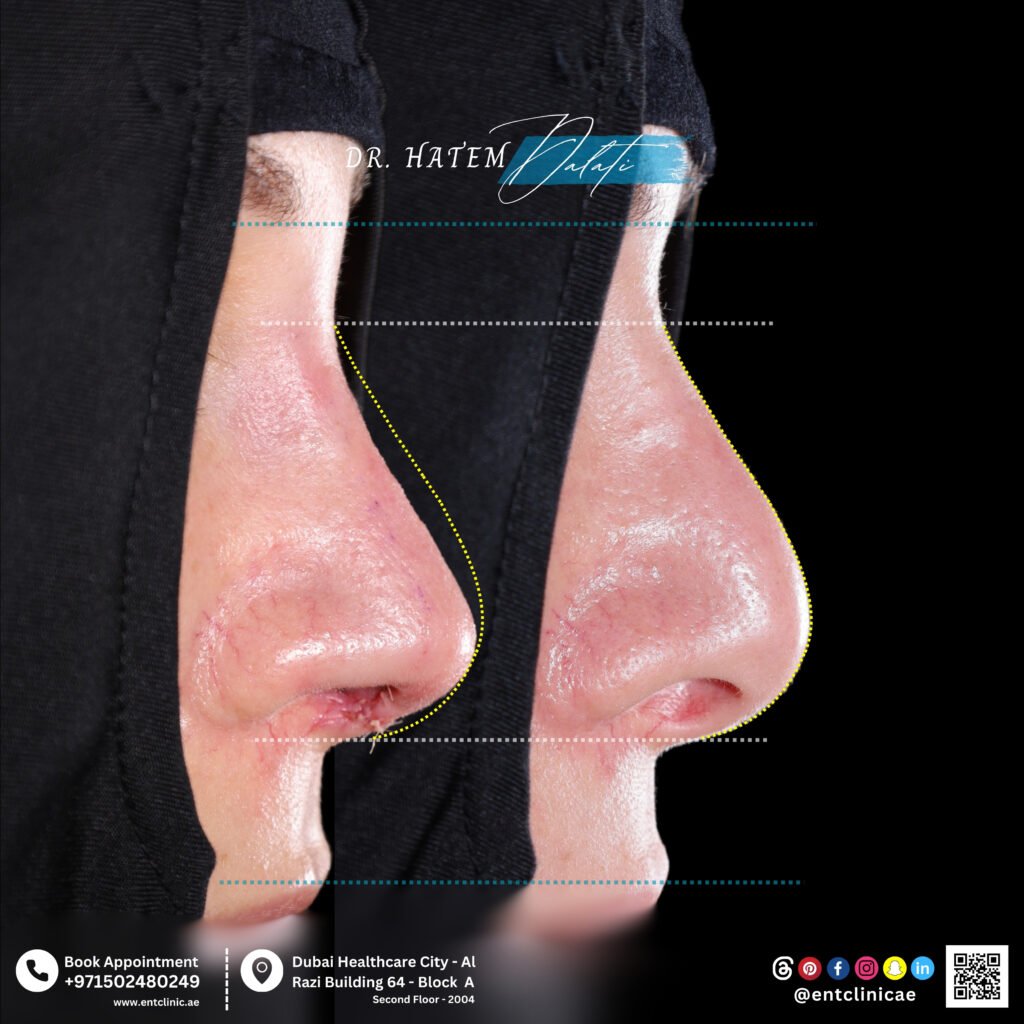
Clinical Case Example: Polybeak Deformity Before and After Revision Rhinoplasty
All images shown are of the same patient, used with informed consent, for educational and clinical demonstration purposes.
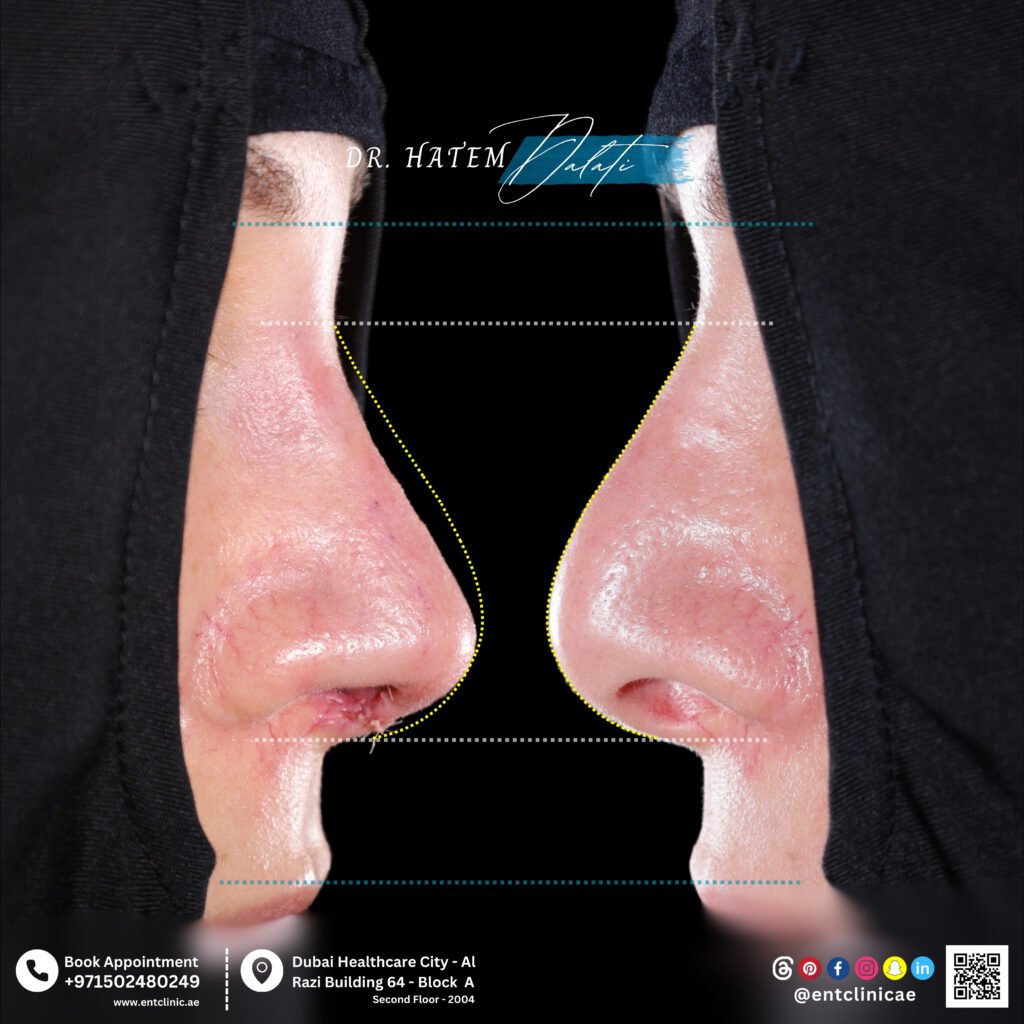
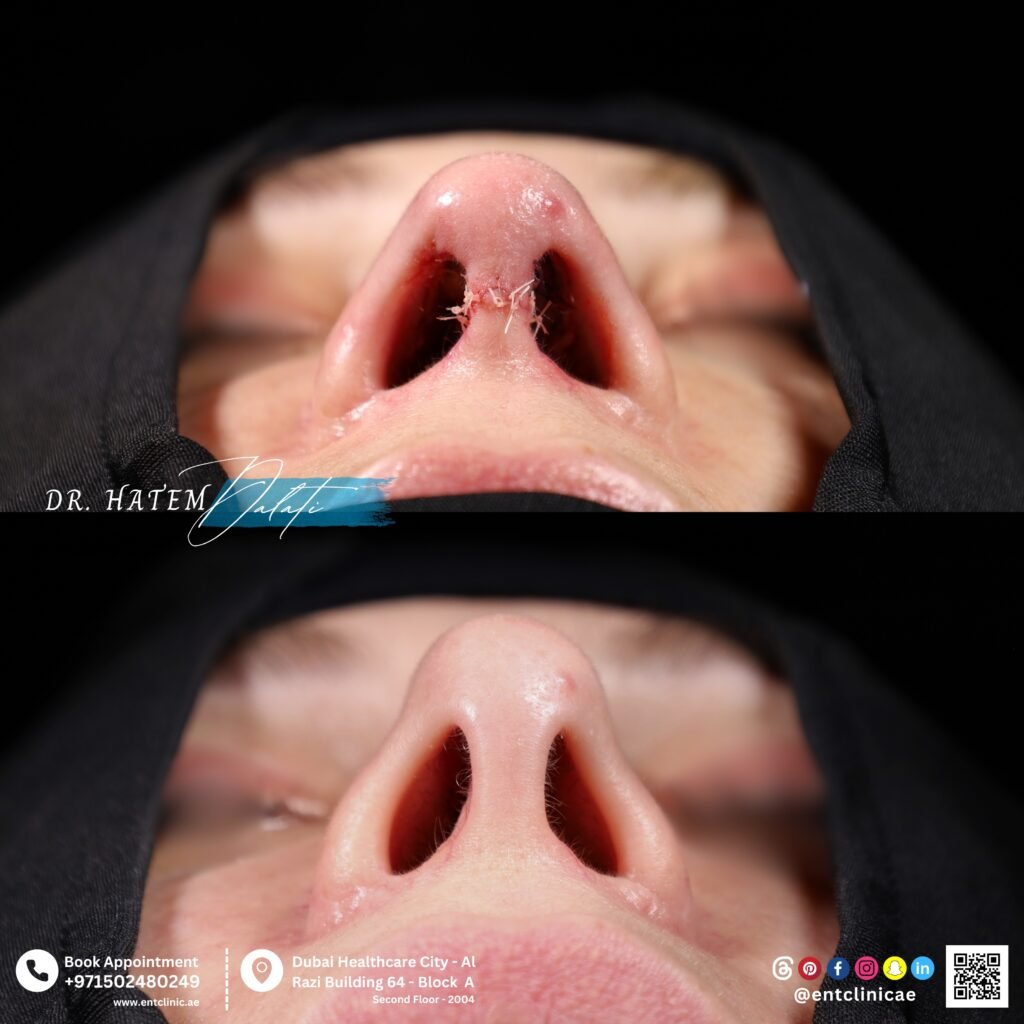
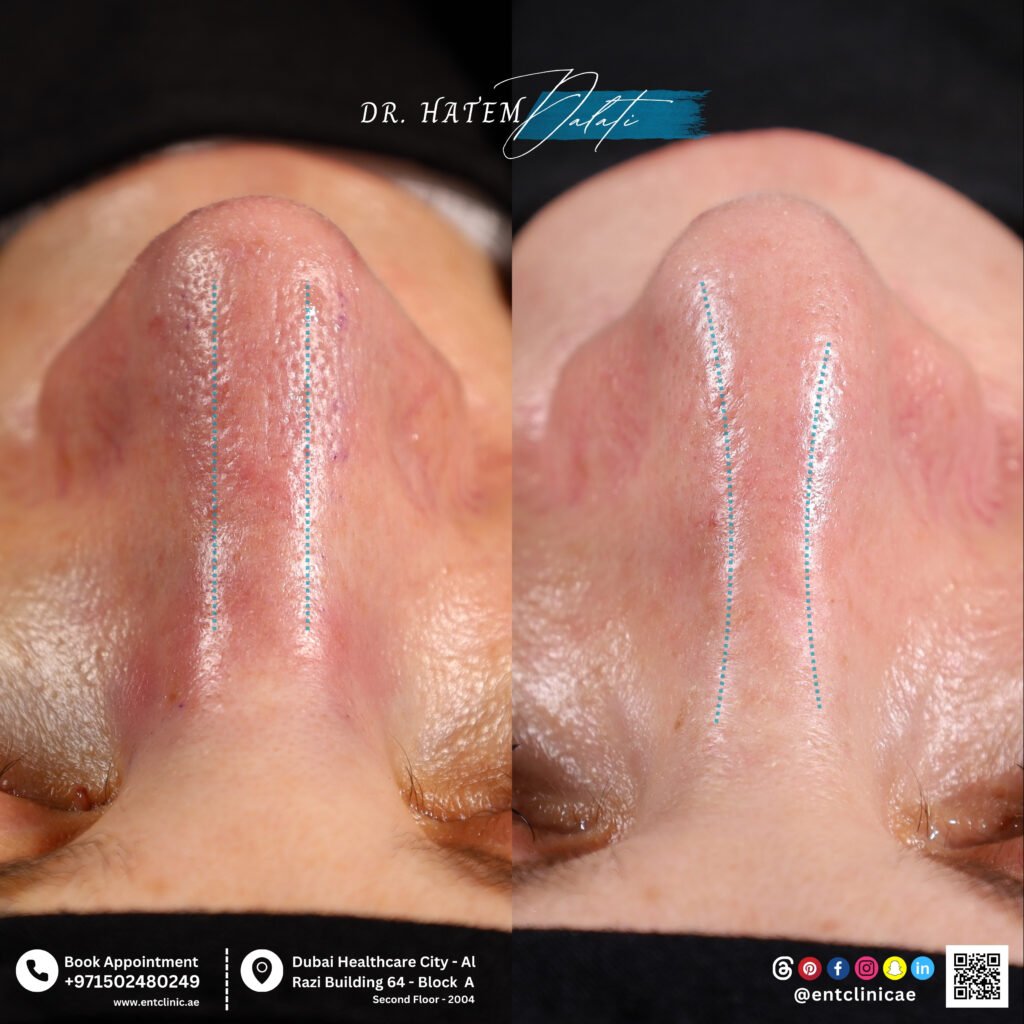
Understanding Polybeak Deformity After Rhinoplasty
Polybeak deformity refers to excessive fullness in the supratip area, the region just above the nasal tip. Instead of a smooth transition from the nasal bridge to the tip, the nose develops a rounded or beak-like contour, making the tip appear under-projected or droopy.
This condition is often more noticeable months after surgery, once initial swelling has resolved.
Common causes of polybeak deformity include:
- Excessive scar tissue formation in the supratip region
- Under-resection of dorsal cartilage or septum
- Over-resection of nasal tip support
- Inadequate structural planning during primary rhinoplasty
- Thick nasal skin that masks definition
When polybeak deformity occurs together with columella show and lower lateral cartilage collapse, it reflects a complex structural problem rather than a minor cosmetic issue.
What Does Excessive Columella Show Mean?
Columella show refers to how much of the tissue between the nostrils is visible when the nose is viewed from the side.
Normal columella show is approximately 2–4 mm. Excessive columella show (+++) indicates a clear structural imbalance.
Common causes after rhinoplasty include:
- Over-resection or shortening of the caudal septum
- Weak or unsupported medial crura
- Malposition of the lower lateral cartilages
- Loss of vertical nasal tip support
In many revision rhinoplasty consultations in Dubai, excessive columella show is one of the most reliable indicators of tip support failure.
Lower Lateral Cartilage Collapse: Aesthetic and Functional Impact
The lower lateral cartilages play a vital role in nasal tip shape, nostril symmetry, and external nasal valve stability.
When these cartilages collapse, patients may experience:
- Poor or pinched nasal tip definition
- Nostril asymmetry
- External nasal valve collapse
- Difficulty breathing, particularly during inspiration
This explains why polybeak deformity after rhinoplasty is frequently associated with functional breathing problems, highlighting the importance of ENT-based evaluation.
The Core Issue: Loss of Nasal Tip Support
When polybeak deformity occurs alongside columella show and lower lateral cartilage collapse, the underlying problem is almost always failure of the nasal tip support mechanism.
Key anatomical structures involved include:
- Medial crura
- Caudal septum
- Tip-defining points
- Lower lateral cartilages
What happens anatomically:
- Tip support is weakened or removed
- The nasal tip descends inferiorly
- The supratip region becomes relatively prominent
- The columella appears overexposed
- Lower lateral cartilages collapse inward
This cascade explains why non-surgical treatments cannot correct established polybeak deformity.
Is It Swelling or a True Polybeak Deformity?
Early phase (0–3 months after surgery)
- Often related to edema or early scar tissue
- May improve with taping or steroid injections
Late phase (6–12 months or longer)
- Structural deformity
- Persistent supratip fullness
- Tip instability and cartilage collapse
👉 True polybeak deformity with columella show and cartilage collapse requires surgical correction.
How ENT Surgeons in Dubai Diagnose Polybeak Deformity
Diagnosis involves a comprehensive assessment that includes:
- Profile and frontal nasal analysis
- Evaluation of supratip fullness
- Measurement of columella show
- Assessment of nasal tip support
- Examination of lower lateral cartilage integrity
- Nasal valve and airflow evaluation
- Internal septal assessment
Functional analysis is particularly important when patients report breathing difficulty.
🔗 For further reading: Rhinoplasty for Nasal Deformities & Fractures in Dubai
Treatment Options for Polybeak Deformity
❌ Non-Surgical Treatments (Limited Role)
- Steroid injections for early scar-related supratip fullness
- Nasal taping in the early healing phase
These measures do not restore cartilage support or correct structural collapse.
✅ Revision Rhinoplasty: Definitive Correction
Revision rhinoplasty is the definitive treatment for polybeak deformity with columella show and lower lateral cartilage collapse.
Surgical goals:
- Restore stable nasal tip support
- Reduce supratip fullness
- Normalize columella show
- Reinforce lower lateral cartilages
- Improve nasal airflow and breathing
Common revision techniques:
- Excision of supratip scar tissue
- Septal extension grafts
- Columellar strut grafts
- Repositioning or reconstruction of lower lateral cartilages
- Alar batten or rim grafts for nasal valve support
These procedures require advanced structural rhinoplasty expertise, particularly in revision cases.
🔗 American Academy of Otolaryngology – Rhinoplasty Complications
https://www.entnet.org
👉 Read more on our article: Best Revision Rhinoplasty Techniques Used by ENT Consultants Today
Why ENT-Based Revision Rhinoplasty Matters in Dubai
ENT surgeons like Dr. Hatem Dalati are uniquely trained to manage:
- Nasal airway anatomy
- Septal reconstruction
- External and internal nasal valve collapse
- Combined functional and aesthetic correction
This is especially important in complex revision rhinoplasty cases, which are commonly seen in Dubai’s international patient population.
Expected Results After Revision Surgery
With proper structural reconstruction:
- Supratip fullness is reduced
- Tip projection and rotation improve
- Columella show normalizes
- Breathing function improves
- Facial harmony and nasal balance are restored
Although revision rhinoplasty requires patience during healing, structural correction provides long-term stability and satisfaction.
FAQs: Polybeak Deformity After Rhinoplasty in Dubai
1. Is polybeak deformity always due to a surgical mistake?
Not always. Individual healing patterns and skin thickness can contribute, but structural imbalance is often the main cause.
2. Can steroid injections fix polybeak deformity?
Only early, mild cases related to scar tissue. Structural deformities require surgery.
3. Why does the nose look worse months after rhinoplasty?
As swelling resolves, loss of tip support becomes more visible.
4. Does polybeak deformity affect breathing?
Yes. Lower lateral cartilage collapse commonly causes nasal valve obstruction.
5. Is revision rhinoplasty more difficult than primary rhinoplasty?
Yes. It requires advanced surgical planning and experience.
Final Thoughts
Polybeak deformity after rhinoplasty in Dubai is a structural condition, not a temporary swelling issue. When associated with columella show and lower lateral cartilage collapse, accurate diagnosis and expert revision surgery are essential to restore both aesthetic balance and nasal function.
Early consultation with an experienced ENT revision rhinoplasty surgeon in Dubai like Dr. Hatem Dalati, significantly improves outcomes.
Book a Revision Rhinoplasty Consultation in Dubai
“Don’t let a post-rhinoplasty deformity affect your confidence or breathing. Schedule a personalized consultation with Dr. Hatem Dalati, Dubai’s expert ENT surgeon, and discover how revision rhinoplasty can restore your nose’s balance and function. Book your appointment today!”
📍 ENT Clinic of Excellence, Dubai Healthcare City
📞 Contact us on WhatsApp:https://wa.me/971502480249
🌐 Visit our website:https://entclinic.ae
📱 Follow us for expert ENT & rhinoplasty insights: Instagram | TikTok