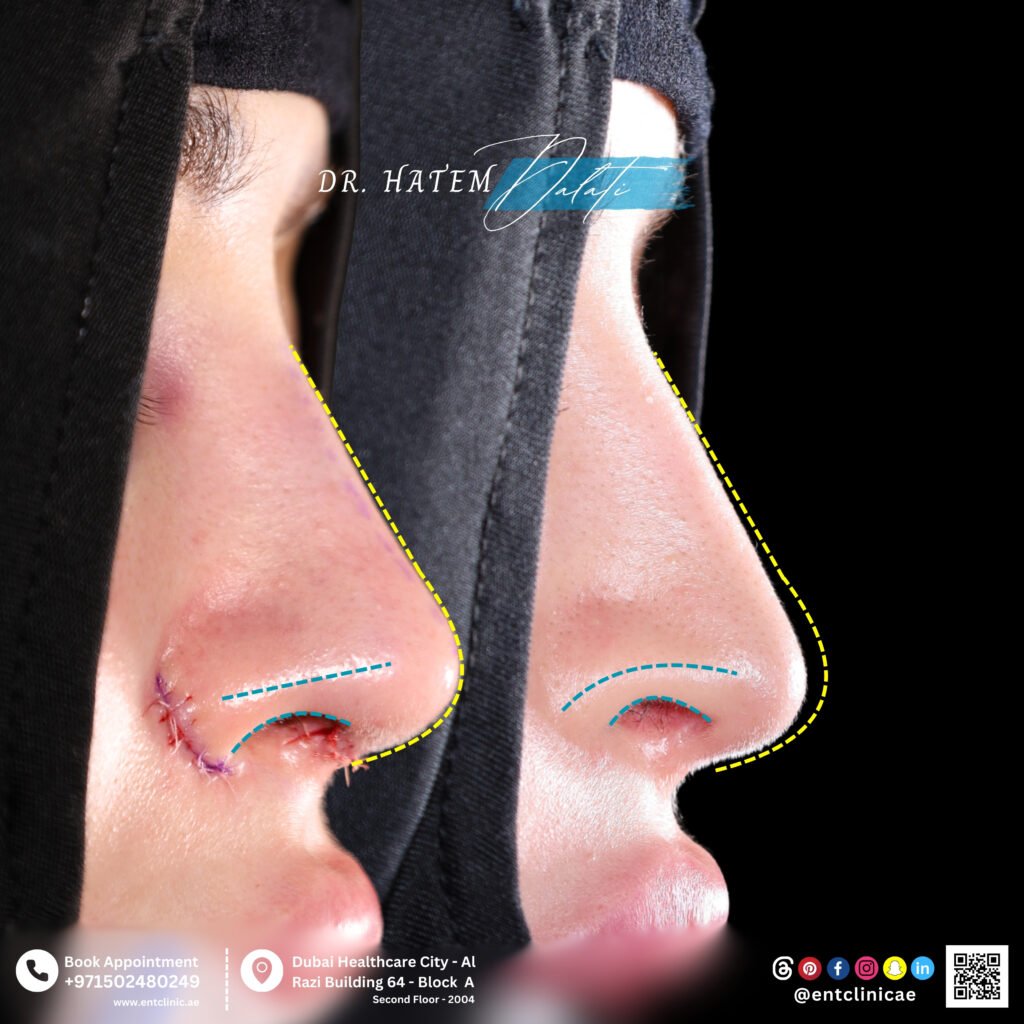
What Are the Risks and Complications of Rhinoplasty in Dubai? Expert ENT Insights on Safety & Infection
Rhinoplasty is one of the most commonly performed facial surgeries worldwide, and Dubai has become a global hub for advanced nasal surgery and medical tourism. While rhinoplasty can significantly improve nasal appearance, breathing, and facial balance, it is still a surgical procedure—and every surgery carries potential risks and complications.
Understanding these risks is not meant to discourage patients, but to empower them with realistic expectations and help them choose the safest possible surgical pathway. In this expert-led guide, we explain the true risks and complications of rhinoplasty, how often they occur, and how experienced ENT-based rhinoplasty surgeons in Dubai actively reduce them.
Why Understanding Rhinoplasty Risks Is Important
Patients often focus on before-and-after photos without fully understanding what happens behind the scenes. Knowing potential complications helps you:
- Make informed decisions
- Recognize early warning signs
- Follow post-operative instructions correctly
- Choose a qualified ENT rhinoplasty surgeon
- Reduce the chance of revision surgery
When rhinoplasty is performed by an ENT surgeon trained in nasal anatomy, airway function, and facial aesthetics, complication rates are significantly lower.
Common Risks After Rhinoplasty (Usually Temporary)
These effects are common and expected after surgery. They usually resolve with time and proper follow-up care.
Swelling and Bruising
Swelling of the nose and surrounding tissues is normal and may fluctuate for weeks to months. Thick skin patients may experience prolonged swelling.
Minor Bleeding
Light bleeding or blood-tinged discharge is common in the early post-operative period.
Nasal Congestion
Temporary blockage can occur due to internal swelling or nasal splints.
Temporary Numbness
Reduced sensation around the nose or upper lip can occur and usually resolves gradually.
👉 Suggested Reading: How Long Does Rhinoplasty Recovery Take? A Complete Healing Guide from Dubai ENT Experts
Infection After Rhinoplasty: How Common Is It?
Infection is one of the most searched concerns related to rhinoplasty. The good news: true surgical infections are rare, with reported rates generally below 1–2% when proper sterile technique and post-operative care are followed.
Common Bacteria Linked to Infections After Rhinoplasty
Although uncommon, medical studies show that two bacteria are most often associated with post-surgical nasal infections:
- Staphylococcus aureus – Commonly found on the skin and inside the nose. When it causes infection after rhinoplasty, it is usually mild and responds well to early treatment with appropriate antibiotics.
- Pseudomonas aeruginosa – Less common but potentially more aggressive. This bacterium is often linked to exposure to unclean water, such as swimming pools, hot tubs, or improper wound hygiene during the early healing phase.
Understanding these bacteria highlights why strict surgical sterility, careful wound care, and avoiding water exposure are critical in reducing infection risk after rhinoplasty.
Possible Signs of Infection
- Increasing redness or warmth
- Persistent pain that worsens instead of improves
- Fever or chills
- Thick, yellow or foul-smelling discharge
- Swelling that increases rather than subsides
Authoritative medical sources explain that early recognition and treatment of surgical infections almost always lead to excellent outcomes.
👉 For further reading:
- Cleveland Clinic – Nose Surgery Risks
- MedlinePlus (U.S. National Library of Medicine) – Surgical Wound Infections
Structural Complications of Rhinoplasty
Structural complications are less common but may occur if nasal anatomy is not handled precisely.
Nasal Asymmetry
Minor asymmetries can persist due to healing differences or cartilage memory.
Over-Reduction or Under-Correction
Removing too much or too little cartilage or bone can affect both appearance and nasal function.
Irregularities or Dents
Surface irregularities may be visible, especially in thin skin patients.
These risks are higher in revision rhinoplasty and when surgery is performed without ENT-level understanding of nasal structure.
Functional Risks: Breathing Problems After Rhinoplasty
Breathing problems after rhinoplasty are a common concern among patients. In most cases, temporary nasal blockage or congestion is part of the normal healing process and improves gradually as internal swelling goes down.
However, breathing difficulties after rhinoplasty may occur if the internal nasal structures are affected during surgery or healing. This is why nasal function should always be preserved—not just the external appearance.
Possible causes of breathing problems after rhinoplasty include:
- Narrowing or collapse of the internal nasal valve
- Residual or new septal deviation
- Over-reduction of cartilage or bone that supports airflow
Our ENT-based rhinoplasty surgeon is specifically trained to maintain or improve nasal airflow while reshaping the nose, which significantly reduces the risk of long-term breathing problems after rhinoplasty.
When Should You Be Concerned About Breathing After Rhinoplasty?
Some nasal blockage is expected early in recovery. However, you should consider an ENT assessment if breathing problems persist, worsen, or interfere with daily life.
Symptoms that may need medical evaluation include:
• Severe or worsening nasal blockage
• A whistling sound when breathing
• Persistent nasal congestion lasting more than 3 months
• New or worsening snoring or disturbed sleep
• Ongoing headaches or sinus pressure
If you notice any of these symptoms, consulting an ENT specialist or ENT consultant in Dubai with experience in post-rhinoplasty airway assessment can help identify the cause early and prevent long-term breathing complications.
Scarring and Skin-Related Complications
External Scars
In open rhinoplasty, a small incision is made at the columella. In expert hands, this typically heals as a fine, barely visible line.
Thick Skin Challenges
Patients with thick nasal skin may experience prolonged swelling or less definition.
👉 Related Reading: Can Rhinoplasty Work for Thick Skin? Surgical Challenges & Expert Solutions
Risks Related to Anesthesia
General anesthesia is very safe when administered by qualified anesthesiologists. Rare risks include:
- Allergic reactions
- Nausea or dizziness
- Temporary blood pressure changes
Pre-operative assessment greatly minimizes anesthesia-related complications.
How ENT Surgeons Minimize Rhinoplasty Risks
Our expert ENT rhinoplasty surgeon in Dubai focuses on evidence-based strategies that protect both nasal structure and patient safety. These include detailed nasal airway assessment, conservative tissue handling, preservation of structural support, customized surgical planning, and close post-operative follow-up.
How Infection Risk Is Minimized in Expert ENT Rhinoplasty
Preventing infection after rhinoplasty begins before surgery and continues throughout the healing process. Our ENT-based rhinoplasty surgeon follows strict medical protocols designed to reduce bacterial exposure and support natural healing.
Key infection-prevention measures include:
- Strict sterile operating conditions in accredited surgical facilities
- Gentle, tissue-preserving surgical techniques to minimize trauma and swelling
- Selective use of antibiotics, prescribed only when clinically indicated
- Clear, personalized aftercare instructions to support wound healing
- Scheduled follow-up visits to detect early signs of infection or delayed healing
Together, these steps significantly reduce the likelihood of post-surgical infection.
What Patients Can Do to Reduce Infection Risk After Rhinoplasty
Infection prevention is a shared responsibility. Patients play a critical role in protecting their surgical results by:
- Keeping the surgical area clean and dry
- Taking medications exactly as prescribed
- Avoiding swimming pools, saunas, and steam rooms during early recovery
- Not touching, pressing, or manipulating the nose unnecessarily
- Attending all scheduled follow-up appointments
Following these guidelines helps ensure smooth healing and protects long-term rhinoplasty outcomes, improving overall safety and satisfaction.
When to Contact Your Surgeon Immediately
Seek medical attention if you experience:
- Sudden increase in pain or swelling
- Fever
- Breathing difficulty
- Persistent bleeding
- Signs of infection
Early intervention prevents minor issues from becoming major problems.
Frequently Asked Questions (FAQs)
1. Is rhinoplasty safe in Dubai?
Yes. When performed by licensed surgeons in accredited facilities, rhinoplasty in Dubai is considered very safe.
2. How common are infections after rhinoplasty?
Infections are rare, generally occurring in less than 1–2% of cases when strict sterile surgical techniques, appropriate antibiotic use, and proper patient aftercare are followed.
3. Can infection ruin rhinoplasty results?
If treated early, most post-rhinoplasty infections do not affect final results. However, delayed or untreated infections may increase the risk of complications or affect healing.
4. When do infections usually appear after rhinoplasty?
Most infections develop within the first 7–10 days after surgery, though late infections can occasionally occur.
5. Do all rhinoplasty patients need antibiotics?
No. Antibiotics are not required for every patient. ENT surgeons prescribe them selectively based on surgical findings, patient risk factors, and clinical judgment.
6. Can rhinoplasty affect breathing permanently?
Long-term breathing problems are uncommon when rhinoplasty is performed by an ENT specialist who prioritizes nasal function and structural support.
7. Are risks higher for thick skin patients?
Thick nasal skin presents unique surgical challenges, but experienced surgeons adjust techniques to reduce risks and improve outcomes.
8. Is revision rhinoplasty riskier than primary surgery?
Yes. Revision rhinoplasty carries a higher risk due to scar tissue, altered anatomy, and limited cartilage availability.
9. Are scars visible after rhinoplasty?
Scars are usually minimal. In open rhinoplasty, the small external incision typically heals into a fine, barely noticeable line.
10. How can I reduce my risk of rhinoplasty complications?
You can lower your risk by choosing an experienced ENT rhinoplasty surgeon, following all pre- and post-operative instructions carefully, avoiding smoking, and attending all scheduled follow-up visits.
📍 Speak Directly with an ENT Rhinoplasty Expert in Dubai
Choosing rhinoplasty is a medical decision — not just a cosmetic one.
If you want honest advice, realistic expectations, and expert ENT evaluation, consult with Dr. Hatem Dalati, European Board-Certified ENT Consultant and Rhinoplasty Surgeon.
📞 Book your consultation via WhatsApp:
👉 https://wa.me/971502480249
📍 ENT Clinic of Excellence – Dubai Healthcare City
👨⚕️ ENT-led cosmetic & functional rhinoplasty
📱 Follow trusted patient education on Instagram Tiktok
Your safety, breathing, and long-term results start with the right surgeon.