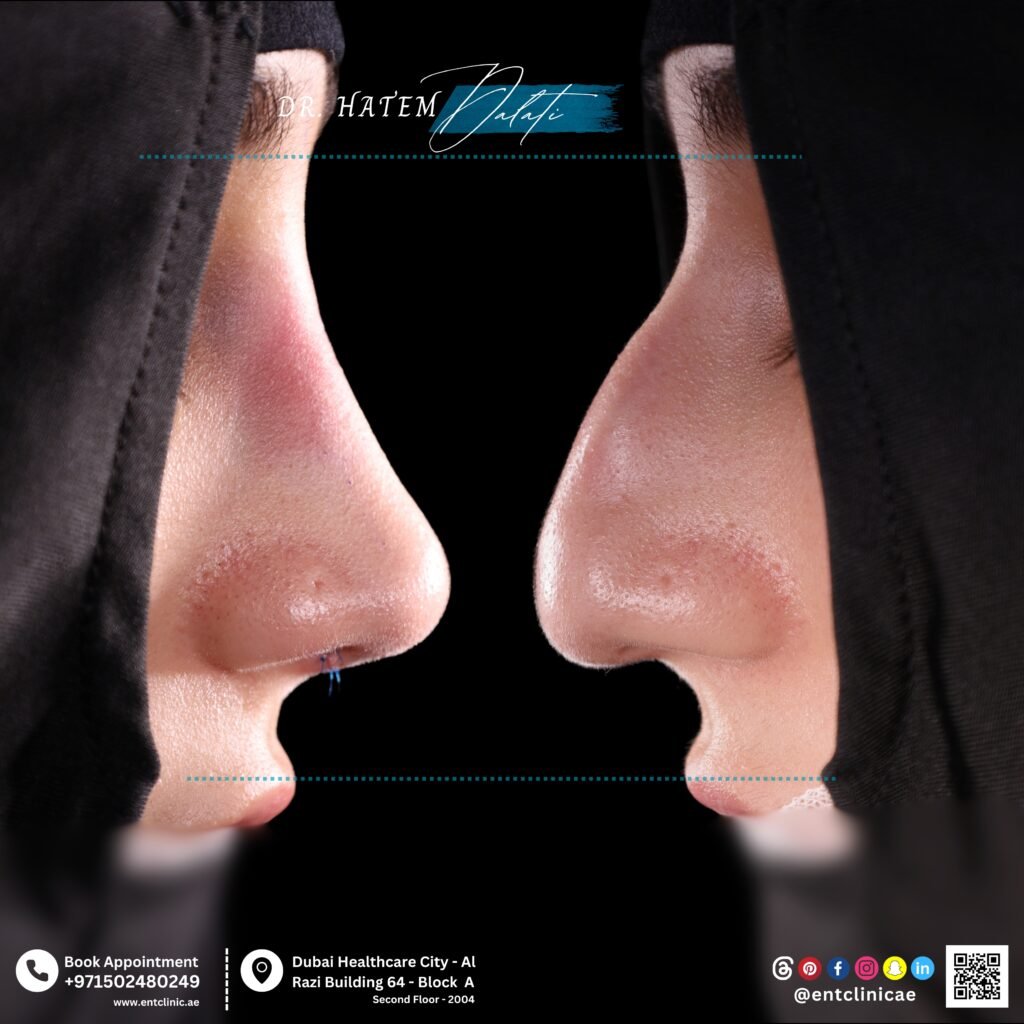
Cast and Splint Removal After Rhinoplasty Outside the UAE: Is It Safe in Dubai?
Many patients who undergo rhinoplasty outside the UAE return to Dubai before their nasal cast or splints are removed — and naturally ask the same important question: is cast and splint removal after rhinoplasty outside the UAE safe in Dubai?
The short answer is yes, when it is done under proper medical supervision. Cast and splint removal is a crucial stage of rhinoplasty recovery, and how this step is handled can directly affect swelling, healing, breathing, and long-term results.
At ENT Clinic of Excellence – Dubai, we regularly provide safe, medically supervised cast and splint removal for patients who had rhinoplasty abroad, followed by structured post-operative follow-up when needed.
Once patients return to Dubai, questions often arise:
- Who will remove my cast or splints?
- Is my swelling normal?
- Why does my nose feel hard in some areas?
- Do I need steroid injections or additional care?
These concerns are completely normal. Proper assessment and medically supervised follow-up during this phase help ensure safe healing, early detection of issues, and long-term stability of your rhinoplasty results.
👉 Related Reading from Our Clinic:
- Steroid Injections After Rhinoplasty: When Are They Needed?
- Rhinoplasty Recovery Timeline & Aftercare Tips
What Are Nasal Casts and Splints After Rhinoplasty?
After rhinoplasty, surgeons typically apply temporary supports to protect the nose during early healing:
- External nasal cast or splint – stabilizes the nasal bones and reduces swelling
- Internal nasal splints – support the septum and nasal airway after internal correction
These supports play an essential role in shaping early recovery. Removing them too early, too late, or incorrectly may affect swelling, alignment, breathing, or scar formation.
Cast and Splint Removal After Rhinoplasty Outside the UAE
Yes — cast and splint removal after rhinoplasty performed abroad can be safely done in Dubai.
At our ENT clinic, removal is performed only after a careful clinical assessment. This ensures the nose is healing appropriately and that removal is done gently, without disturbing internal structures or compromising results.
Why Medical Supervision Is Important
Unsupervised or improper cast and splint removal may lead to:
- Increased swelling or bruising
- Skin irritation or pressure marks
- Internal bleeding
- Delayed wound healing
- Nasal congestion or breathing discomfort
Having cast and splint removal performed by a DHA-licensed ENT and rhinoplasty specialist helps protect both the aesthetic outcome and nasal function.
When Is Cast and Splint Removal Usually Done?
In most cases, cast and splint removal is performed between Day 7 and Day 10 after surgery. The exact timing depends on:
- Type of rhinoplasty performed
- Skin thickness
- Extent of bone or septal work
- Individual healing response
Patients who return to Dubai during this period are ideal candidates for supervised removal and early follow-up care.
🗓️ Week 1: Cast and Splint Removal After Rhinoplasty Outside the UAE
This is often the first and most important visit for patients who had surgery abroad.
What This Visit Includes:
- Gentle removal of the external nasal cast or splint
- Removal of internal splints, if present
- Assessment of swelling, bruising, and skin condition
- Evaluation of internal healing and nasal airflow
- Guidance on nasal hygiene and daily care
Many patients feel immediate relief once splints are removed, although swelling remains completely normal at this stage.
What Happens After Cast and Splint Removal?
It is very common to notice:
- Swelling or puffiness
- Mild asymmetry
- Firm or hard areas, especially at the tip
These findings are part of normal healing. After cast and splint removal, we monitor:
- Swelling patterns
- Nasal alignment and symmetry
- Skin response
- Early scar tissue (fibrosis)
- Breathing comfort
Proper guidance during this phase helps prevent long-term complications.
So, How Often Should You Follow Up After Rhinoplasty?
After rhinoplasty — especially following cast and splint removal after surgery performed outside the UAE — many patients worry whether what they are feeling or seeing is normal. This concern is completely understandable, as the nose continues to heal internally for several months.
Follow-up visits are designed to provide clarity, reassurance, and medical guidance during each stage of recovery. The first follow-up usually takes place within the first week, often at the time of cast or splint removal, followed by scheduled visits over the next few weeks and months. These appointments allow your ENT specialist to gently monitor swelling, breathing, skin response, and internal healing.
If you are based in Dubai or have returned after rhinoplasty abroad, having a trusted ENT clinic nearby means you do not have to navigate recovery alone. Regular follow-ups help address concerns early, answer questions as they arise, and ensure that healing progresses safely, smoothly, and confidently over time.
🗓️ Weeks 2–4 After Cast and Splint Removal
During the first month, weekly or bi-weekly follow-ups allow close monitoring of recovery.
These Visits Focus On:
- Tracking swelling reduction
- Identifying early fibrosis or tip stiffness
- Addressing nasal congestion
- Advising on taping, massage, and activity restrictions
Early intervention at this stage can significantly improve long-term outcomes.
🗓️ 1 Month After Rhinoplasty: Swelling, Fibrosis & Shape Assessment
At around one month, some areas of the nose may still feel firm or uneven.
We Assess:
- Persistent or localized swelling
- Early scar tissue formation
- Tip support and contour
- Internal nasal healing
Possible Interventions (Only When Clinically Indicated):
- Steroid (triamcinolone / Kenalog) injections
- Continued taping techniques
- Personalized aftercare advice
Managing these issues early can help reduce the need for revision surgery later.
🗓️ 3 Months After Rhinoplasty: Tip Definition & Scar Tissue Monitoring
By three months, most general swelling has reduced, although the nasal tip continues to refine.
This visit focuses on:
- Skin thickness response
- Tip definition and contour
- Resolution or progression of fibrosis
Early identification of problematic scar tissue can help preserve results.
🗓️ 6–12 Months: Long-Term Healing and Breathing Check
Long-term follow-up ensures:
- Stable nasal structure
- Balanced, natural appearance
- Healthy breathing function
At this stage, we reassure patients about normal healing timelines and advised whether continued observation is needed.
Common Concerns After Cast and Splint Removal We Treat
Patients who had rhinoplasty abroad commonly visit us for:
- Prolonged or uneven swelling
- Nasal tip hardness
- Fibrosis or scar tissue concerns
- Asymmetry during healing
- Breathing discomfort or congestion
- Thick or oily skin–related challenges
What to Bring for Your Post-Rhinoplasty Follow-Up Appointment in Dubai
To help us assess your recovery accurately, please bring:
- Surgical or discharge report (if available)
- List of medications used
- Exact date of surgery
- Any post-operative instructions given by your surgeon
If documents are unavailable, clinical examination is still sufficient to guide care.
Why Choose ENT Clinic of Excellence in Dubai for Post-Rhinoplasty Follow-Up?
- Experienced ENT consultant & rhinoplasty surgeon
- Ethical follow-up for surgeries done abroad
- Expertise in swelling control and fibrosis prevention
- Patient-centered, non-judgmental care
- Convenient access for UAE residents and travelers
Important Note for Patients
Post-operative follow-up does not replace your original surgeon. It ensures that while you are in the UAE, your healing is medically supervised and any concerns are addressed promptly.
FAQs: Post-Rhinoplasty Follow-Up After Surgery Abroad
Q: Can you remove my cast or splints if my surgery was done abroad?
Yes. Cast and splint removal can be safely performed after proper assessment.
Q: Can you remove stitches placed during surgery abroad?
Yes. Sutures can be removed safely following clinical evaluation.
Q: Is prolonged swelling normal after rhinoplasty?
Yes. Swelling, especially at the nasal tip, can last several months and varies by skin type.
Q: Can proper follow-up reduce the need for revision rhinoplasty?
In many cases, early detection and management of swelling or fibrosis can reduce the risk of revision surgery.
Q: Do you manage both cosmetic and functional rhinoplasty follow-up?
Yes. We provide follow-up care for cosmetic, functional, and combined ENT rhinoplasty procedures.
For further reading:
External resources are provided for general education and do not replace personalized medical advice.
Ready for Safe Cast and Splint Removal in Dubai?
Your rhinoplasty journey doesn’t end with surgery. Every step of healing matters — from cast removal to long-term care. At ENT Clinic of Excellence – Dubai, our expert ENT and rhinoplasty specialists are here to monitor your progress, manage swelling, and guide your recovery so your nose heals naturally and beautifully.
💬 Book Your Follow-Up Today via WhatsApp: https://wa.me/971502480249
📍 Visit Us: ENT Clinic of Excellence, Dubai Healthcare City
🌐 Learn More: entclinic.ae
📸 Follow for expert tips, patient stories & recovery guidance: Instagram Tiktok
Don’t leave your healing to chance — expert guidance ensures the best possible results.