Rhinoplasty results are generally long-lasting because surgery reshapes the underlying bone and cartilage of the nose, creating structural changes that usually remain for many years. However, your nose continues to age naturally, and the final appearance develops gradually as postoperative swelling settles and the tissues heal.
Rhinoplasty, commonly known as nose reshaping surgery, can address concerns such as a dorsal hump, a wide or poorly defined nasal tip, nasal asymmetry, and certain structural problems that affect breathing. The outcome depends on the patient’s anatomy, skin characteristics, surgical technique, healing process, and the goals established before surgery.
Although many patients enjoy long-lasting improvements, it is important to understand the difference between the durability of surgical changes and the time required for the nose to heal fully.
In this guide, we explain how long rhinoplasty results last, whether they are permanent, how aging can affect the nose, and when patients can expect to see their final results.
How Long Do Rhinoplasty Results Last?
Rhinoplasty results are generally permanent in the sense that the surgical changes to the nasal bone and cartilage are designed to be long-lasting. Once the nose has healed, its reshaped framework typically remains stable, although subtle changes may occur over time.
Unlike temporary cosmetic treatments, surgical rhinoplasty changes the underlying nasal structure. The surgeon may reshape bone, modify cartilage, refine the nasal tip, or add structural support depending on the patient’s needs.
Several factors influence how rhinoplasty results develop and how well they are maintained:
- Surgical technique: The approach must suit the patient’s nasal anatomy and surgical goals.
- Structural support: Appropriate support of the nasal tip and other areas can help maintain the intended shape.
- Skin thickness: Thick skin may conceal fine definition and take longer to settle, while thin skin may reveal small irregularities more readily.
- Healing and scar tissue: Each patient heals differently, and tissue changes can influence the final appearance.
- Natural aging: Skin, cartilage, and other soft tissues continue to change throughout life.
It is also important to remember that long-lasting results do not mean the nose will look exactly the same forever. Aging and other natural changes may gradually affect its appearance.
The American Society of Plastic Surgeons explains that most improvement after rhinoplasty should be relatively permanent, while natural changes to the face and nose can still occur with aging.
Rhinoplasty Results at 6 and 10 Months
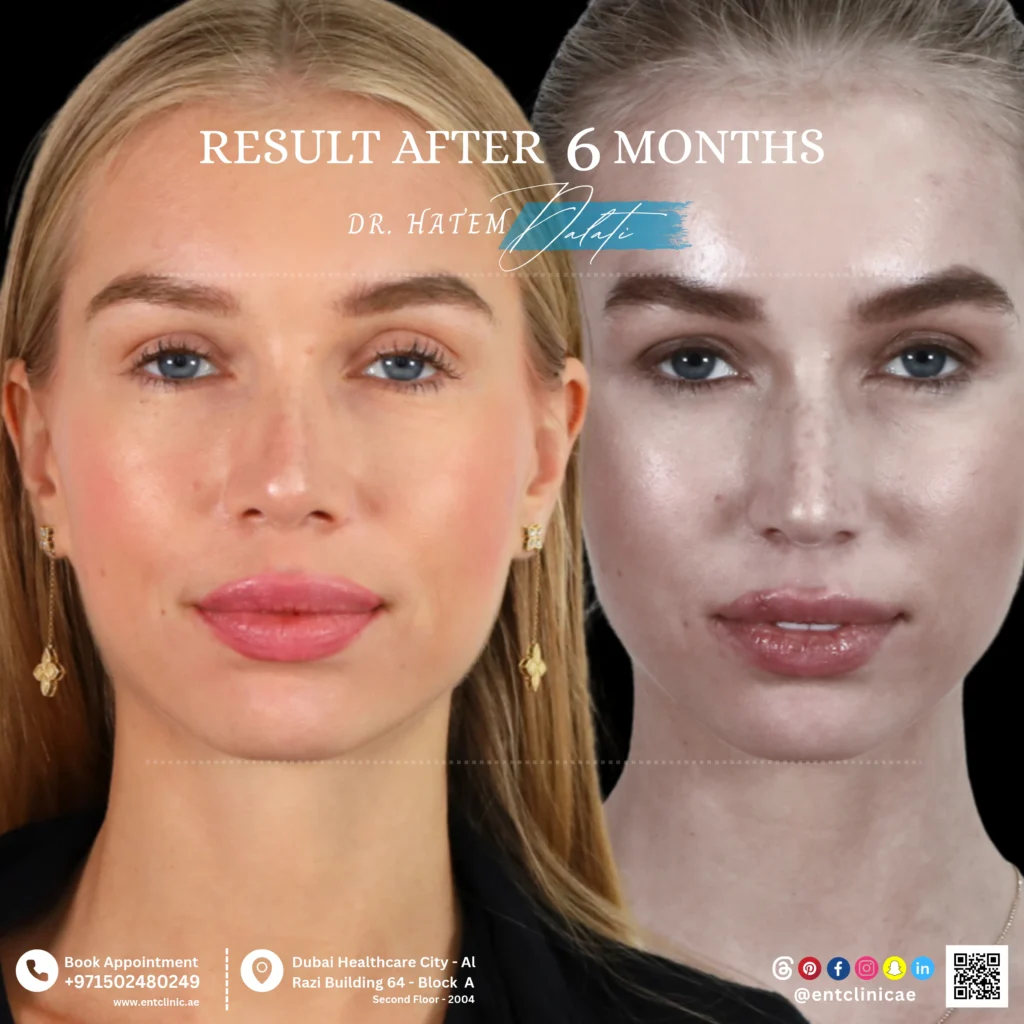
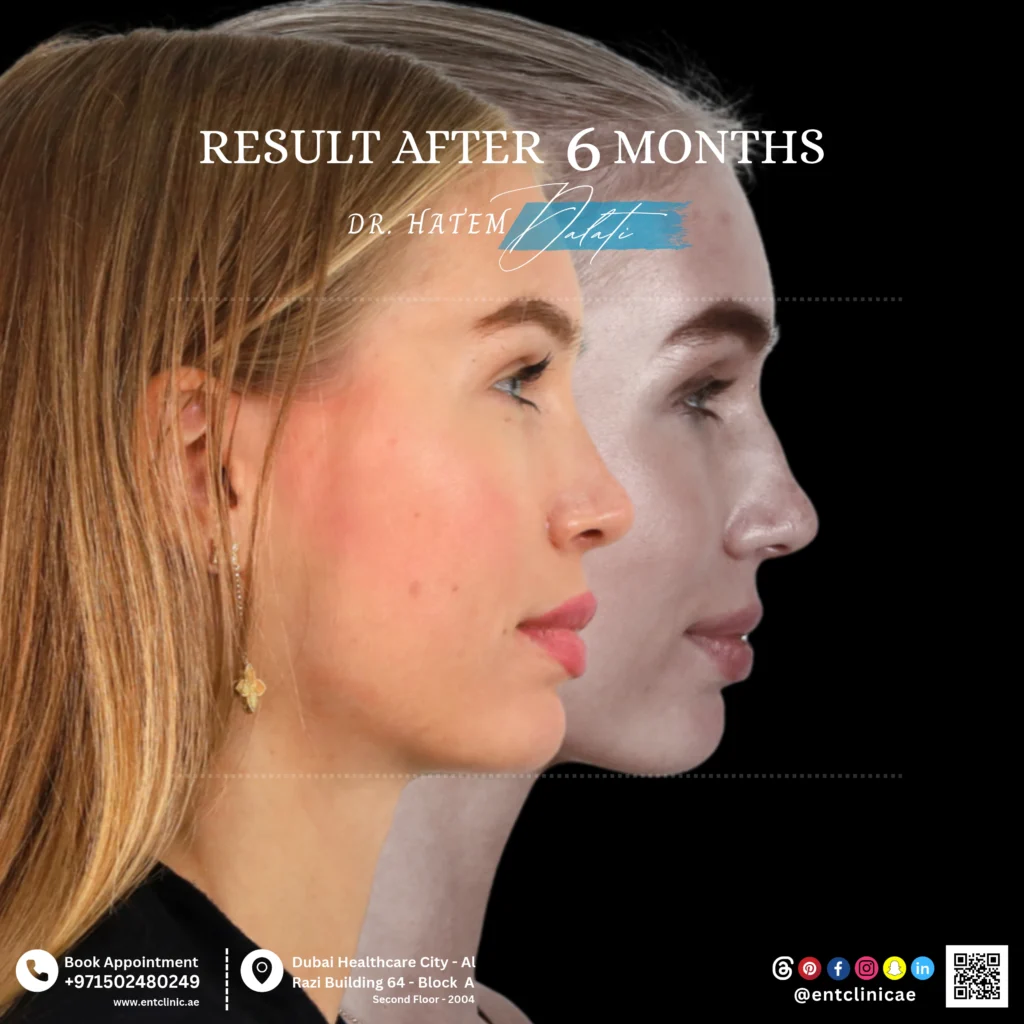
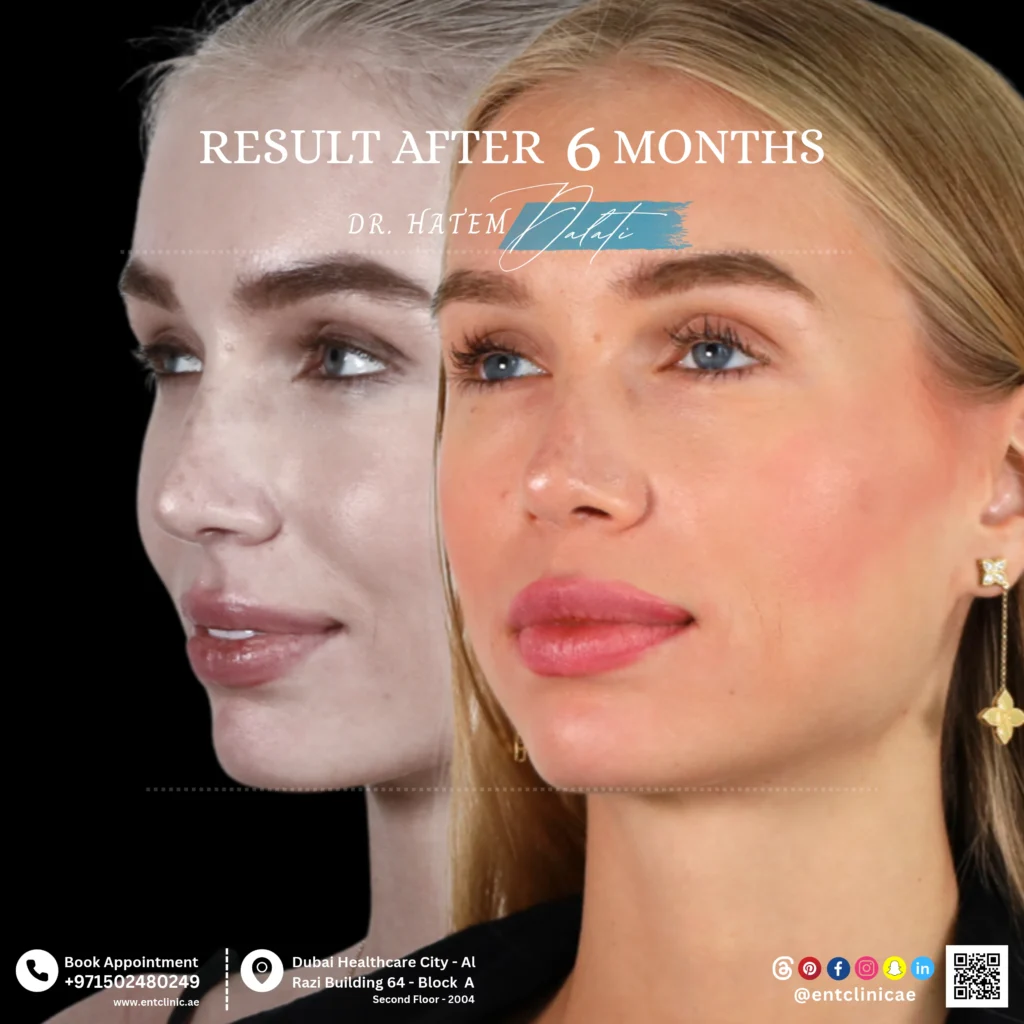
Rhinoplasty results develop gradually as postoperative swelling decreases and the nasal tissues heal. The following before-and-after photographs show two individual patient outcomes at six and ten months after surgery, with frontal, profile, and three-quarter views to illustrate the changes from different angles.
Case 1: Rhinoplasty Results at 10 Months
Case 2: Rhinoplasty Results at 6 Months
Longer-Term Rhinoplasty Patient Experiences
Rhinoplasty results continue to evolve as the nose heals, and each patient’s recovery timeline is different. To learn more about individual experiences with rhinoplasty performed by Dr. Hatem Dalati, you can explore patient reviews on RealSelf, including accounts that describe patients’ progress after surgery.
Read Patient Reviews of Dr. Hatem Dalati on RealSelf
Patient reviews reflect individual experiences and are not a guarantee of similar results for every patient.
Why Can Rhinoplasty Results Change Over Time?
Even though rhinoplasty creates long-lasting structural changes, the nose can continue to evolve during recovery and throughout life.
There are several reasons why patients may notice changes in their rhinoplasty results.
Postoperative swelling
Swelling is a normal part of healing after rhinoplasty. Much of it improves during the first few weeks and months, but residual swelling can persist for considerably longer.
The nasal tip often takes longer to settle than other areas because it contains delicate soft tissues and cartilage that may have been reshaped or supported during surgery.
As swelling decreases, the nose may appear more refined and its contours may become clearer. This gradual change does not necessarily mean the surgical result is deteriorating; it may simply reflect ongoing healing.
Skin thickness and soft tissue
Skin characteristics influence how the underlying nasal framework appears.
Patients with thicker skin may experience prolonged swelling and slower visible definition, particularly around the tip. Patients with thinner skin may see changes in contour earlier, although subtle irregularities can sometimes be more noticeable.
These differences are among the reasons why two patients who undergo rhinoplasty on the same date may experience different recovery timelines.
Scar tissue and tissue healing
Scar tissue forms as part of the body’s normal healing response. Its development and maturation can influence the way the skin and soft tissues settle over the reshaped nasal framework.
This process varies between individuals and may contribute to changes in contour during recovery.
Natural changes in the nose
Even after healing is complete, the nose is not entirely immune to aging or other changes. Skin elasticity, cartilage, and supporting tissues may change over time.
A change in appearance does not automatically mean that the original surgery has failed or that revision surgery is necessary. Any new concern should be assessed in the context of the patient’s anatomy, symptoms, and surgical history.
Does Aging Affect Rhinoplasty Results?
Yes. Aging can affect the appearance of the nose, whether or not a person has undergone rhinoplasty.
Over time, the skin may lose some elasticity, and the supporting soft tissues and cartilage can change. These natural processes may affect the nasal tip, the appearance of the nostrils, and the relationship between the nose and the surrounding facial features.
Some people may notice that their nasal tip appears lower or that the nose looks different in profile as they get older. The degree of change varies considerably from person to person.
However, aging does not mean that rhinoplasty results will suddenly disappear. The structural changes made during surgery are generally long-lasting, although the nose may gradually change around that framework.
Good surgical planning considers both the patient’s current anatomy and the need for appropriate structural support. The goal is to create a balanced result that suits the individual’s facial features while maintaining or improving nasal function where needed.
Patients should also understand that rhinoplasty cannot stop the natural aging process. Its purpose is to address specific concerns through changes to nasal structure, not to freeze the nose’s appearance permanently.
When Are Rhinoplasty Results Considered Final?
One of the biggest misconceptions about rhinoplasty is that the nose reaches its final appearance as soon as the cast is removed. It does not. The cast removal is only the beginning of the visible transformation.
During the early recovery period, swelling can make the nose appear larger, wider, uneven, or less defined than expected. The nasal tip often takes longer to settle than other areas.
According to Cleveland Clinic, the nose may continue healing for up to a year, while the American Society of Plastic Surgeons notes that the new nasal contour can take up to a year to fully refine.
A General Rhinoplasty Results Timeline
First week:
The cast and any internal splints are typically removed according to the surgeon’s protocol. The nose is still swollen and healing.
First few weeks:
Bruising and swelling gradually improve. The overall change becomes easier to see, but the nose is not yet at its final shape.
1–3 months:
The nose continues to settle. Swelling, particularly around the tip, can still influence its appearance.
6 months:
Many patients can see significant refinement, although subtle swelling may remain.
9–12 months:
The nasal contour becomes increasingly stable, and many patients are much closer to their final rhinoplasty results.
12 months and beyond:
Subtle changes can continue, particularly in the nasal tip and in patients with thicker skin or more complex surgery.
These timeframes are approximate rather than strict milestones. Not every patient will follow the same pattern, and more complex procedures may require a longer period of healing. It is also important not to judge the outcome too early. The nose may look different at six months than it does later, and temporary swelling can affect the appearance of the bridge or tip.
Regular follow-up appointments allow the surgeon to monitor healing, assess nasal function, and determine whether the recovery is progressing as expected.
If a patient remains concerned about the appearance or function of the nose, an assessment can help distinguish normal healing from an issue that may require further attention. Revision surgery, when appropriate, is generally considered only after adequate healing and careful evaluation.
At ENT Clinic of Excellence, our own rhinoplasty recovery guidance explains that the nose may continue refining over approximately 9–12 months and that the final result should be assessed in the context of the individual patient’s healing.
Can You Maintain Your Rhinoplasty Results?
You cannot stop the natural aging process, but you can take steps to protect your nose and support healthy long-term healing.
Follow Your Post-Operative Instructions
The early healing period is particularly important. Follow your surgeon’s instructions regarding pressure, exercise, sleeping position, medications, wound care, and follow-up appointments.
Protect Your Nose From Trauma
Avoid unnecessary pressure or impact, particularly during the early recovery period.
Protect Your Skin From Sun Exposure
Long-term sun protection is important for overall skin health and may help maintain the quality of the skin around your nose as you age.
Attend Follow-Up Appointments
Follow-up appointments allow your surgeon to monitor healing and identify any concerns early.
At ENT Clinic of Excellence, patients are followed after surgery to assess healing and the development of their rhinoplasty results.
What Role Does an ENT Rhinoplasty Surgeon Play?
Rhinoplasty is not only about changing the external appearance of the nose.
The nose is also an important airway.
A surgical plan that focuses exclusively on appearance may overlook problems involving the septum, nasal valves, turbinates, or other structures that contribute to breathing.
This is why an ENT-based approach can be particularly important for patients who have both cosmetic and functional concerns.
At ENT Clinic of Excellence in Dubai Healthcare City, rhinoplasty is performed under the expertise of Dr. Hatem Dalati, ENT Consultant and Rhinoplasty Surgeon.
Dr. Hatem Dalati has more than 19 years of experience and holds an MD and Master’s degree in ENT, along with Arab Board and European Board certifications and specialized rhinoplasty fellowship training. He is also a member of the Rhinoplasty Society of Europe. His ENT background is particularly relevant for patients who want to address both nasal appearance and breathing function. His approach to rhinoplasty focuses on creating natural, balanced results while respecting the structure and function of the nose.
What Makes Rhinoplasty Results Long-Lasting?
Long-term results depend on more than the operation itself.
Important factors include:
A personalized surgical plan
Every nose has different bone, cartilage, skin, and airway characteristics.
Preservation of nasal function
The nose should continue to function properly after reshaping.
Adequate structural support
The nasal framework must remain stable after surgery.
Realistic expectations
A good rhinoplasty aims for improvement and facial harmony rather than an unrealistic idea of perfection.
Proper aftercare
Following post-operative instructions can help protect the healing nose.
Experienced surgical judgment
Complex nasal anatomy requires careful planning, particularly when functional problems or previous surgery are involved.
The Bottom Line: Does Rhinoplasty Last Forever?
So, does rhinoplasty last forever? The structural changes created by surgical rhinoplasty are intended to be permanent, and rhinoplasty results are generally long-lasting.
However, “permanent” does not mean that your nose will look exactly the same for the rest of your life. Your face and nose will naturally age. Skin, soft tissue, cartilage, and facial proportions can change gradually over time.
The goal of a well-planned rhinoplasty is therefore not to stop aging. It is to create a stable, balanced and functional nasal structure that can age naturally with you.
For patients considering rhinoplasty in Dubai, the most important question may not simply be “How long do rhinoplasty results last?” but rather:
“How can my rhinoplasty be planned to provide natural, functional and stable results for the long term?”
That answer starts with an individual assessment of your nasal anatomy, breathing, facial proportions, and goals.
Frequently Asked Questions About Rhinoplasty Results
Are rhinoplasty results permanent?
Yes. Surgical rhinoplasty creates structural changes to the nasal bones and cartilage, so the results are generally considered permanent or long-lasting. However, natural aging and changes to facial tissues can gradually alter the appearance of the nose.
How many years do rhinoplasty results last?
There is no fixed expiration date for rhinoplasty. In general, rhinoplasty results can last for decades and potentially for a patient’s lifetime, although the nose naturally changes with aging.
Can my nose change 10 years after rhinoplasty?
Yes. The nose can naturally change as you age. However, this does not necessarily mean the original rhinoplasty has failed. The structural changes made during surgery are generally long-lasting.
Why does my nose still look swollen after six months?
Residual swelling can persist for months after rhinoplasty, particularly around the nasal tip. The amount and duration of swelling depend on factors such as skin thickness, surgical extent, and individual healing.
If swelling is worsening, accompanied by pain or redness, or causing new breathing problems, contact your surgeon for assessment.
Can rhinoplasty results disappear?
Surgical rhinoplasty results do not normally “wear off” like injectable treatments. However, aging, trauma, healing changes, or a subsequent nasal problem can alter the appearance or function of the nose.
Does rhinoplasty prevent my nose from aging?
No. Rhinoplasty changes the structure of the nose but does not stop the natural aging process. Your nose can continue to change gradually as you get older.
Can I have rhinoplasty again in the future?
Revision rhinoplasty is possible in selected patients, but it should only be considered after careful assessment. Revision surgery can be more complex because of previous changes and scar tissue.
Does rhinoplasty improve breathing permanently?
If functional problems are appropriately identified and corrected during surgery, breathing may improve for the long term. However, future changes, allergies, trauma, aging, or other nasal conditions can affect breathing over time.
What is more important for long-term rhinoplasty results: appearance or function?
Both matter. A well-planned rhinoplasty should consider facial harmony while preserving or improving nasal function. The nose needs adequate structural support to remain stable and functional.
Conclusion: What to Expect From Rhinoplasty Results
Rhinoplasty results are generally long-lasting, but the nose continues to heal and change naturally over time. While the surgical changes to bone and cartilage are designed to be durable, the final appearance may take a year or longer to become clear.
Understanding the healing process, attending follow-up appointments, and having realistic expectations can help patients approach recovery with greater confidence.
At ENT Clinic of Excellence in Dubai Healthcare City, rhinoplasty assessment considers both the appearance of the nose and its function. A personalized consultation helps determine the appropriate surgical approach based on the patient’s anatomy, breathing concerns, and goals.
Considering rhinoplasty? Arrange a consultation to discuss your concerns and learn about the options suited to your individual needs.
ENT Clinic of Excellence – Dubai Healthcare City
- Location: Building 64 – Block A, 2nd Floor – Unit 2004, Umm Hurair 2, Dubai Healthcare City, Dubai
- WhatsApp: Contact us to arrange a consultation
- Website: www.entclinic.ae
- Instagram: @entclinicae
- TikTok: @entclinic.ae
Natural results. Functional breathing. Long-term confidence.
Medical information is intended for educational purposes and does not replace an individual assessment by a qualified medical professional.