Septoplasty vs. Rhinoplasty: What’s the Difference and Which Do You Need?
When comparing septoplasty vs rhinoplasty, the main difference is what each procedure is designed to address: septoplasty corrects problems with the nasal septum, primarily to improve breathing, while rhinoplasty reshapes the nose and can address appearance, structure, or certain functional problems. Although both procedures involve the nose, they have different primary goals, and understanding this distinction can help patients better understand which procedure may be appropriate for their concerns.
Patients may consider nasal surgery because of difficulty breathing, a crooked or blocked nose, changes following an injury, or dissatisfaction with the appearance of their nose. In some cases, these concerns are related to the nasal septum; in others, they involve the external nasal structure or a combination of both. This is why the choice between septoplasty vs rhinoplasty is not always straightforward and should be based on an individual assessment of the nose’s internal and external anatomy.
In this guide, we explain the key differences between septoplasty vs rhinoplasty, what each procedure can address, when they may be performed together, and how an ENT specialist determines which approach may be suitable for an individual patient.
What Is Septoplasty?

Septoplasty is a surgical procedure used to correct a deviated nasal septum. The septum is the wall made of cartilage and bone that separates the two sides of the nasal cavity. If it is significantly crooked or displaced, it can narrow one nasal passage or both and interfere with airflow.
According to Mayo Clinic’s information on septoplasty, the procedure involves straightening the septum and may require trimming, repositioning, or replacing portions of cartilage or bone.
What Symptoms May Indicate You Need Septoplasty?
Not everyone with a deviated septum requires surgery. A septoplasty may be considered when a structural deviation is contributing to persistent symptoms that do not adequately improve with appropriate medical treatment.
Symptoms that may indicate the need for further evaluation include:
- Persistent difficulty breathing through one or both nostrils
- Frequent or long-lasting nasal obstruction
- One side of the nose consistently feeling more blocked than the other
- Difficulty breathing during exercise
- Noisy nasal breathing during sleep
- Recurrent nasal congestion associated with a known deviated septum
- Symptoms that continue despite appropriate medical treatment
These symptoms do not automatically mean that septoplasty is necessary. Nasal blockage can have several causes, including allergies, turbinate enlargement, nasal valve problems, inflammation, or other structural abnormalities. A clinical examination is therefore important before deciding whether septoplasty is appropriate.
During septoplasty, the surgeon may reposition, reshape, or remove selected portions of cartilage or bone that are contributing to the deviation while preserving adequate structural support. The primary goal of septoplasty is generally functional improvement rather than changing the external appearance of the nose.
What Is Rhinoplasty?
Rhinoplasty or nose job is surgery that changes the shape, size, proportions, or structural characteristics of the nose. It may be performed for cosmetic reasons, functional reasons, or a combination of both.
Depending on the individual case, rhinoplasty may address concerns such as:
- A nasal hump
- A crooked or asymmetric nose
- An overly prominent or broad nose
- Nasal tip shape or position
- Nostrils or nasal base
- Structural weakness
- Certain causes of nasal obstruction
Unlike septoplasty, rhinoplasty or nose reshaping primarily involves the external shape and structural framework of the nose, although functional rhinoplasty can also address structures that affect airflow.
This is important when considering septoplasty vs rhinoplasty because nasal appearance and nasal function are closely connected. A change to one part of the nose can influence the structure through which air passes. The American Society of Plastic Surgeons explains that rhinoplasty can also correct impaired breathing caused by structural problems
For further reading explore our article: What is Rhinoplasty? The Evolution and Meaning of Nose Surgery in Dubai.
Septoplasty vs Rhinoplasty: What Are the Main Differences
The easiest way to understand septoplasty vs rhinoplasty is to compare their primary purpose, the structures they address, and the reasons they may be recommended.
| Septoplasty | Rhinoplasty | |
| Primary purpose | Improve nasal function by correcting the septum | Reshape or reconstruct the nose |
| Main structure addressed | Nasal septum | External nasal framework and surrounding structures |
| Common reason | Deviated septum causing obstruction | Cosmetic, structural, or functional concerns |
| Changes external nose? | Usually not intended to | Yes, when planned |
| Can improve breathing? | Yes, when septal deviation contributes to obstruction | Yes, in selected functional cases |
| Can be combined? | Yes | Yes |
| Combined procedure | Septorhinoplasty | Septorhinoplasty |
Therefore, the difference between septoplasty vs rhinoplasty is not simply that one is for breathing and the other is for appearance. Rhinoplasty can sometimes have a functional purpose, while septoplasty primarily addresses the internal septum.
What Are the Health-Related Differences Between Septoplasty and Rhinoplasty?
The health-related differences between septoplasty vs rhinoplasty depend on which anatomical problem is causing the patient’s symptoms.
Septoplasty is primarily directed at the nasal septum. If a deviated septum is narrowing the nasal airway and contributing to persistent obstruction, correcting the deviation may improve airflow.
Rhinoplasty, particularly functional rhinoplasty, may address other structural factors that affect breathing. These can include the external nasal framework, nasal valves, or other areas where the shape and support of the nose influence airflow.
This distinction is important because nasal obstruction does not always come from a deviated septum alone. A patient may have more than one contributing structural factor. For this reason, an assessment should look beyond the septum and consider the overall nasal airway.
Can You Need Both Septoplasty and Rhinoplasty?
Yes. This is where septoplasty vs rhinoplasty becomes more complex.
Some patients have a deviated septum as well as an externally crooked or structurally compromised nose. In these cases, correcting only the septum may not address all of the patient’s concerns. A combined procedure, often called septorhinoplasty, can address both the internal septum and the external or structural framework of the nose.
For example, a patient may have:
- A deviated septum causing nasal obstruction
- A crooked external nose
- Previous nasal trauma
- A dorsal hump or other structural concern
- Nasal valve narrowing
- A desire to improve both breathing and nasal appearance
Combining the procedures allows the surgical plan to address relevant internal and external structures together.
If you want to understand the combined procedure in more detail, see our guide to: What is Septorhinoplasty? And How Does It Improve Your Nose and Breathing?
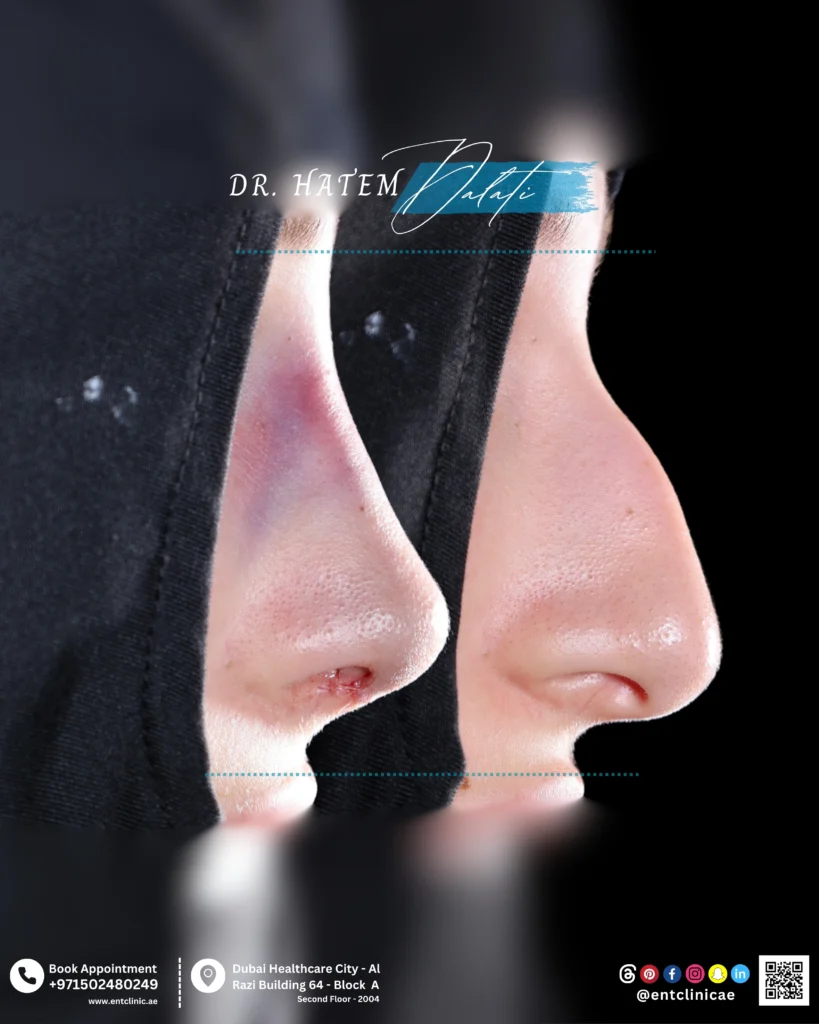
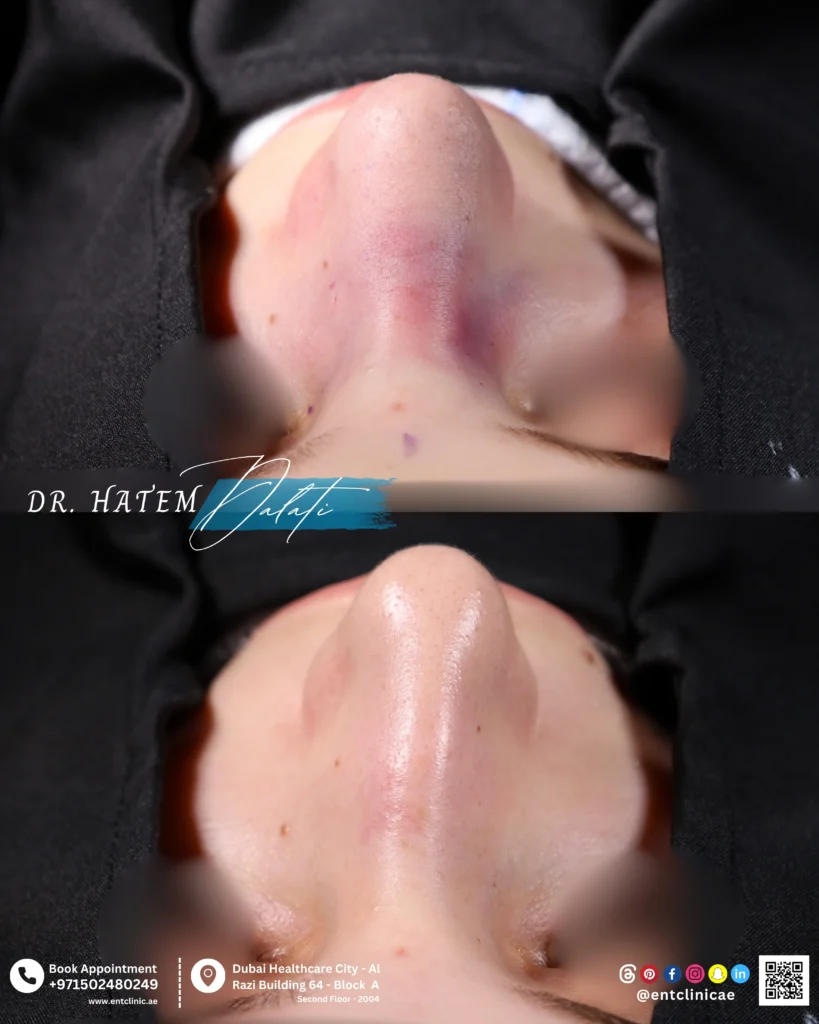
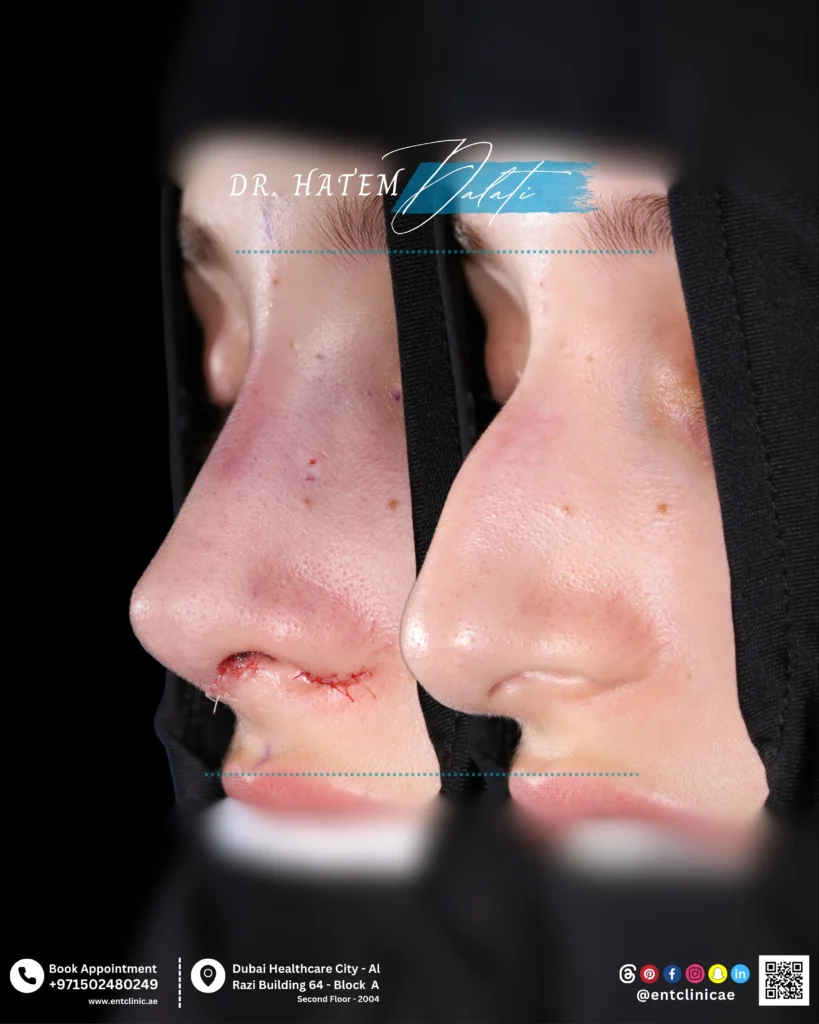
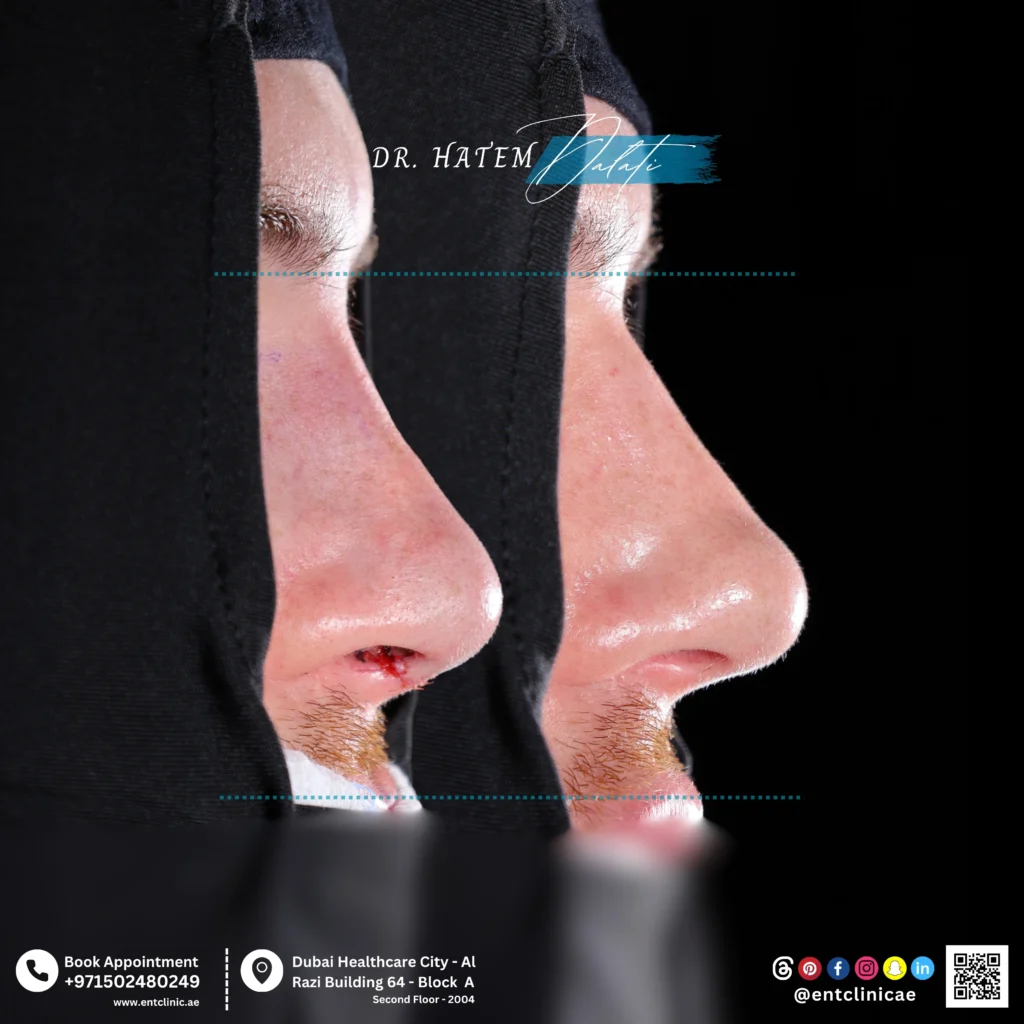
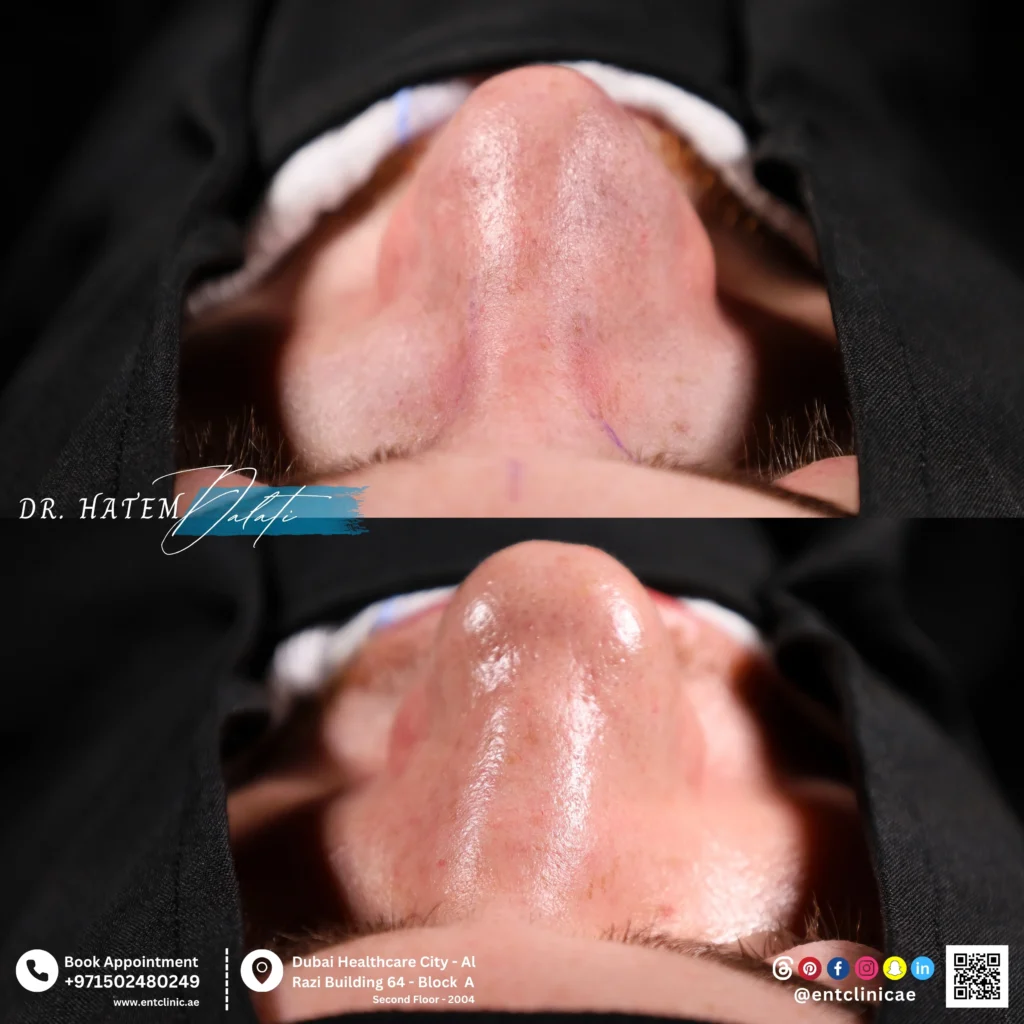
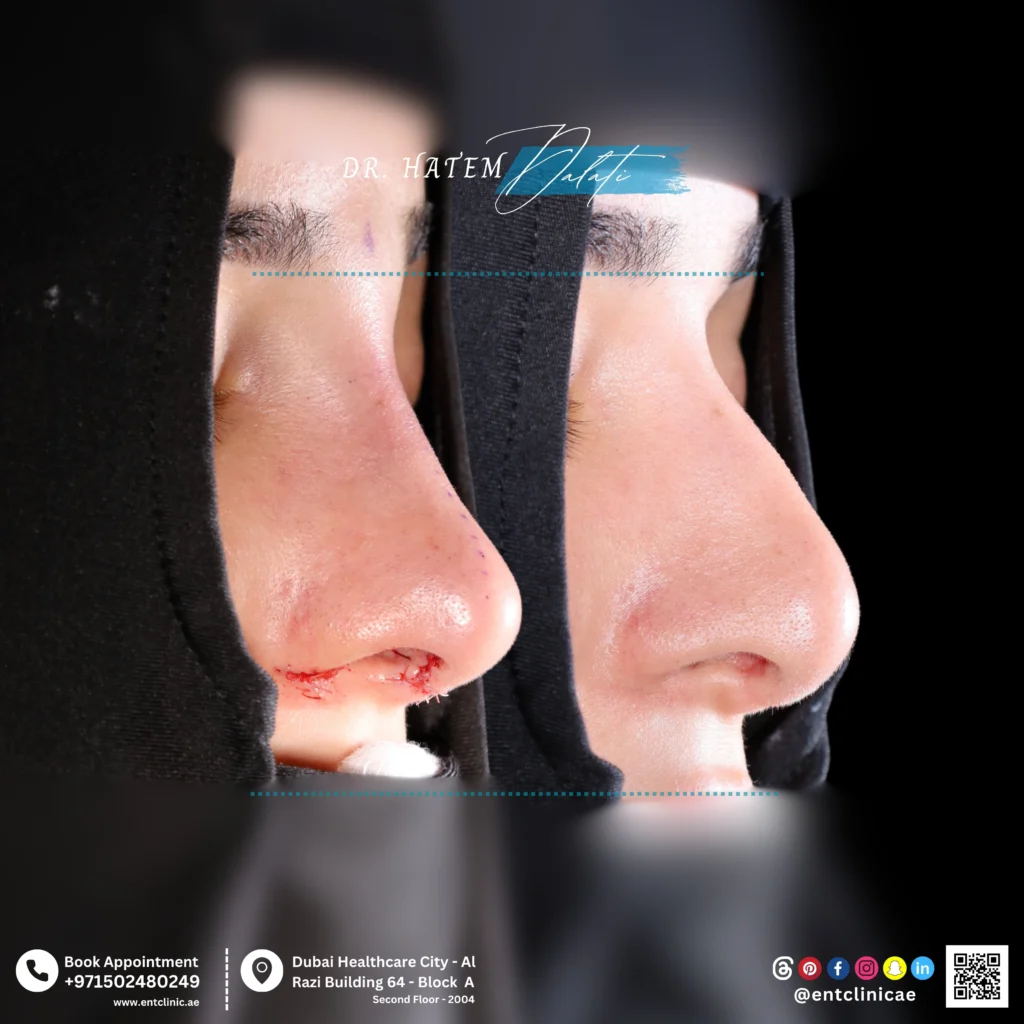
Septorhinoplasty Patient Results
The following before-and-after photographs show examples of individualized septorhinoplasty results. Each patient’s surgical plan is based on their nasal anatomy, functional concerns, and aesthetic goals.
Disclaimer: Patient consent was obtained for the use of these images. Results may vary between patients.
1. Primary Septorhinoplasty
2. Primary Male Septorhinoplasty
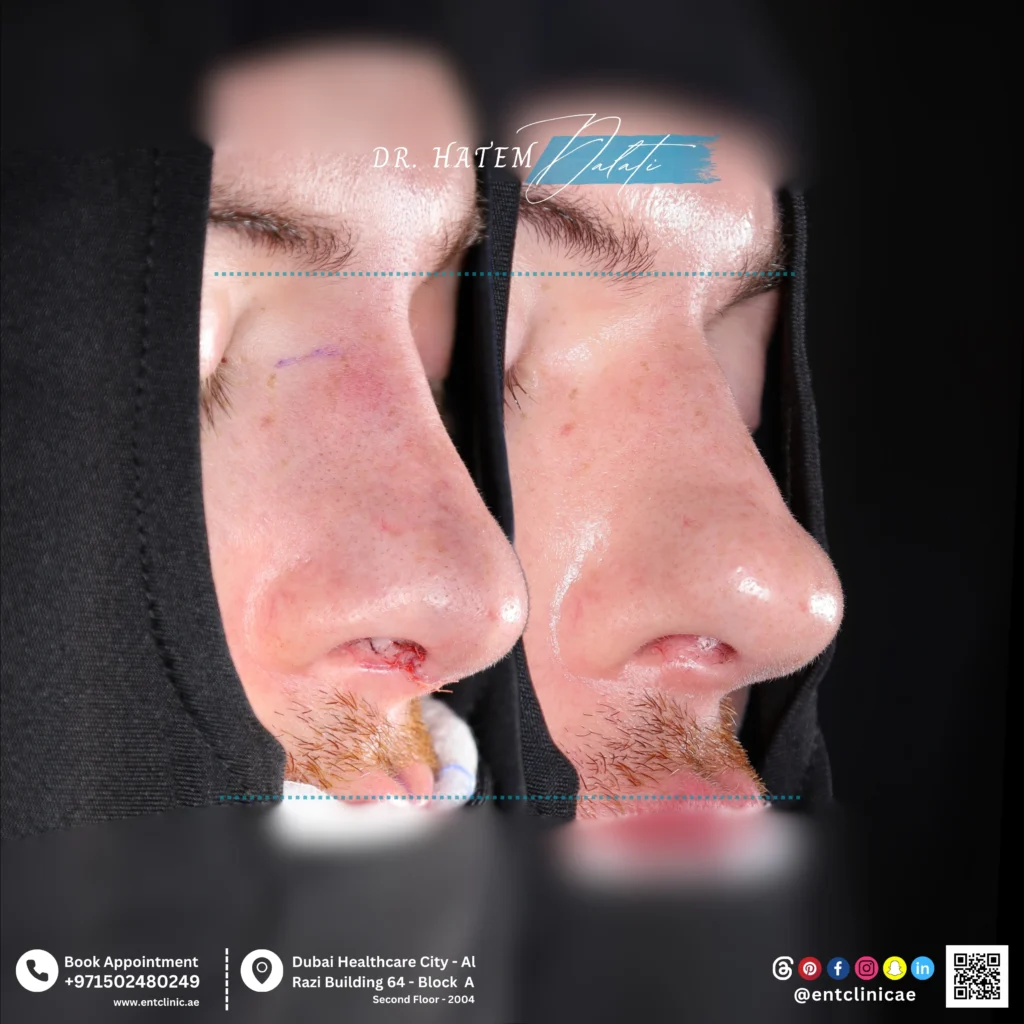
3. Revision Septorhinoplasty
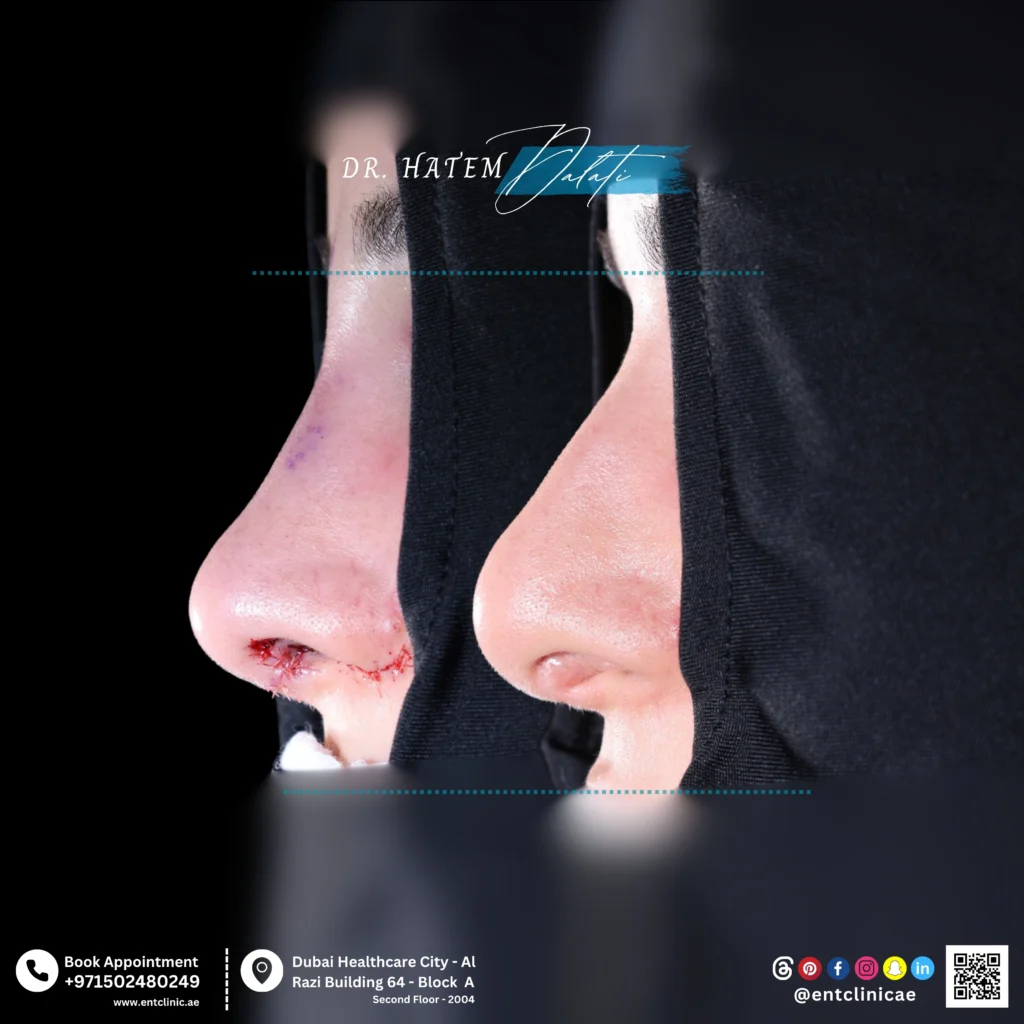
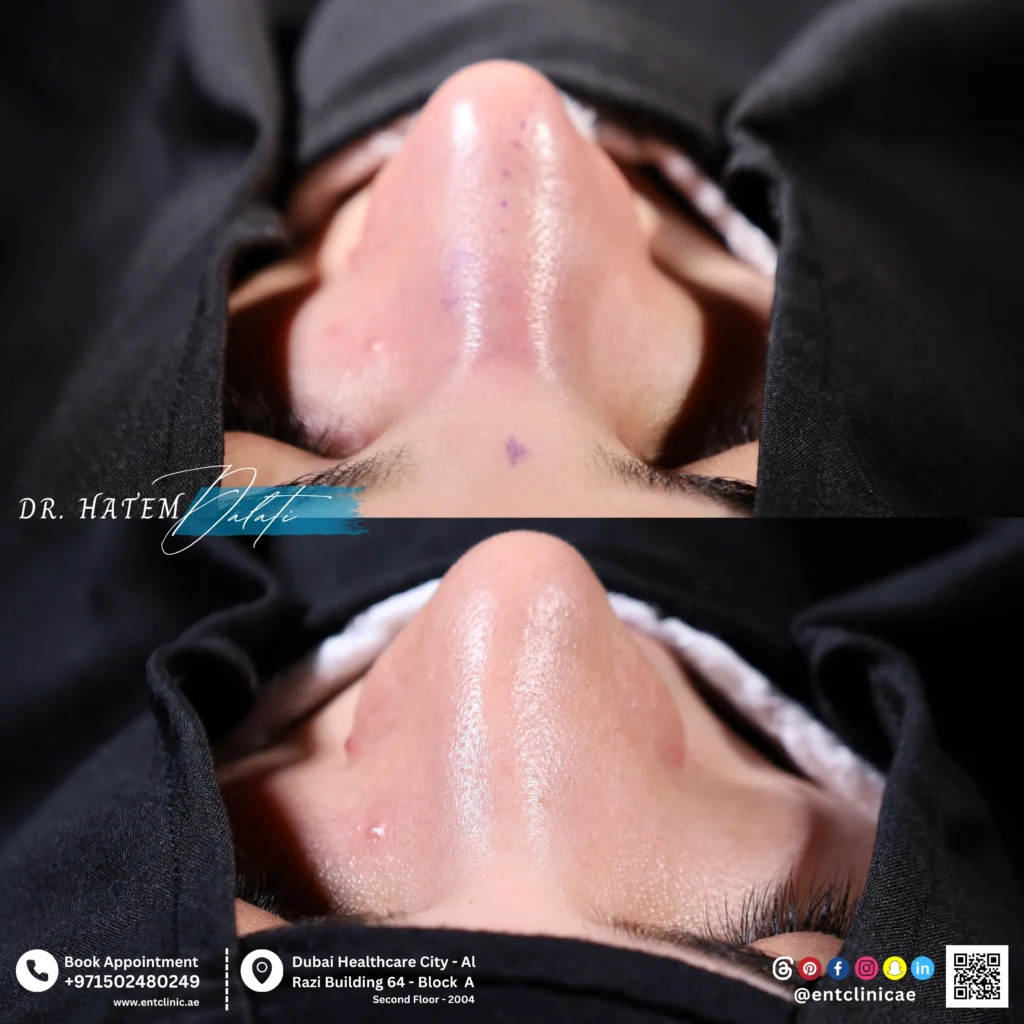
Does Septoplasty Change the Shape of the Nose?
In most cases, the primary purpose of septoplasty is to improve the internal structure of the nose rather than change its external appearance. However, the relationship between the septum and the external nasal framework is important. Significant structural changes to the septum can potentially affect nasal support and shape, particularly when the deviation involves important supporting areas.
If a patient has both a deviated septum and an external nasal deformity, a combined approach may be considered rather than treating the septum alone.
The purpose of septoplasty is to correct the internal septum rather than cosmetically reshape the nose. In most cases, patients should not expect septoplasty to create a new nasal shape. If the external appearance of the nose also needs to be corrected, rhinoplasty may be performed at the same time.
This distinction is important because a patient who wants both better breathing and a change in nasal appearance may need a treatment plan that goes beyond septoplasty alone.
Read more about whether septoplasty changes the shape of the nose to understand when changes in appearance may occur.
Can Rhinoplasty Improve Breathing?
Yes, rhinoplasty can improve breathing in selected patients, particularly when structural problems involving the nasal framework contribute to airway obstruction. Rhinoplasty may be used to address structural abnormalities that contribute to nasal obstruction.
Functional rhinoplasty may address structures such as the nasal valves or external framework while also considering the overall shape and support of the nose. The American Society of Plastic Surgeons notes that rhinoplasty can correct impaired breathing caused by structural defects also describes rhinoplasty as a procedure that can address both the appearance and function of the nose.
However, rhinoplasty is not automatically a treatment for every breathing problem. The cause of obstruction needs to be identified first. For example, a patient whose primary problem is a deviated septum may require septoplasty, while another patient may have obstruction caused by several structural factors requiring a more comprehensive surgical approach.
This is why an examination is more useful than trying to decide between septoplasty vs rhinoplasty based only on symptoms.
How Do You Know Which Procedure You Need?
Choosing between septoplasty vs rhinoplasty requires an assessment of both nasal function and nasal structure.
Depending on the patient’s symptoms, the assessment may include examination of:
- The nasal septum
- Nasal passages
- Nasal valves
- Turbinates
- External nasal structure
- Previous trauma or surgical changes
Dr. Hatem Dalati begins the examination by assessing the nose with a nasal speculum to evaluate the nasal passages and septum. When indicated, he then uses rigid nasal endoscopy to examine the deeper structures inside the nose and assess areas that cannot be fully evaluated with a routine examination.
This detailed assessment can help identify structural factors that may be contributing to nasal obstruction and determine whether the patient may benefit from septoplasty, rhinoplasty, or septorhinoplasty.
The important question is therefore not simply, “Do I need septoplasty vs rhinoplasty?” It is, “What structural problem is causing my symptoms, and which procedure can address it?”
Why Choose an ENT Consultant for Nasal Surgery?
When considering septoplasty vs rhinoplasty, it is valuable to have both nasal function and nasal appearance assessed.
Dr. Hatem Dalati is an ENT Consultant and Rhinoplasty Surgeon in Dubai, specializing in cosmetic and functional rhinoplasty, septoplasty, revision rhinoplasty, and complex nasal structural problems.
His ENT background allows nasal surgery to be approached with attention to the airway as well as the external appearance of the nose. His qualifications include European Board Certification in Otolaryngology–Head & Neck Surgery, Arab Board certification in ENT, an MD and Master’s degree in ENT, and advanced rhinoplasty fellowship training.
Dr. Dalati’s approach emphasizes individualized surgical planning rather than applying the same technique to every patient.
You can learn more about Dr. Hatem Dalati and his rhinoplasty expertise.
Septoplasty vs Rhinoplasty: What About Recovery?
Recovery depends on the procedure performed and the extent of structural correction.
After septoplasty, patients commonly experience temporary congestion, swelling, mild discomfort, and difficulty breathing through the nose during the early healing period. The initial recovery commonly takes around one to two weeks, while deeper healing can continue for several months.
Rhinoplasty recovery involves both internal healing and changes to the external nose. Swelling can gradually decrease over several weeks and months, while the final appearance may continue to refine over a longer period.
When septoplasty and rhinoplasty are combined, recovery reflects the overall surgical procedure and the individual patient’s healing process.
Patients should therefore follow their surgeon’s specific postoperative instructions rather than comparing their recovery with someone else’s.
Septoplasty vs Rhinoplasty: Which One Do You Need?
The answer depends on what is causing your nasal symptoms and what you want the surgery to address.
Septoplasty may be appropriate when a deviated septum is contributing to nasal obstruction. Rhinoplasty may be considered when the external shape or structure of the nose needs to be changed for cosmetic, structural, or selected functional reasons.
Some patients may require both procedures as septorhinoplasty when internal and external structural problems are present. Rather than choosing a procedure based only on symptoms or appearance, a detailed examination can help determine which structures are involved and what surgical approach may be appropriate.
Frequently Asked Questions
Is septoplasty the same as rhinoplasty?
No. In septoplasty vs rhinoplasty, septoplasty primarily corrects the nasal septum to improve airflow, while rhinoplasty or nose job reshapes the nose and can address aesthetic and certain functional concerns.
Which is better for breathing, septoplasty or rhinoplasty?
Neither procedure is universally better for breathing. The appropriate procedure depends on the anatomical cause of the obstruction. Septoplasty may improve breathing when a deviated septum is contributing to blockage, while functional rhinoplasty may address other structural causes.
Can septoplasty and rhinoplasty be done together?
Yes. The procedures can be combined when a patient has both a deviated septum and external or structural nasal concerns. This combined approach is commonly called septorhinoplasty.
Will septoplasty make my nose straight?
Septoplasty corrects the internal septum, but it is not primarily designed to straighten the external nose. If the external nose is crooked, rhinoplasty or septorhinoplasty may be considered depending on the underlying anatomy.
Does rhinoplasty always improve breathing?
No. Rhinoplasty or nose reshaping is not automatically a breathing procedure. Functional improvement depends on the cause of obstruction and whether the surgical plan addresses the relevant anatomical structures.
Is rhinoplasty only cosmetic?
No. Rhinoplasty can address appearance and, in selected patients, structural problems affecting nasal breathing.
How do I know whether I need septoplasty vs rhinoplasty?
An examination by an experienced ENT and rhinoplasty surgeon can determine whether your symptoms are related to a deviated septum, external nasal structure, nasal valve problems, or another cause. Your treatment plan should be based on your anatomy and goals.
Conclusion
Understanding septoplasty vs rhinoplasty begins with identifying the problem being treated. Septoplasty primarily addresses the nasal septum and is generally performed to improve nasal function, while rhinoplasty or nose job reshapes or structurally modifies the nose and may have cosmetic or functional goals.
For patients with both a deviated septum and external nasal structural concerns, combining the procedures as septorhinoplasty may provide a more comprehensive approach.
Because nasal anatomy and breathing problems vary from patient to patient, the most appropriate procedure should be determined after a detailed assessment of the internal and external nose.
Book a Consultation With Dr. Hatem Dalati in Dubai
If you are unsure whether you need septoplasty vs rhinoplasty, an assessment with an experienced ENT specialist can help identify the underlying structural problem and discuss appropriate treatment options.
📍 ENT Clinic of Excellence
Dubai Healthcare City, Dubai, UAE
📱 Call / WhatsApp: +971 50 248 0249
🌐 Website: entclinic.ae
📸 Instagram: @entclinicae
🎵 TikTok: @entclinic.ae
The right nasal surgery starts with understanding the structure and function of your nose.