Why Does Removing Too Much Cartilage Cause Problems in Rhinoplasty?
When you hear rhinoplasty, what’s the first thing you think of?
For many people, the answer is simple: making the nose smaller or changing its shape. But rhinoplasty is not simply about removing tissue to reduce the size of the nose. The nose is a three-dimensional structure supported by bone, cartilage, connective tissue, and soft tissue. Some of these structures play an important role in maintaining the shape, stability, and function of the nose. When too much cartilage is removed or important supporting structures are weakened, the nose may lose some of the support it needs. In some patients, this can contribute to changes in appearance, nasal obstruction, or structural problems that become noticeable during healing or even years later.
Dr. Hatem Dalati approaches rhinoplasty with attention to both nasal structure and function, recognizing that aesthetic refinement should be balanced with the need to maintain appropriate structural support. That is why modern rhinoplasty is not simply about asking, “What should be removed?” It is also about asking: “What needs to be preserved, reshaped, or supported?”
In this article, we explain why cartilage matters in rhinoplasty, what can happen when too much is removed, and why maintaining the right balance between appearance, breathing, and structural support is essential for long-term results.
What Is Cartilage and Why Is It Important in the Nose?
Cartilage is a strong but flexible connective tissue that helps give the nose its shape and structural support. Several important cartilage structures contribute to the nasal framework, including:
- Septal cartilage — forms an important part of the central nasal support and separates the two nasal passages.
- Upper lateral cartilages — contribute to the middle portion of the nose and help support the internal nasal airway.
- Lower lateral cartilages — help shape and support the nasal tip and nostrils.
These structures do more than determine how the nose looks. They also contribute to maintaining the nasal airway and structural stability. Because these structures work together, changes to one area can sometimes affect another.
What Happens When Too Much Cartilage Is Removed?
Removing cartilage is not automatically a problem. In appropriate areas and amounts, cartilage may be reduced or reshaped as part of rhinoplasty. The concern arises when too much structural cartilage is removed or important supporting relationships are disrupted. The remaining framework may become weaker or less able to resist the forces created by healing and normal breathing.
A PubMed-indexed review, Correction of the Over-resected Nose, explains that overzealous reduction during rhinoplasty can result in both functional and aesthetic problems and may lead patients to require revision rhinoplasty.
Depending on the location and extent of cartilage removal, this can potentially contribute to:
- Loss of nasal support
- Changes in nasal shape
- Tip weakness or distortion
- Narrowing of the nasal airway
- Nasal valve problems
- Irregularities or asymmetry
- Changes that become more noticeable over time
The effects vary from patient to patient because every nose has different anatomy, tissue characteristics, and healing patterns. For this reason, Dr. Hatem Dalati evaluates the existing nasal framework and the relationship between its different supporting structures when planning rhinoplasty, rather than viewing cartilage removal as an isolated step.
Possible Problems Following Excessive Cartilage Removal
Excessive cartilage removal can potentially affect both appearance and function.
Appearance
Structural weakening may contribute to changes such as:
- An overly pinched appearance
- Excessive narrowing
- Tip deformity or loss of support
- Irregularities
- Asymmetry
- An overly operated appearance
- Changes in nasal contour during healing
These changes do not necessarily occur in every patient who has undergone cartilage removal. Their likelihood depends on factors such as the location and amount of cartilage removed, the remaining structural support, and individual healing.
Function
The nasal framework also helps maintain the shape of the airway. If supporting structures become weakened or narrowed, some patients may develop:
- Nasal obstruction
- Increased difficulty breathing through the nose
- Nasal valve narrowing or collapse
- A sensation that the nose feels blocked, particularly during exercise or deeper inspiration
This is one reason functional considerations should be evaluated alongside cosmetic goals during rhinoplasty.
For more information, you can also read our related article: What is Nasal Valve Collapse and Can Rhinoplasty Fix It?
Can Too Much Cartilage Removal Affect Breathing?
Yes, it can. The nasal airway depends partly on the structural framework remaining open and stable during breathing. When certain supporting cartilages are excessively weakened, the nasal passages may become narrower or less stable. In some patients, this can contribute to nasal valve dysfunction or obstruction. However, nasal breathing problems after rhinoplasty are not always caused by excessive cartilage removal.
Other factors can include:
- A deviated septum
- Swelling
- Scar tissue
- Turbinate enlargement
- Nasal valve narrowing
- Changes in the internal nasal framework
- Other pre-existing or post-surgical conditions
For this reason, patients experiencing breathing difficulties after rhinoplasty should have the nose carefully evaluated rather than assuming that cartilage removal is the only cause.
Why “Smaller” Does Not Always Mean “Better”
One of the most important principles in rhinoplasty is that a smaller nose is not necessarily a better nose. Removing more cartilage does not automatically create a more attractive result. The nose needs to remain proportionate to the rest of the face while maintaining sufficient structural support. An appropriate rhinoplasty aims to create harmony between nasal shape, facial proportions, nasal tip support, nasal airway, structural stability and the patient’s individual anatomy. A nose that looks smaller immediately after surgery may not necessarily remain stable as healing progresses if important support has been compromised.
For Dr. Hatem Dalati, the goal of rhinoplasty is not simply reduction. It is to achieve appropriate refinement while respecting the patient’s individual anatomy and maintaining the structural foundations of the nose. The goal should therefore be appropriate refinement—not simply maximum reduction.
Is Cartilage Always Preserved During Rhinoplasty?
No. Cartilage is not necessarily left completely untouched during rhinoplasty. Depending on the patient’s anatomy and surgical goals, Dr. Hatem Dalati may:
- Remove a limited amount of cartilage
- Reshape cartilage
- Reposition cartilage
- Use sutures to change its shape
- Preserve important supporting structures
- Add cartilage grafts when additional support is needed
The objective is to make controlled structural changes while maintaining an appropriate framework. In some noses, selective cartilage removal may be appropriate. In others, preservation and reinforcement may be more important. The surgical approach should be individualized rather than based on a single technique for every patient.
What Is Structural Rhinoplasty?
Structural rhinoplasty focuses on preserving, strengthening, or restoring the framework of the nose rather than relying primarily on tissue removal. Depending on the patient’s anatomy, a surgeon may use sutures or cartilage grafts to reinforce specific areas of the nose. Examples of structural grafts can include spreader grafts, columellar strut grafts, septal extension grafts, alar batten grafts and alar rim grafts.
Not every patient requires structural grafting. These techniques are selected when additional support or reconstruction is needed based on the patient’s anatomy and surgical goals. Structural rhinoplasty is particularly relevant when the nasal framework is weak, when functional support needs to be maintained, or when reconstruction is required after previous surgery.
Related Reading: Will I Need Cartilage Grafts for My Rhinoplasty, and Where Are They Taken From?
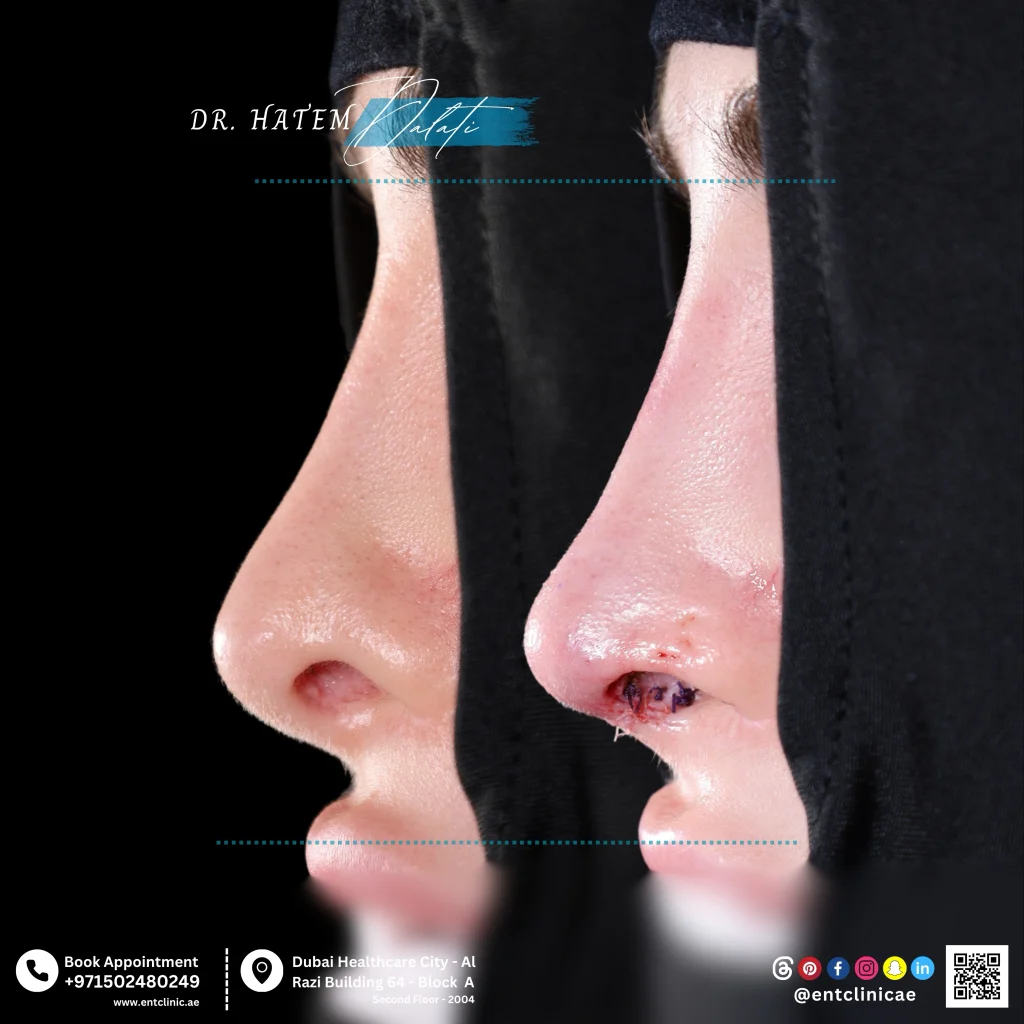
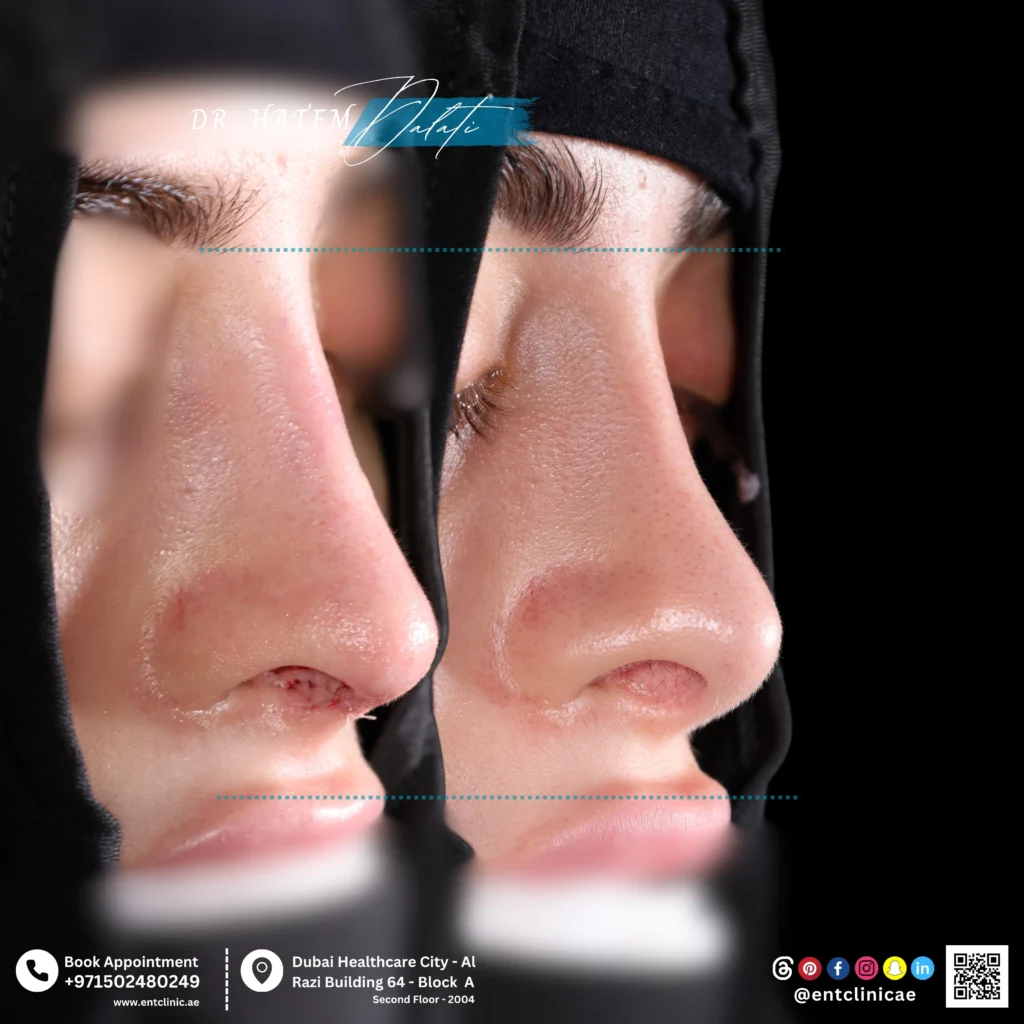
Structural Rhinoplasty: Patients Results
Examples of primary and revision rhinoplasty cases involving structural cartilage support.
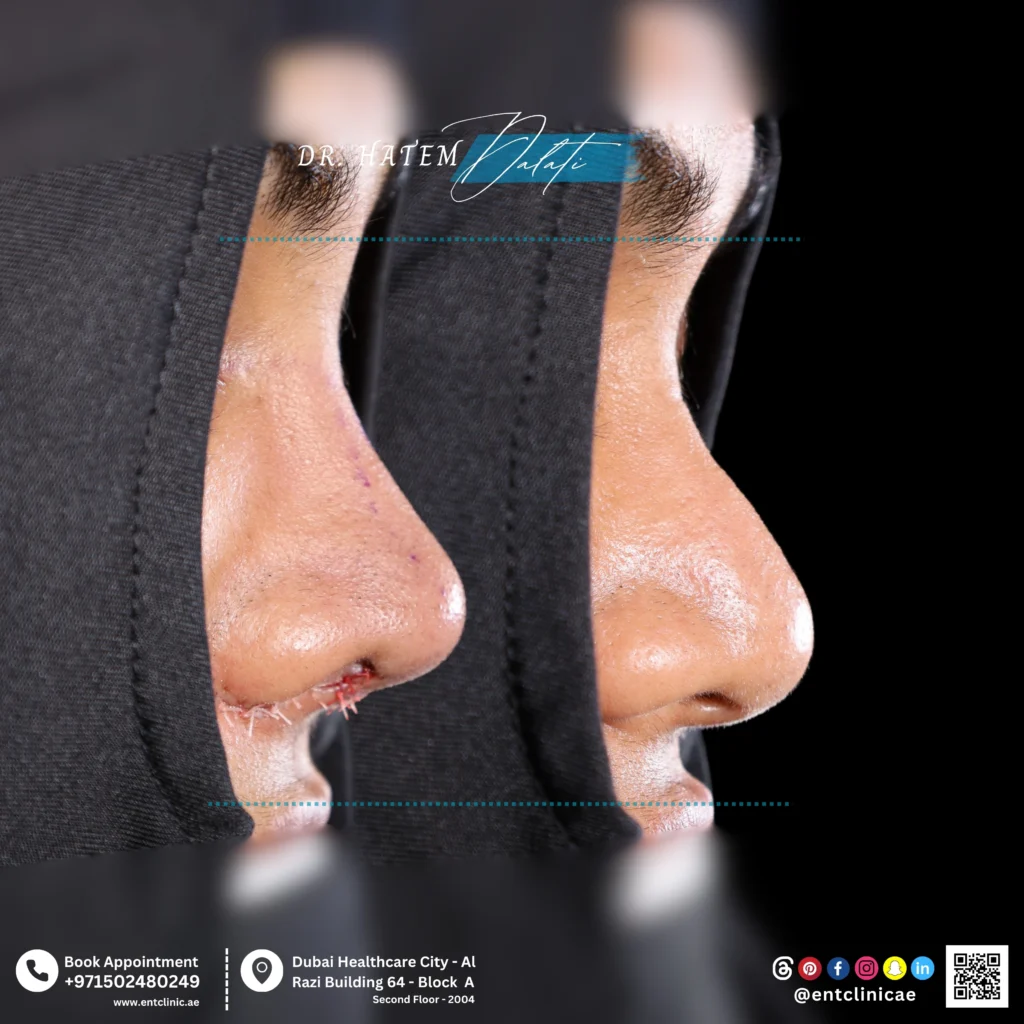
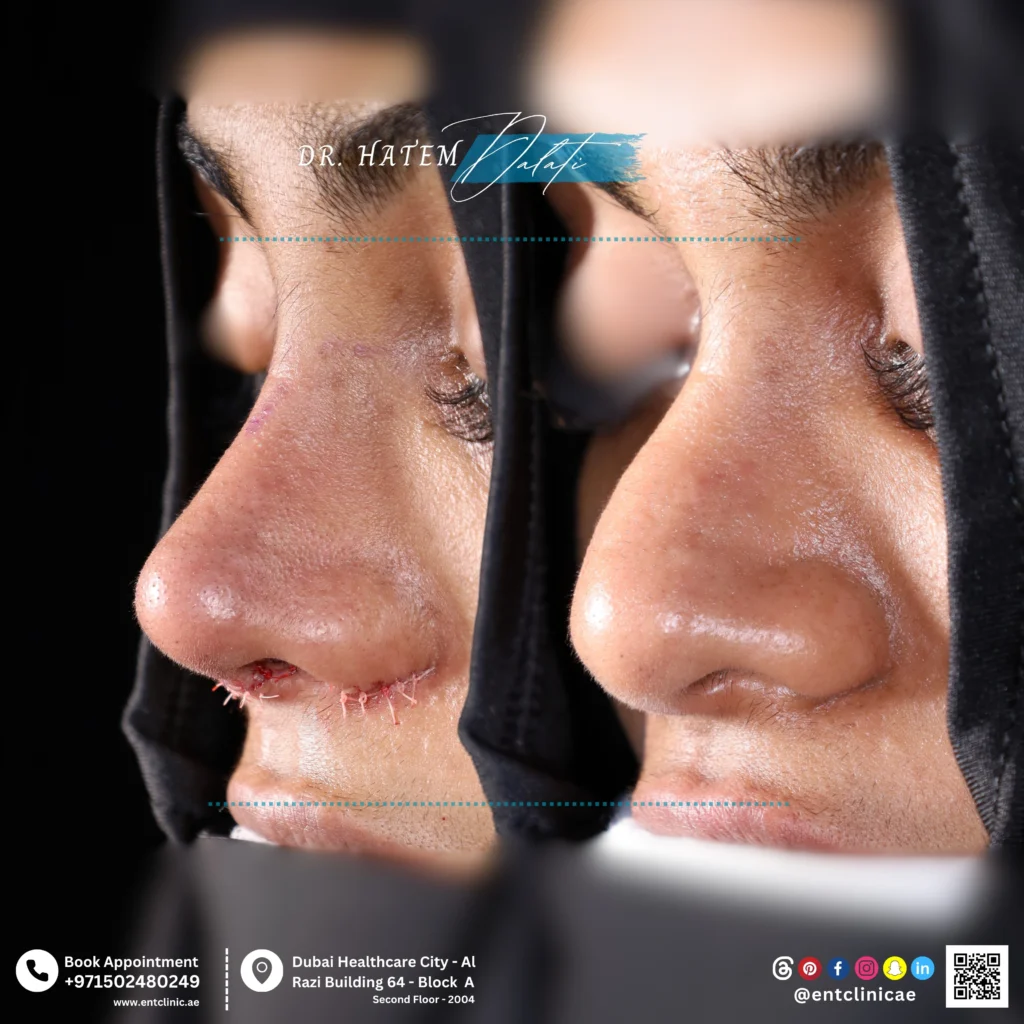
CASE 01 — PRIMARY SEPTORHINOPLASTY
Findings: Severe deviated septum, C-shaped nasal dorsum, low radix, wide tip and nasal base, with congested mucosa and mild bilateral turbinate hypertrophy.
Approach: Septorhinoplasty with cartilage grafting to address both nasal structure and breathing function.
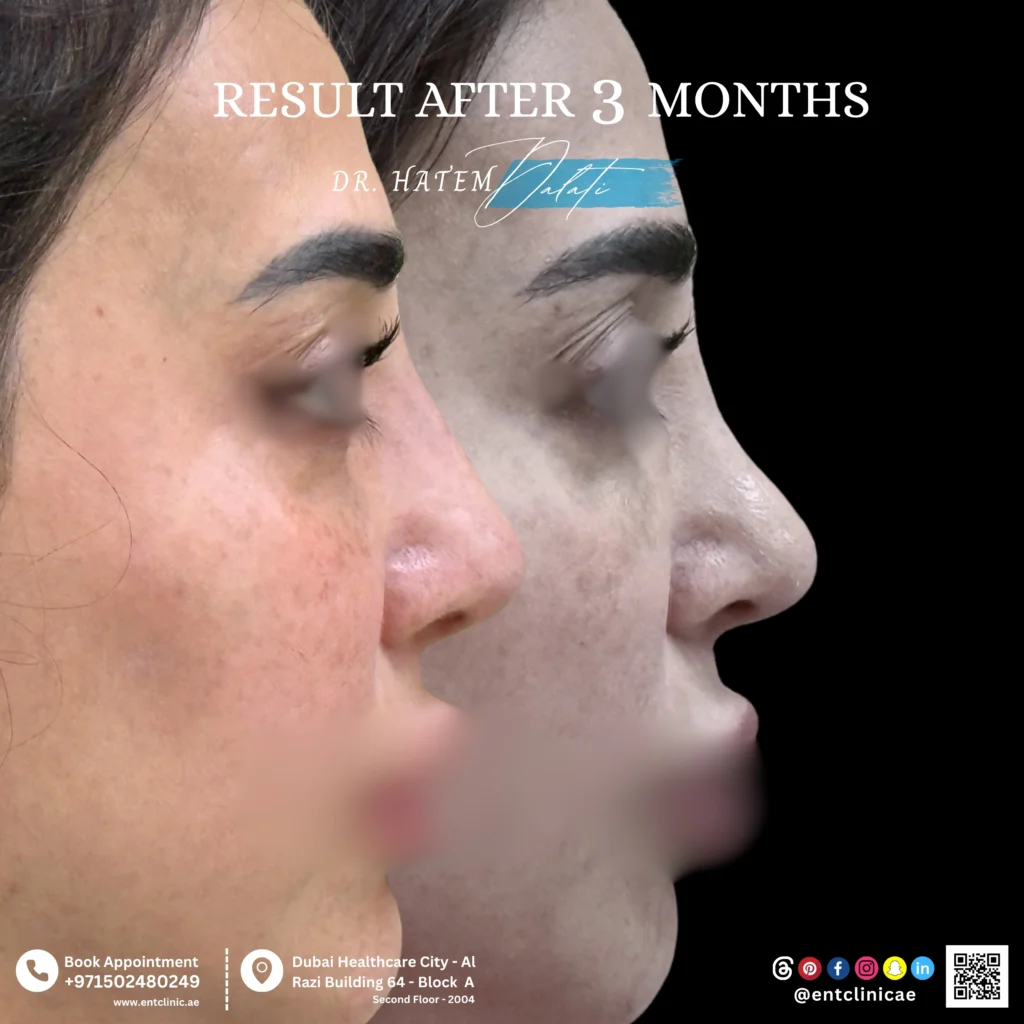
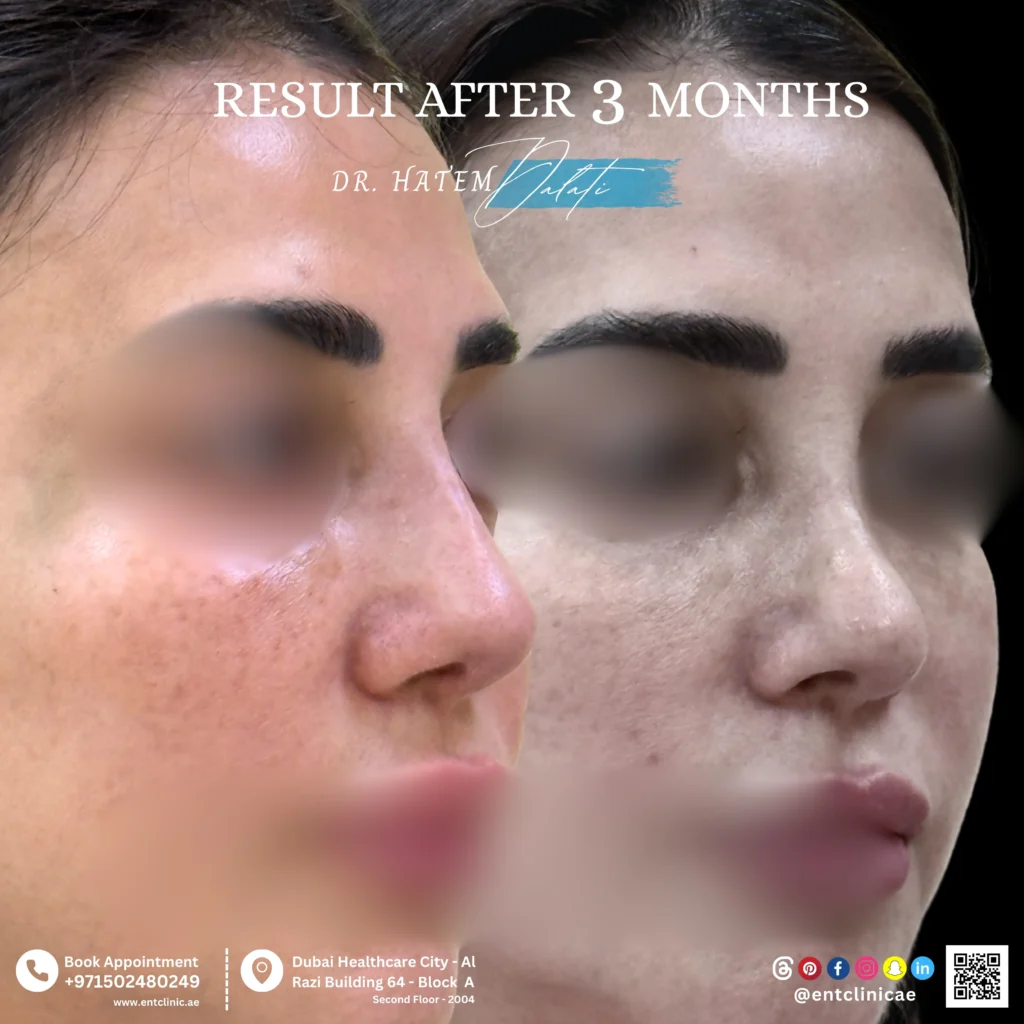
CASE 02 — REVISION RHINOPLASTY | SADDLE NOSE
Findings: Saddle nose deformity with septal collapse following previous rhinoplasty, nasal congestion, long-standing mouth breathing, and bilateral inferior turbinate hypertrophy.
Approach: Revision septorhinoplasty with septal reconstruction and bilateral inferior turbinate reduction to restore structural support and address nasal airway obstruction.
CASE 03 — 3rd REVISION RHINOPLASTY
Findings: S-shaped nasal dorsum, irregular pointy tip, hanging columella, left lower alar notch, and congested nasal mucosa following previous rhinoplasty.
Approach: Third revision rhinoplasty to address nasal deformity, tip irregularity, and overall structural balance.
CASE 04 — REVISION SEPTORHINOPLASTY
Findings: Severe C-shaped nasal and septal deviation toward the left, external nasal deviation, over-projected and irregular nasal tip, congested mucosa, and bilateral turbinate hypertrophy.
Approach: Revision septorhinoplasty with bilateral turbinate reduction + cartilage grafting to address nasal structure, symmetry, and breathing function.
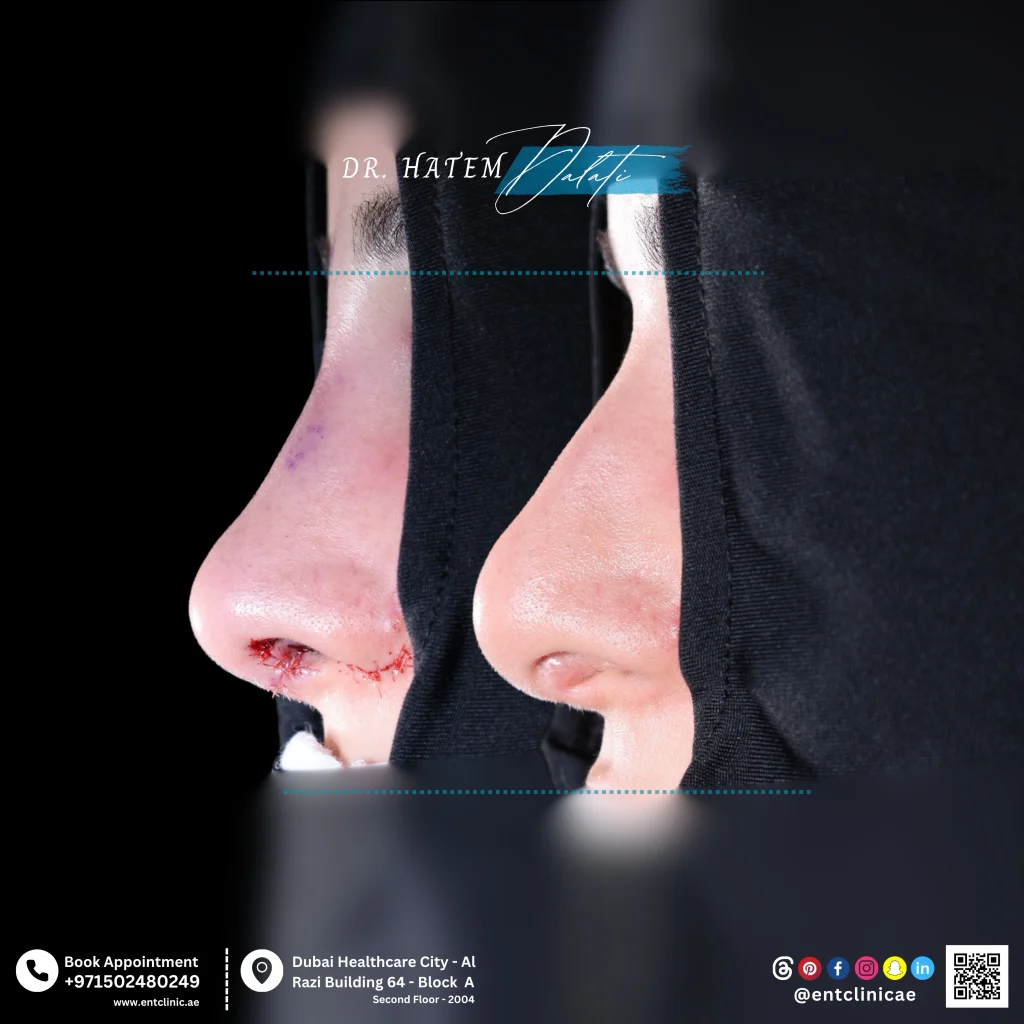
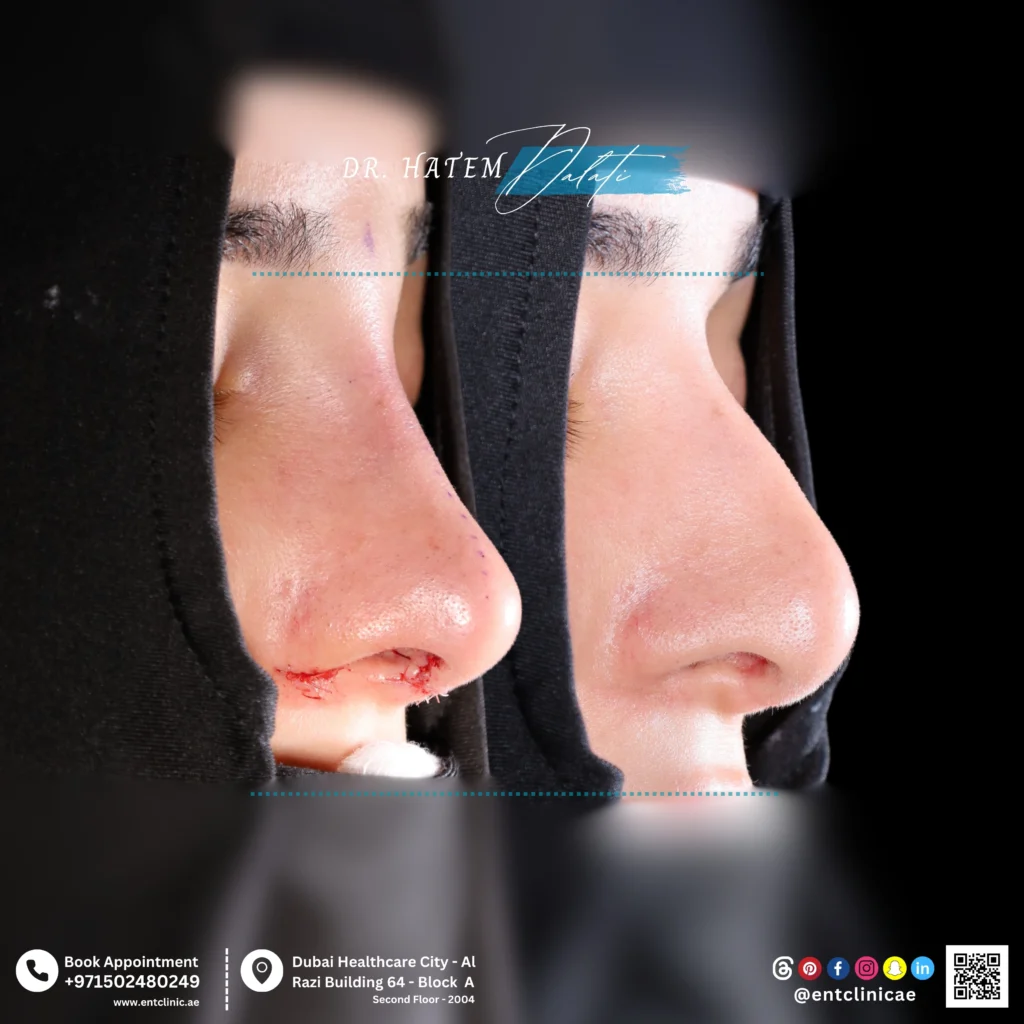
Patient Results: These photographs are presented with patient consent for educational purposes and show individual results. Outcomes vary between patients depending on anatomy, previous surgery, healing, and the surgical approach. Before-and-after photographs do not guarantee a specific outcome.
Can Removed Nasal Cartilage Be Replaced?
In some cases, yes. If a patient has insufficient structural support, cartilage grafts may be used to reinforce or reconstruct specific areas of the nose.
The source of graft material depends on the individual case. Dr. Hatem Dalati may use either the patient’s remaining septal cartilage or appropriate donor cartilage when additional structural support is needed. Using these options can help avoid creating another incision site to harvest cartilage and may also reduce surgical time. The choice depends on factors such as how much support is required, what cartilage remains available, the patient’s anatomy, and whether the surgery is primary or revision rhinoplasty.
Cartilage grafting is not simply about “adding more cartilage.” The graft must be carefully selected and positioned to provide the appropriate structural support without creating unnecessary bulk or distortion.
In revision cases, Dr. Hatem Dalati assesses the available cartilage and existing nasal framework to determine whether additional structural support or grafting may be appropriate.
What Happens If Cartilage Was Already Removed During a Previous Rhinoplasty?
Previous cartilage removal can make revision rhinoplasty more complex. During a revision procedure, the surgeon may encounter:
- Less native cartilage available for grafting
- Weakened structural support
- Scar tissue
- Altered nasal anatomy
- Changes in the nasal airway
- Previous grafts or surgical modifications
This means revision rhinoplasty often requires a different strategy from primary rhinoplasty. The surgeon must first understand what remains, what has been changed, and what needs to be reconstructed. When additional support is required, cartilage grafting may be considered to restore or reinforce the nasal framework.
How Is Nasal Structure Protected During Rhinoplasty?
Protecting the nasal structure begins with understanding the patient’s anatomy before surgery. At ENT Clinic of Excellence, Dr. Hatem Dalati considers:
- The existing nasal framework
- Septal structure
- Nasal tip support
- Nasal valve anatomy
- Existing airway limitations
- Skin and soft-tissue characteristics
- Facial proportions
- Previous nasal surgery, if applicable
Dr. Hatem Dalati’s approach emphasizes preserving important structural support while making carefully planned changes based on each patient’s anatomy. This does not mean that cartilage should never be removed. Rather, cartilage removal should be purposeful and balanced with the need to maintain the structural integrity and function of the nose.
During surgery, structural support may be maintained through careful tissue preservation, controlled cartilage reshaping, suturing techniques, or cartilage grafting when appropriate.
Can Excessive Cartilage Removal Cause Problems Years Later?
It can, in some patients. Not every structural problem appears immediately after surgery. Changes during healing, scar contracture, tissue remodeling, and the long-term behavior of a weakened framework can sometimes make structural issues more noticeable months or years after rhinoplasty.
Possible concerns may include:
- Progressive narrowing
- Changes in nasal contour
- Tip or sidewall weakness
- Increasing asymmetry
- Nasal obstruction
However, a problem developing years after rhinoplasty does not automatically mean that excessive cartilage was removed. A detailed examination is needed to determine the actual cause.
When to Seek Assessment
Consider an assessment if you experience:
- Persistent or worsening difficulty breathing through the nose
- Noticeable changes in nasal shape after rhinoplasty
- New or increasing nasal asymmetry
- Tip drooping or loss of nasal support
- A feeling of nasal blockage or collapse when breathing in
- Ongoing concerns following previous rhinoplasty
These symptoms do not necessarily mean that too much cartilage was removed. A clinical examination is needed to determine whether the concern involves cartilage, the nasal septum, nasal valves, turbinates, scar tissue, or other nasal structures.
Dr. Hatem Dalati, ENT Consultant and Rhinoplasty Surgeon at ENT Clinic of Excellence in Dubai, can assess both the structural and functional aspects of the nose when evaluating primary or revision rhinoplasty concerns.
Frequently Asked Questions
Does removing cartilage make the nose smaller?
It can. Cartilage reduction may be used to reshape or reduce certain areas of the nose. However, the amount removed should be carefully controlled so that appropriate structural support remains.
Can too much cartilage removal cause breathing problems?
Excessive weakening or disruption of supporting structures can contribute to nasal valve narrowing or other structural problems that may affect airflow. However, breathing problems after rhinoplasty can have multiple causes and require an individual assessment.
Can cartilage grow back after rhinoplasty?
Cartilage that has been surgically removed does not simply grow back as normal nasal cartilage. If structural cartilage is deficient after previous surgery, reconstruction may require cartilage grafting or other structural techniques.
Can a weak nose be reconstructed?
In many cases, structural problems can be addressed through revision rhinoplasty. Depending on the patient’s anatomy, cartilage grafting or other reconstructive techniques may be used to restore support.
Is preserving cartilage important in every rhinoplasty?
Preserving appropriate supporting structures is important, but rhinoplasty sometimes requires controlled cartilage reduction. The appropriate approach depends on the patient’s anatomy, functional needs, and aesthetic goals.
Considering Rhinoplasty?
If you are concerned about your nasal shape, breathing, or changes following previous rhinoplasty, an individual assessment can help determine whether your nasal cartilage needs to be preserved, reshaped, or structurally supported.
Book a consultation with Dr. Hatem Dalati at ENT Clinic of Excellence in Dubai to discuss your individual concerns and treatment options.
📍 ENT Clinic of Excellence – Dubai Healthcare City
📱 WhatsApp us directly: https://wa.me/971502480249
🌐 Book online: entclinic.ae
Stay connected with us:
Follow us on Instagram and TikTok for educational content about rhinoplasty, ENT conditions, nasal breathing, recovery, and patient awareness.