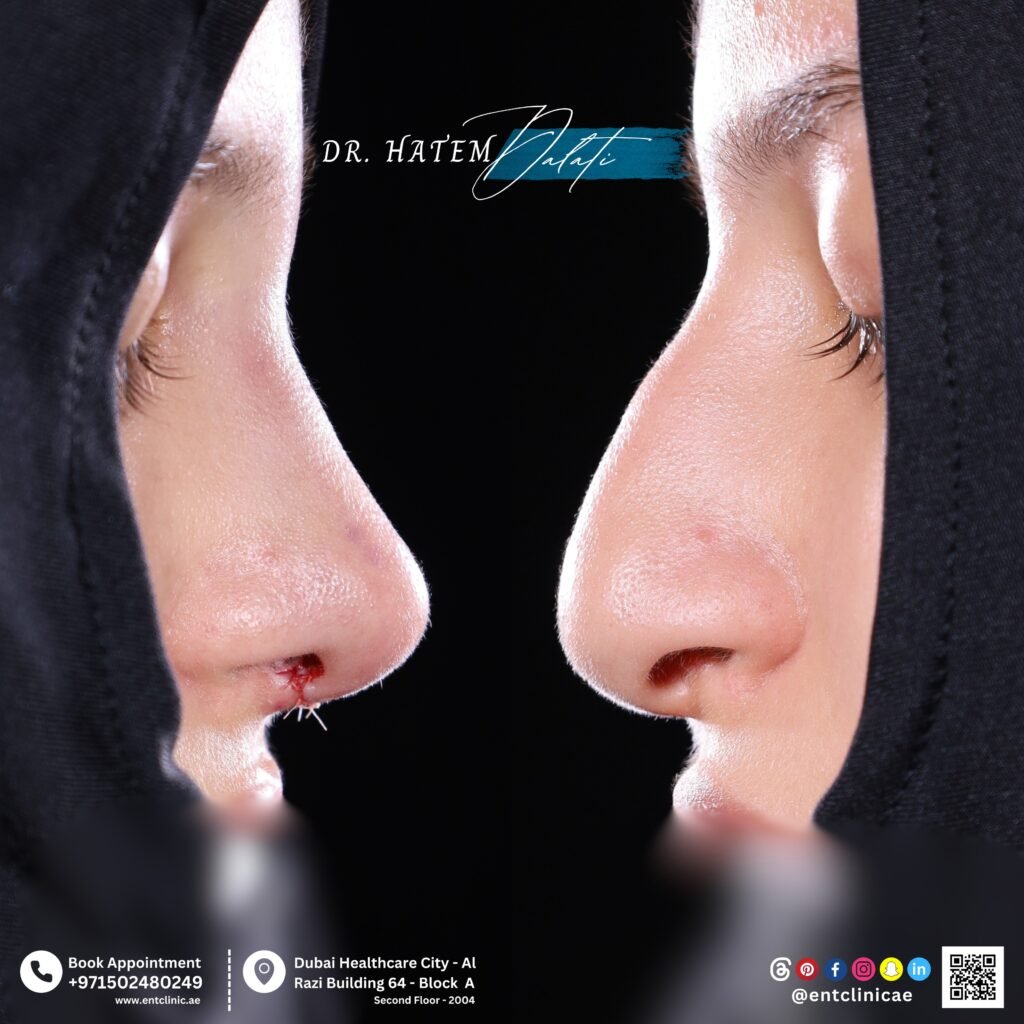
Can Rhinoplasty Work for Thick Skin? Surgical Challenges, Skin Types & Expert Solutions in Dubai
Expert Rhinoplasty Care by Dr. Hatem Dalati | ENT Clinic of Excellence, Dubai
If you’ve been told you have thick nasal skin and are wondering “Can rhinoplasty really work for me?”—you’re not alone. This is one of the most common concerns among patients seeking rhinoplasty in Dubai, especially those of Middle Eastern, South Asian, or Mediterranean background.
The short answer is yes—rhinoplasty can work beautifully for thick skin, but only when performed using the right techniques, realistic expectations, and an experienced surgeon.
At ENT Clinic of Excellence, Dubai Healthcare City, Dr. Hatem Dalati, a European & Arab Board-Certified ENT and Rhinoplasty Surgeon, specializes in thick-skinned, ethnic, and complex rhinoplasty cases, delivering natural and long-lasting results.
This guide explains how skin type affects rhinoplasty, the unique challenges of thick skin, and the advanced surgical solutions used in Dubai’s leading ENT clinic.
For further reading about Rhinoplasty: UK NHS – Cosmetic Surgery Information-Rhinoplasty
Why Skin Type Matters in Rhinoplasty
When people think of rhinoplasty, they often focus on bone and cartilage. However, the skin is the final layer that reveals—or conceals—the surgeon’s work.
Your skin type directly affects:
- Nasal tip definition
- Degree and duration of swelling
- Healing speed
- Scar visibility
- Long-term stability of the result
Ignoring skin characteristics can lead to disappointment, unrealistic expectations, or the need for revision rhinoplasty in Dubai later.
What Is Thick Nasal Skin?
Thick nasal skin is commonly seen in patients of Middle Eastern, South Asian, Mediterranean, and some African backgrounds, making it especially relevant in Dubai’s diverse population.
Characteristics of Thick Nasal Skin:
- Dense, oily skin—especially over the nasal tip
- Enlarged sebaceous (oil) glands
- Reduced elasticity and slower contraction
- Bulbous or rounded nasal tip appearance
- Tendency for prolonged swelling after surgery
While thick skin can be more resilient, it also masks fine sculpting, making rhinoplasty more technically demanding.
This skin type is very common among ethnic rhinoplasty patients, particularly in the UAE. For further reading: Dubai’s Expert Guide to Ethnic Rhinoplasty: Beauty in Cultural Balance
👉 Thick skin is not a disadvantage—but it demands expertise.
Surgical Challenges of Rhinoplasty for Thick Skin
1. Reduced Tip Definition
Even perfectly sculpted cartilage may not appear sharp beneath thick skin. This is why aggressive reduction alone fails—structure, not removal, is key.
2. Longer Healing & Swelling
Patients with thick skin often experience swelling that lasts 12–18 months, particularly at the tip. Early judgment of results can be misleading.
3. Need for Strong Structural Support
If the nasal framework is weak, thick skin can cause the tip to droop over time.
4. Higher Risk with Inexperienced Surgeons
Over-reduction or poor planning can lead to flat, undefined, or unstable results.
This is why thick-skinned rhinoplasty should only be performed by surgeons experienced in structural and ethnic rhinoplasty.
Advanced Rhinoplasty Solutions for Thick Skin in Dubai
At ENT Clinic of Excellence, Dr. Hatem Dalati uses modern structural rhinoplasty techniques, not outdated reduction methods.
✅ Open Structural Rhinoplasty
Provides full visibility and precise reshaping—essential for thick skin cases.
✅ Strong Tip-Defining Cartilage Grafts
Cartilage grafts help:
- Enhance projection
- Maintain long-term shape
- Prevent post-operative drooping
✅ Selective Skin & Soft Tissue Management
In carefully selected cases, conservative thinning of subcutaneous tissue may be performed—never aggressively.
✅ Ethnic Harmony, Not Over-Westernization
The goal is refinement while preserving ethnic identity and facial balance, not creating an artificial or generic nose.
Dr. Dalati’s philosophy:
“A strong structure under thick skin creates beautiful, lasting definition.”
Understanding Different Skin Types & Rhinoplasty Outcomes
Not all patients with thick skin are the same. Skin type also plays a major role.
🔹 Oily Skin
- Produces excess sebum
- Thicker and more glandular
- Can prolong swelling
- Requires oil-control strategies post-op
🔹 Dry Skin
- More delicate and sensitive
- Needs intensive moisturization post-surgery
- Can heal beautifully with proper care
🔹 Combination Skin
- Oily nose with drier cheeks
- Requires customized pre- and post-op skincare
🔹 Sensitive Skin
Needs gentle handling and tailored medications
Prone to redness and irritation
Other Factors That Influence Rhinoplasty Outcomes
✔ Ethnicity
Affects skin thickness, pigmentation, oil production, and scarring behavior.
✔ Age
Younger skin heals faster and contracts better. Aging skin may be thinner but less elastic.
✔ Genetics
Plays a major role in swelling, scarring, and healing response.
Because of these variables, personalized surgical planning is essential.
What to Expect After Rhinoplasty with Thick Skin
- Longer swelling phase (especially tip area)
- Gradual improvement over months
- Customized skin care guidance
- Realistic expectations discussed upfront
Dr. Dalati ensures patients fully understand what can and cannot be achieved with their skin type—before surgery.
Meet Dr. Hatem Dalati – Rhinoplasty Expert in Dubai
Dr. Hatem Dalati is a European & Arab Board-Certified ENT and Rhinoplasty Surgeon with over 15 years of experience.
He is widely known for:
- Thick-skinned rhinoplasty
- Ethnic rhinoplasty
- Functional + aesthetic balance
- Revision rhinoplasty correction
His approach is ethical, conservative, and structure-focused—designed for results that last.
Why Choose ENT Clinic of Excellence for Rhinoplasty in Dubai?
✔ Proven experience in thick-skinned and ethnic rhinoplasty
✔ Honest guidance with realistic expectations
✔ Personalized treatment plans — no “one-nose-fits-all” approach
✔ Advanced ENT surgical standards in Dubai Healthcare City
At ENT Clinic of Excellence, we focus on expertise, safety, and long-term results—not unrealistic promises.
FAQs: Rhinoplasty for Thick Skin
1. Can rhinoplasty work for thick skin?
Yes. With structural rhinoplasty techniques and realistic expectations, excellent results are achievable.
2. Is thick skin bad for rhinoplasty?
No—but it requires advanced techniques and an experienced surgeon.
3. How long does swelling last with thick skin?
Swelling may last up to 12–18 months, especially at the nasal tip.
4. Will my nose look defined with thick skin?
Yes, when strong cartilage support and proper projection are used.
5. Is ethnic rhinoplasty different from regular rhinoplasty?
Yes. It focuses on refinement while preserving ethnic identity.
6. Can thick skin cause rhinoplasty failure?
Only if surgery is poorly planned or over-reductive.
7. Is revision rhinoplasty common in thick-skinned patients?
It can be—but is often avoidable with expert primary surgery.
8. Who is the best rhinoplasty surgeon in Dubai?
A board-certified surgeon with proven experience in structural and ethnic rhinoplasty, such as Dr. Hatem Dalati. Read: How Do I Choose the Best Rhinoplasty Surgeon in Dubai? Expert Guide & Tips
Ready to See What Rhinoplasty Can Really Achieve for Thick Skin?
If you’ve been told “rhinoplasty won’t work for thick skin”—that’s not the full story.
With the right surgeon, technique, and expectations, refined and confident results are absolutely possible. Book now for consultation.
📍 ENT Clinic of Excellence – Dubai Healthcare City
📞 WhatsApp Direct: https://wa.me/971502480249
🌐 Website: https://www.entclinic.ae
📲 Follow Real Patient Journeys & Expert Insights:
Instagram Tiktok
✨ Discover what’s possible when your rhinoplasty is designed for your skin—not against it.